

Use of traffic lights
In addition to the normal traffic lights, there are a few other traffic lights. For example, tram and bus lights, level crossing and bridge lights and lane lights.
Three coloured traffic lights
These are the traffic lights that you encounter most in daily traffic. They are located at larger intersections and consist of the colours red, yellow (sometimes called ‘orange’) and green.
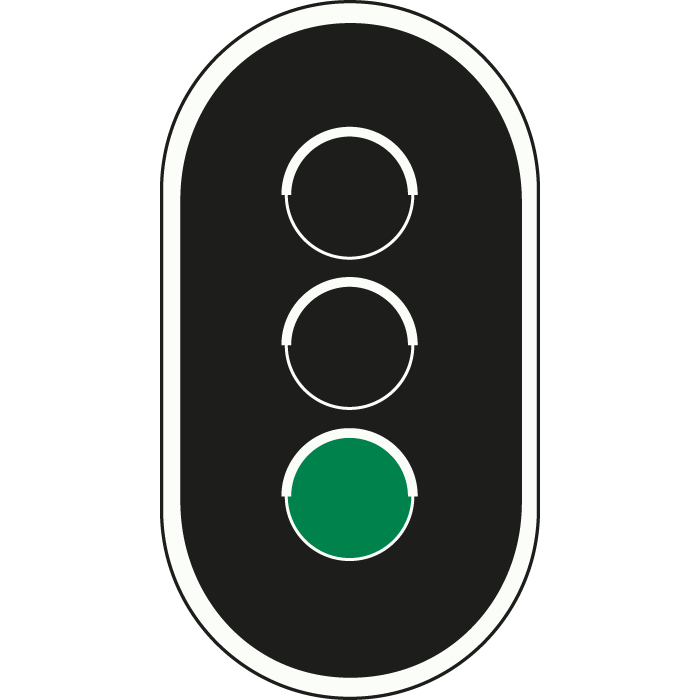
Traffic light for all directions.
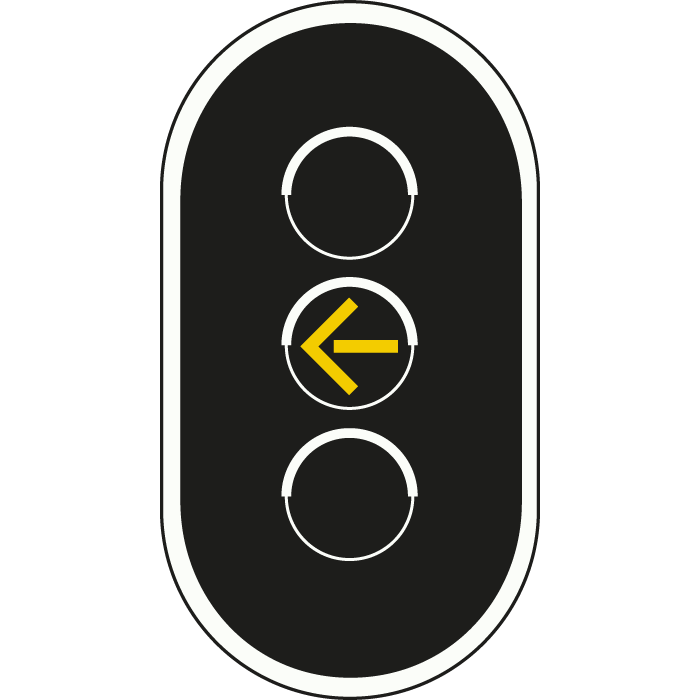
Traffic light for turning left.
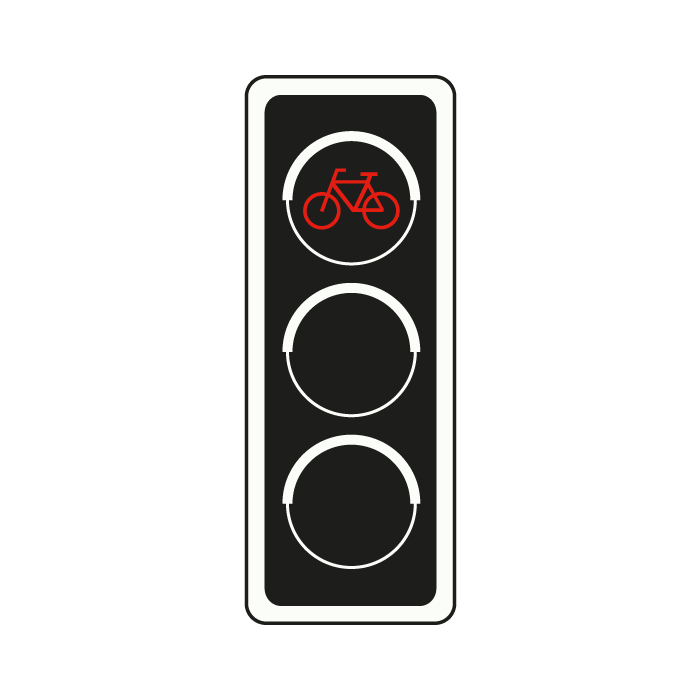
Traffic light for cyclists and moped riders.
The lights can be designed as a circle, but also as a directional arrow or another symbol such as a bicycle. In the latter cases, the traffic light only applies to the indicated direction, or to the drivers of the indicated vehicles. With this, a bicycle symbol also indicates a snorfiets, moped, speed pedelec and disability vehicle. This depends on which vehicles may use the road section for which the traffic light applies.
The meaning of the colours is as follows:
- Red
Stop. Riding on is prohibited. - Yellow
Stop. Unless you are so close to the traffic light that stopping is no longer reasonable. Then you are allowed to ride on. - Green
Keep riding. Not riding on while this is possible, is prohibited. - Flashing yellow light
The traffic light is out of order. Approach the intersection with caution. Now, the traffic signs and markings that regulate the priority apply.
Turning right at red lights
In some cases, a sign with text is placed under or next to the traffic light:
- Cyclists can turn right – Dutch: ‘Rechtsaf voor fietsers vrij’
Here, cyclists and snorfietsers may turn right, even when the traffic light is red. - Cyclists and moped riders can turn right – Dutch: ‘Rechtsaf voor (brom)fietsers vrij’
Here, cyclists, snorfietsers, moped riders and speed pedelec riders may turn right, even when the traffic light is red. Brommobielen may not turn right!
However, you do have to give way to traffic that does have a green light.
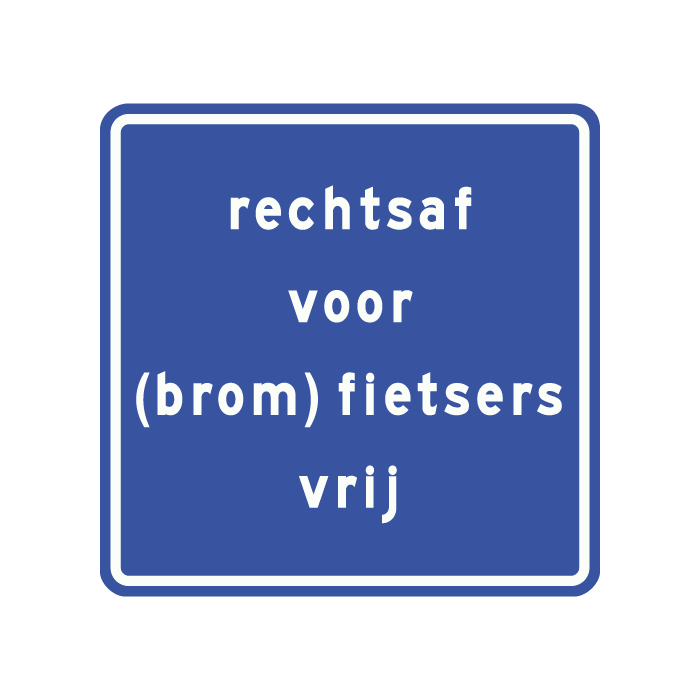
Cyclists, snorfietsers, moped riders, and speed pedelec riders may turn right through the red light here.
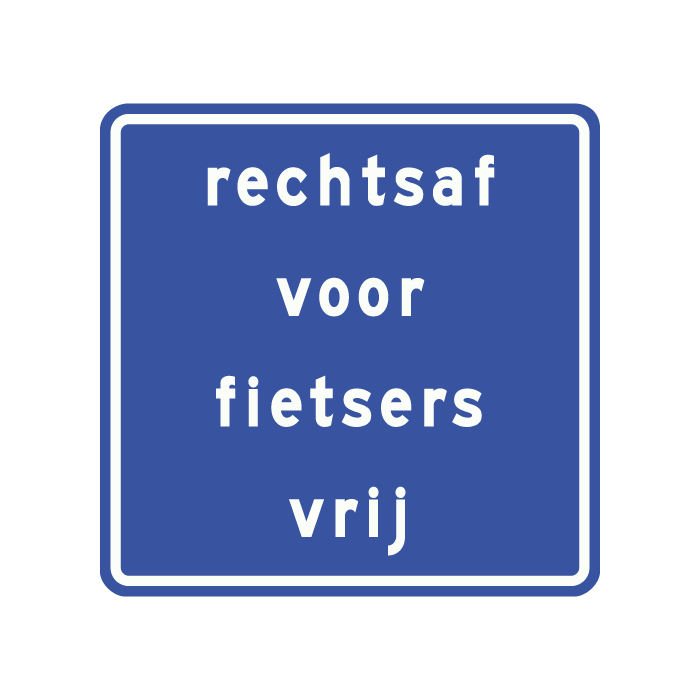
Cyclists and snorfietsers may turn right through the red light here.
Traffic lights with an arrow or a circle
Depending on the intersection the shape of the traffic light lamps can differ. Sometimes it is a directional arrow, sometimes a circle. At larger intersections with multiple pre-sort lanes, you will find lamps in the shape of directional arrows more often. At smaller intersections, without pre-sorting lanes, you will find lamps in the shape of the circle more often.
If you want to turn left or right at a traffic light with a round lamp, then oncoming traffic or traffic alongside you can have a green light at the same time. Two rules then apply.
- Through traffic on the same road goes before traffic turning off.
- Drivers turning right go before drivers turning left.
This is often indicated with a sign under the traffic lights.
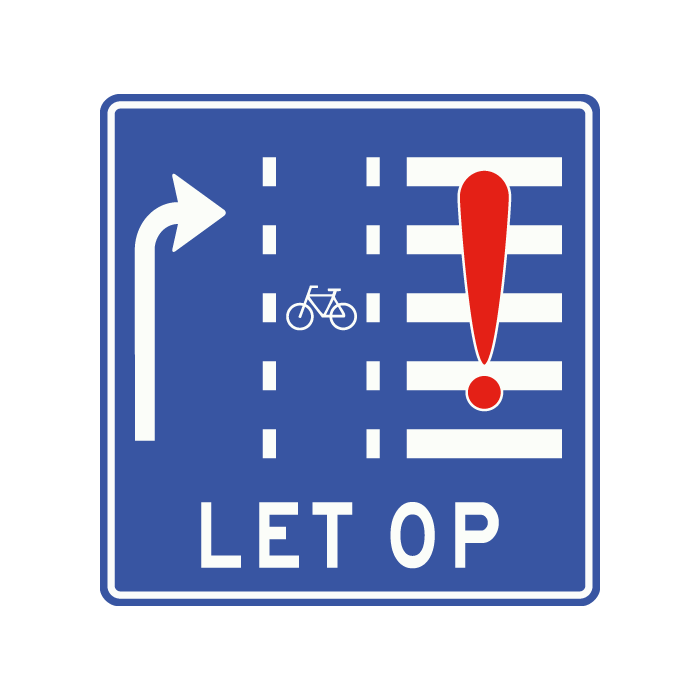
If you turn right at a green light, then you must give way to through traffic.
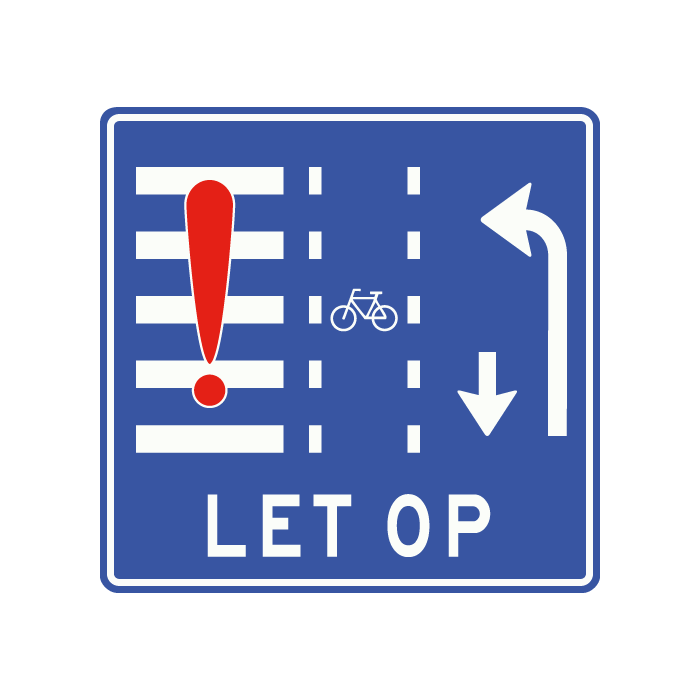
If you turn left at a green light, you must give way to oncoming traffic and through traffic.
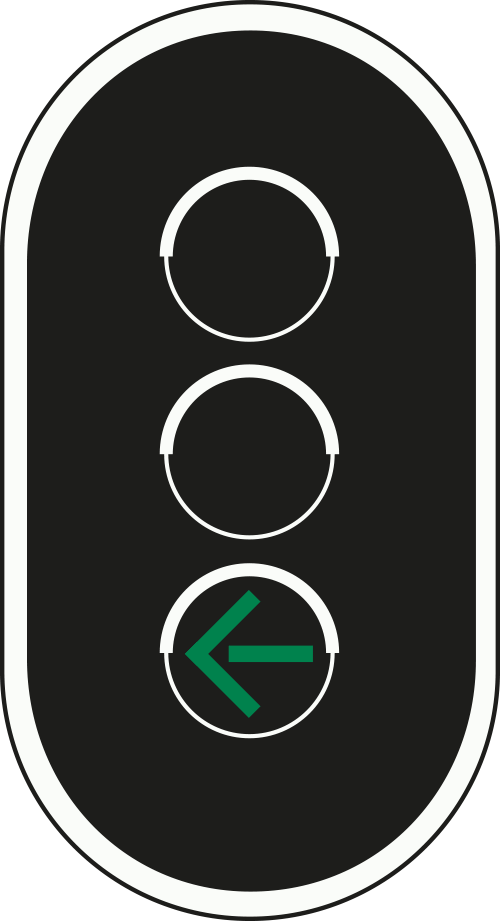
If you want to turn left or right at a traffic light with a directional arrow lamp, then you will not have to deal with oncoming traffic or traffic alongside you. You can turn left or right unhindered.
Level crossing lights
These lights consist of two red lights that are off when no train is approaching and flash alternately when a train is approaching. In that case, you are required to stop. Some level crossings still have old-fashioned level crossing lights, where a white light flashes when no train is approaching. Here, the red lights also start flashing when you need to stop.
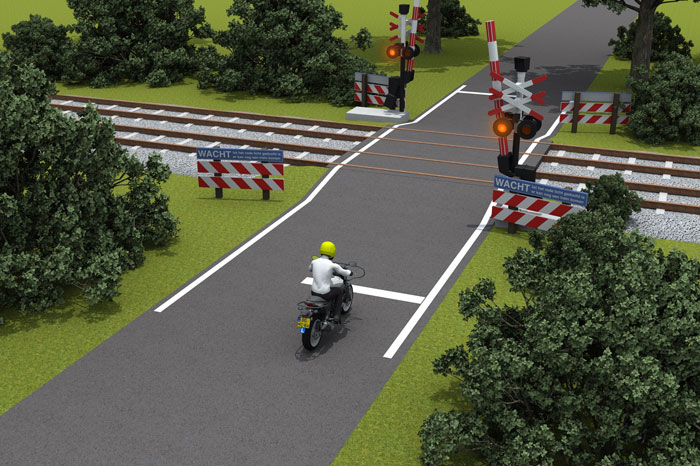
Even if the crossing barriers have not closed yet, you must stop for the red level crossing lights. You are only allowed to ride on when the lights have turned off.
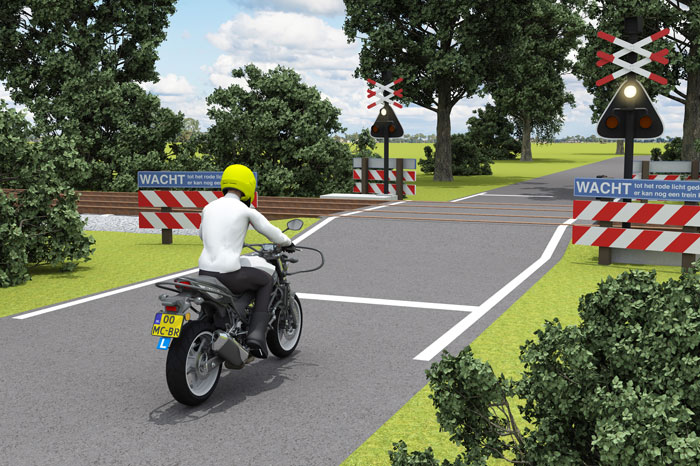
You can still find old level crossings in some places. The white lights indicate that no train is approaching.
Bridge lights
Bridge lights consist of one or two red lights that are off when the bridge is closed, and traffic can pass. When the bridge opens, these red lights light up or flash (in case of two lights) and you must stop.
Tram and bus lights (nine eye)
These lights consist of night round lights in a square plane. The upper and lower row of lights is white, the middle light is yellow, and the lights left and right of that are red.
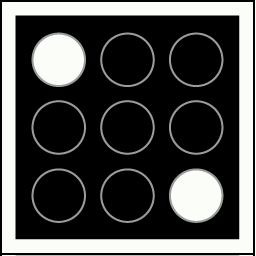
Turning left allowed

Straight through allowed

Turning right allowed
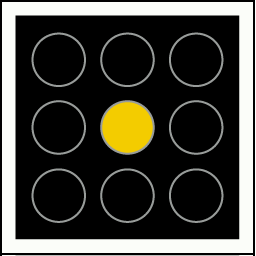
Stop, if reasonably possible
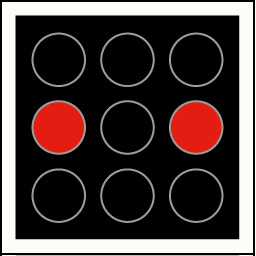
Stop
Trams and buses that use the lane for which this traffic light applies, must follow these lights.
Yellow flashing light
To warn of a dangerous point, a single yellow flashing light is sometimes used. For example, it can warn of a pedestrian crossing or a level crossing. Depending on the situation, it may be smart to reduce your speed.
Red flashing light
There are also red lights that indicate that you are approaching a level crossing or an open bridge past an intersection. These red lights indicate that you are not allowed to ride on in the direction displayed. These intersections do not need to be further regulated by traffic lights. The red lamps are intended to prevent congestion at the intersection itself.
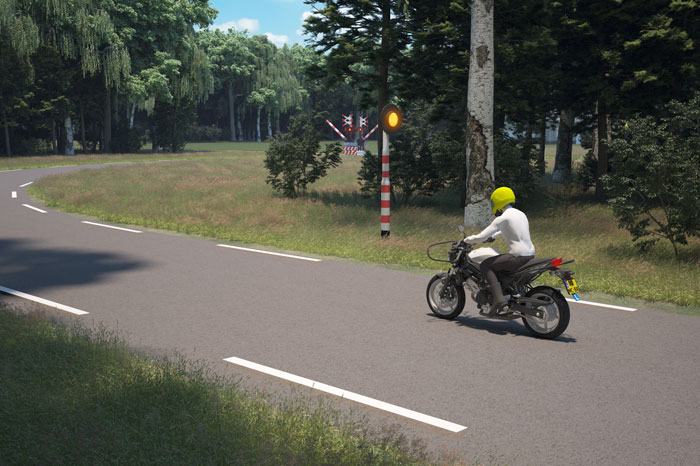
The yellow flashing light warns of a closed level crossing up ahead.
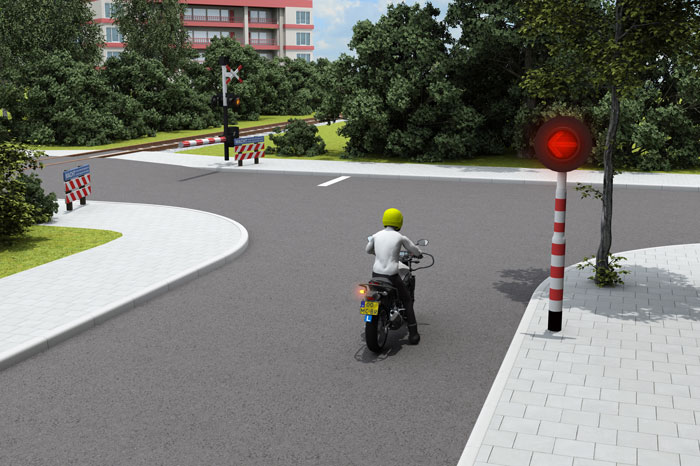
The red flashing light indicates that you must stop here if you want to turn left. The level crossing is closed. If you were to continue riding, you would block the intersection.
Pedestrian light
Most pedestrian lights consist of a red and a green light in the shape of a pedestrian. At some pedestrian lights the red light is replaced by a yellow one, in the shape of a triangle with an exclamation mark.
The colours of the pedestrian light mean:
- Green light
Pedestrians may cross. - Flashing green light
Pedestrians may still cross. The light will turn red very soon. - Red light
Pedestrians may no longer start to cross. Pedestrians who are already crossing should walk as quickly as possible. - Flashing yellow light
Pedestrians may cross but must give way to all other traffic. Cross at your own risk.
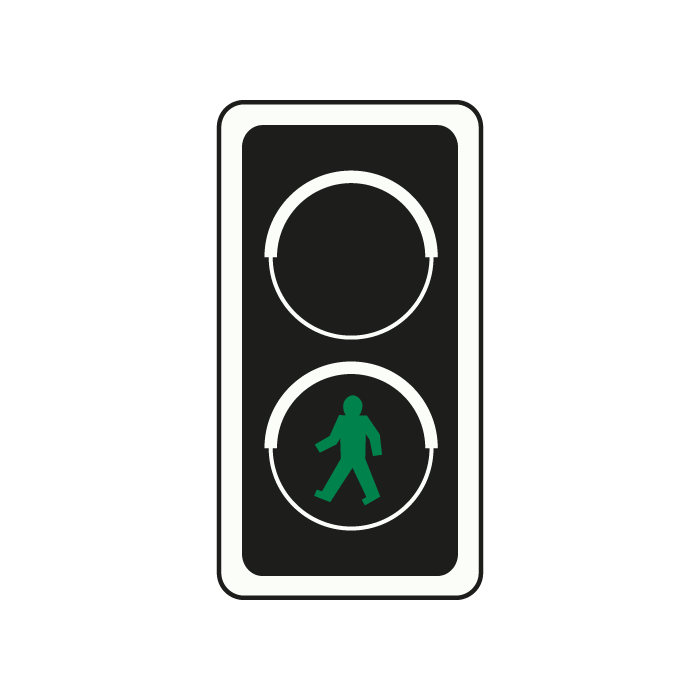
Green pedestrian light
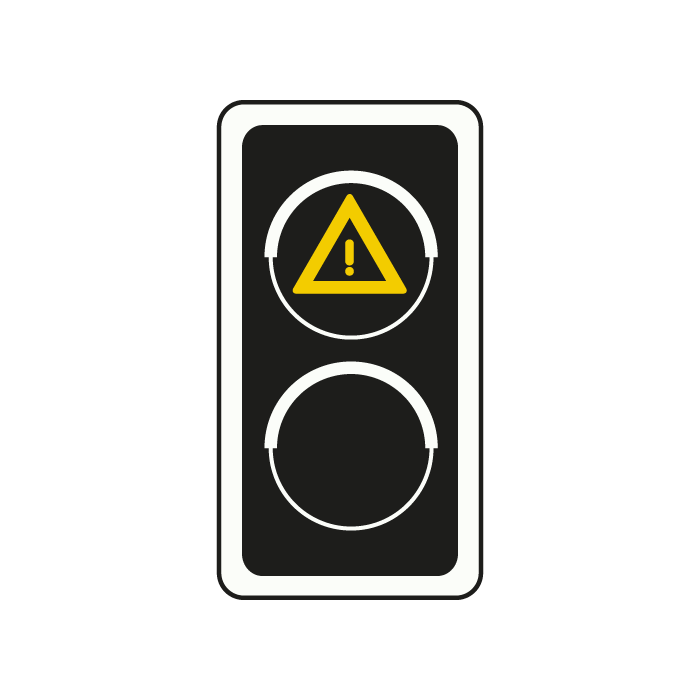
Yellow pedestrian light
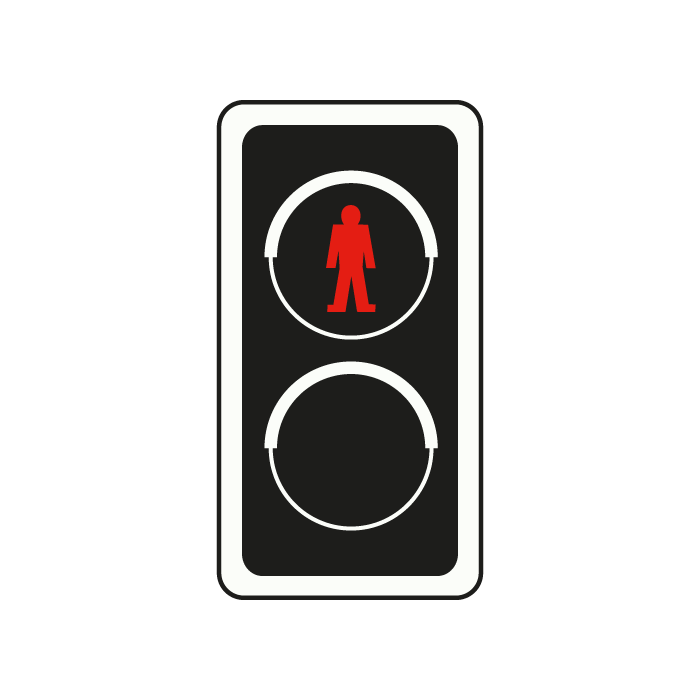
Red pedestrian light
Lane lights
There are the lights on electronic matrix signs. You will find these in more and more places above the lanes of autowegen and motorways. Different signs can be displayed on these signs.
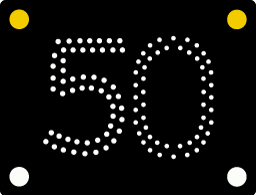
Speed limit
On this lane you may not ride faster than the indicated speed limit. This is not a recommended speed. In addition, it also means that you are allowed to use the lane. In case of a changing speed (for example during a traffic jam) the speed is often combined with flashing yellow lights on the sign.
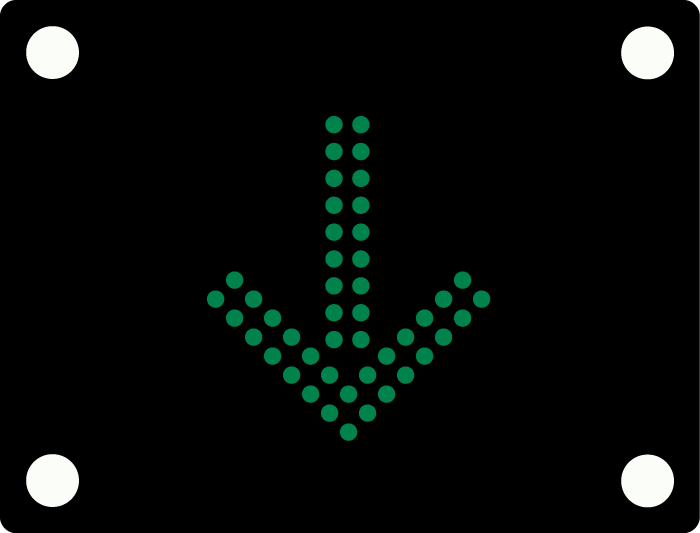
Green arrow
The lane may be used.
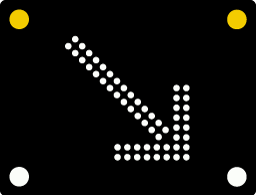
White arrow
Advance notice of a red cross, the lane must be cleared as soon as possible. Often combined with flashing yellow lights on the sign.
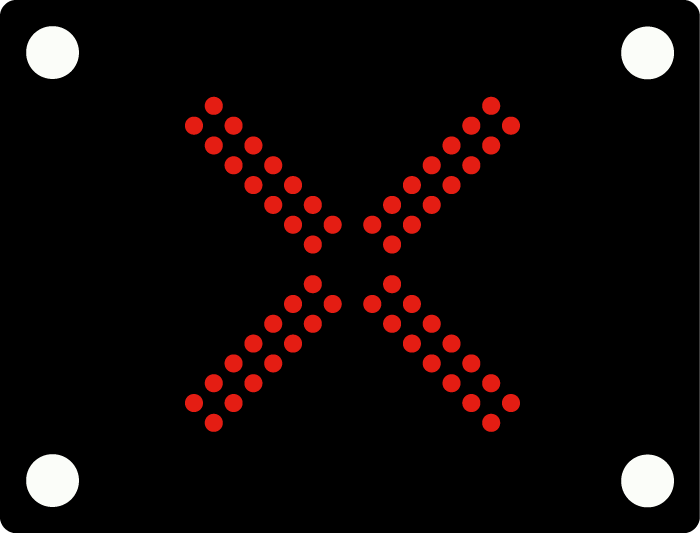
Red cross
Lane may not be used. Except during emergencies. You can view this as a hard shoulder.
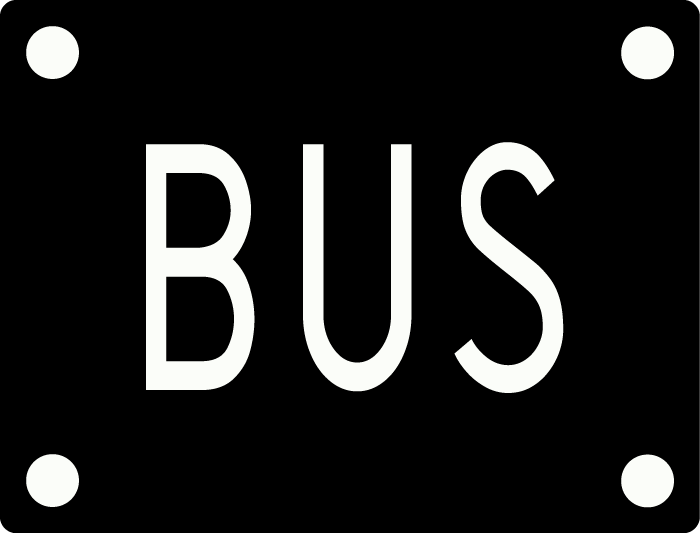
The word ‘BUS’ or ‘LIJNBUS’
The lane may only be used by drivers of a public bus. In case of the word ‘BUS’ it may be used by all bus drivers.
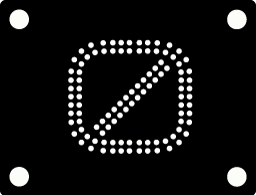
Traffic sign F-9
End of all, on electronic matrix sign, indicated prohibitions. From this point on, the normal rules apply again.
Other (warning) signs
Other signs can also be displayed on electronic matrix signs. Usually these are warning signs. As a result, you as a driver know why the speed limit has been lowered, or why a lane has been closed.
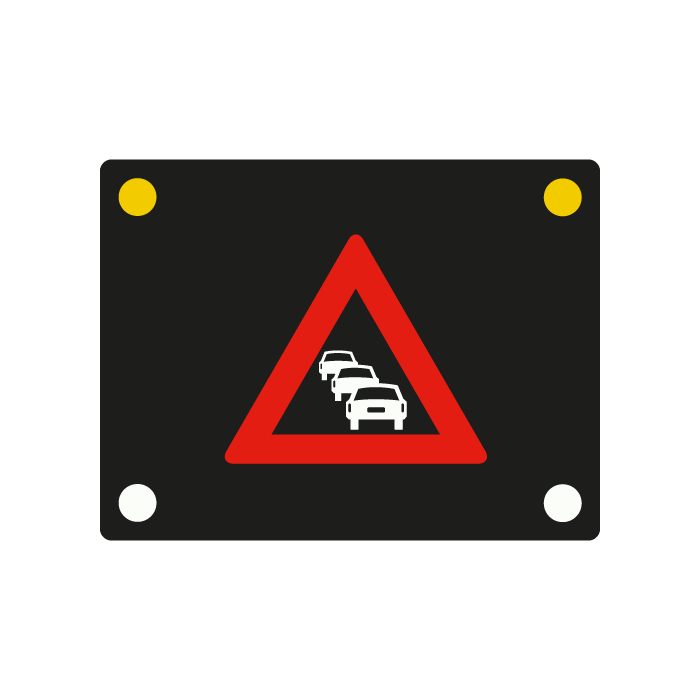
J-33 - Traffic jam warning
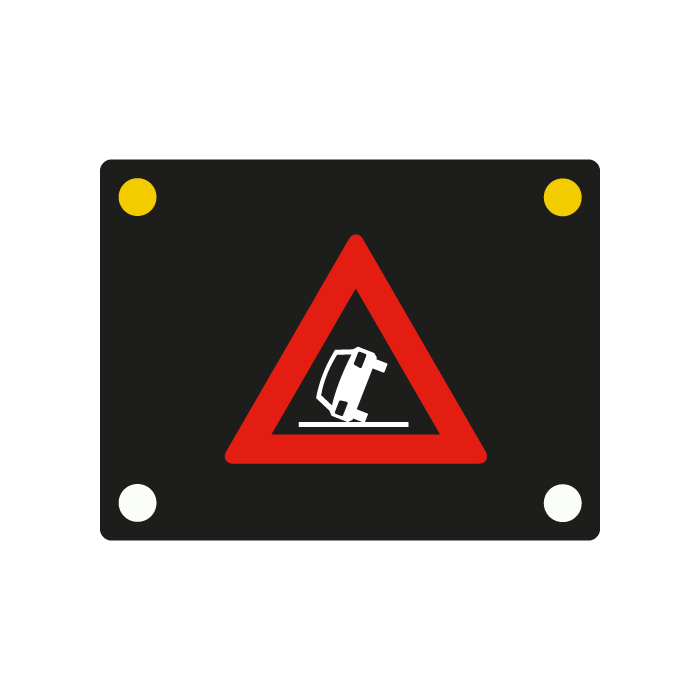
J-34 - Accident warning