

Weather conditions
Weather has a big influence on traffic. For example, rainfall does not only cause a longer braking distance, but it also causes a poorer visibility and a chance of aquaplaning. Some circumstances are clearly present, but in a lot of cases you can be surprised. Especially when you still have little experience. Adjust your speed and following distance in time.
- Rutting
Gullies that appear in the direction of travel on the road surface, due to high road surface stress, for example due to heavy freight traffic. As a result, rutting on motorways appears mainly on the right lane. As a motorcyclist, try and stay out of these ruts.
- Aquaplaning
A layer of water between the running surface of the tyre and the road surface which causes the tyres to have less grip. In that case, the grooves of the tyre (the profile) cannot handle the great amount of water. This mainly occurs at rutting, but it can also occur on roads without rutting. The wider the tyre and the running surface, the bigger the risk of aquaplaning.
Rain
The road surface always becomes a little more slippery from rain, but it can suddenly become extremely slippery if, after a long period of drought, it suddenly starts raining heavily. Built up rubber residue, oil and dirt mix with the water and form a slippery layer over the road surface. But fallen leaves in autumn also become treacherously slippery.
In addition to that, always account for aquaplaning with heavy rainfall, especially when there is a lot of rutting. You mainly prevent aquaplaning by making sure your tyres have good tread and keeping to a lower speed. Do not ride in the ruts.
You can prevent aquaplaning by maintaining a correct tyre pressure, good profile depth and a lower speed. Maintain the correct position and avoid puddles and rutting as much as possible.
The only thing you can do as a motorcyclist, if you do have to deal with aquaplaning is releasing the throttle and keep looking straight ahead. Never start braking! This almost always causes you to fall. Luckily the chance of aquaplaning for motorcyclists is way smaller than for motorists, because the running surface of the tyre is rounder, and the tyre is usually narrower among other things.
Slipperiness due to frost
Wet road sections can freeze over and become extremely slippery in wintry conditions. Mainly road sections that lay in the shadow, become slippery more quickly and stay slippery longer because they are less heated by the sun. But on bridges and viaducts you should also account for sudden slipperiness during frost, because these roads also freeze from below.
At temperatures of 4°C and below you can already encounter slipperiness because the ground can be colder. This is also called ground frost. Slipperiness is treacherous because you cannot always see it beforehand. Always take slipperiness into account at low temperatures by adjusting your speed in bends and at intersections and by maintaining enough distance. Do this by releasing the throttle and try to avoid braking as much as possible. By the way, riding is not advised when it is slippery.
Frost damage
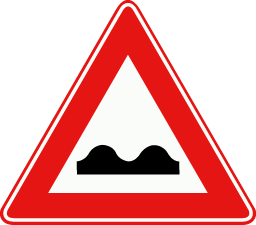
J-1 - Poor road surface
A different problem of frost is the damages it inflicts to the road surface. The water in the asphalt freezes and expands. This loosens pebbles and creates weak spots and eventually holes in the top layer of the road surface. The braking distance on roads with frost damage increases a lot. In addition to that, loose chippings may cause less grip.
Wintry precipitation
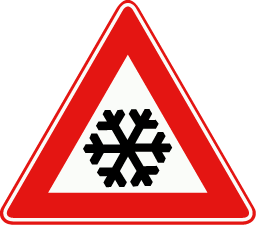
J-36 - Sleet or snow
Besides frost, snow, sleet (frozen rain) and hail also cause slipperiness and thus danger for traffic. Visibility is also reduced during wintry precipitation. Especially during snowfall, it is more difficult to concentrate on the view in the distance, because your gaze is drawn to the snowflakes close by. Riding during snowfall is therefore extra tiring. You can even ask yourself if riding a motorcycle in these conditions is even responsible.
If there is no other way, or if you unexpectedly find yourself in wintry conditions, take a few other things into account besides the slipperiness. For instance, you may not be able to see the lines on the road or certain signs well anymore. Maintain extra distance and ride defensively. Look far ahead, release the throttle in time and never brake abruptly.
Fog
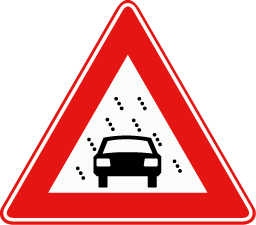
J-35 - Poor visibility due to snow, rain or fog
Fog consists of small raindrops that stay in the air. The visibility can be more or less obstructed. Not only because you cannot see through the fog, but also due to the small raindrops on your visor. A lot of drivers startle when they suddenly enter a mist bank and will brake out of reflex. This is difficult to see due to the fog.
Therefore, during fog, maintain more distance and do not brake unnecessarily. Rather just release the throttle and let your speed ease down.
Make sure you have good lighting but do keep in mind that the rear fog light, if you have one, may only be turned on with a view of 50 metres or less.
Fog: half your speed and double your following distance.
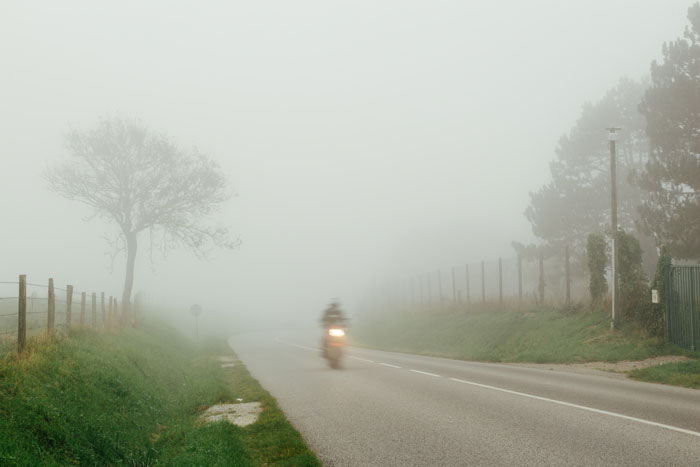
Half your speed and double your following distance when riding in thick fog.
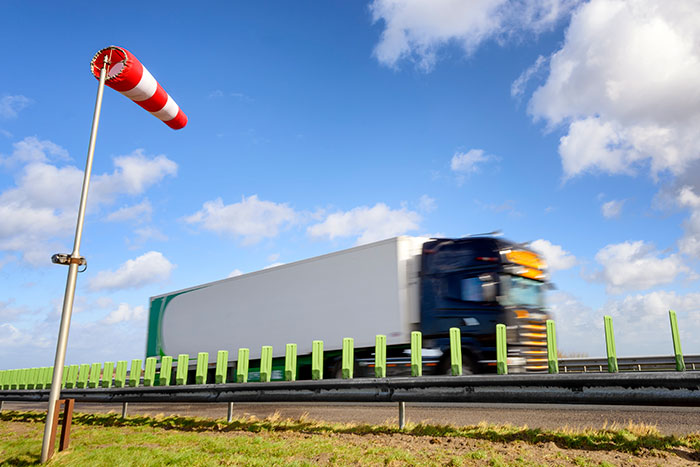
Especially tall vehicles are affected by crosswind.
Crosswind
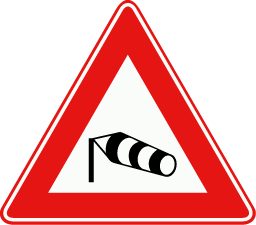
J-31 - Crosswind
Windsocks often occur in areas with an increased risk of crosswinds. The more horizontal the windsock is, the stronger the wind is. In addition to that, windsocks also indicate the direction the wind is blowing. Especially when the wind is transverse to the road, you must account gusts of wind that can influence the stability of your motorcycle.
Because a motorcycle is relatively light, you can suddenly be pushed aside by sudden gusts of wind. Try to anticipate this by timely leaning against the wind. Taller vehicles, such as lorries and trailers, are also affected by crosswinds and can suddenly start swerving. Keep this in mind when overtaking.
Obstacles alongside and on the road, such as lorries, viaducts, buildings and forests, can block the wind. You notice this as soon as you pass them. First the wind falls away, to then suddenly return. If you do not account for this, it could cause you to sway.