

Use of road signs
Because there are many different traffic signs, it is good to know what format there is. And in which way and in which combinations certain signs can occur.
Individual signs
Individual signs only apply to the next intersection. This could be, for example, a sign that indicates a speed limit, or that prohibits you to park on that side of the carriageway. After every intersection the sign must be repeated to maintain its validity.
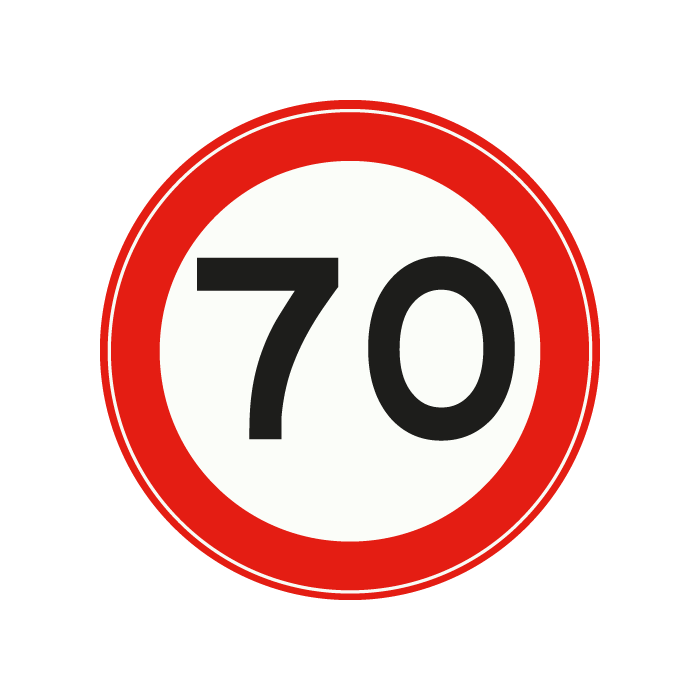
Individual sign A-1 - Applies up to the next intersection or the ‘end sign’.

End sign A-2 - End of the previously indicated speed limit.
For example:
- If you encounter the sign 70 km/h within built-up areas, you may ride with a speed limit of 70 km/h up to the next intersection.
- If this sign is not repeated after the intersection, then the speed limit of 70 km/h expires and the normal speed limit of 50 km/h, that applies in built-up areas, applies.
- If you encounter ‘end 70 km/h’ before the next intersection, then this speed limit will expire from that sign.
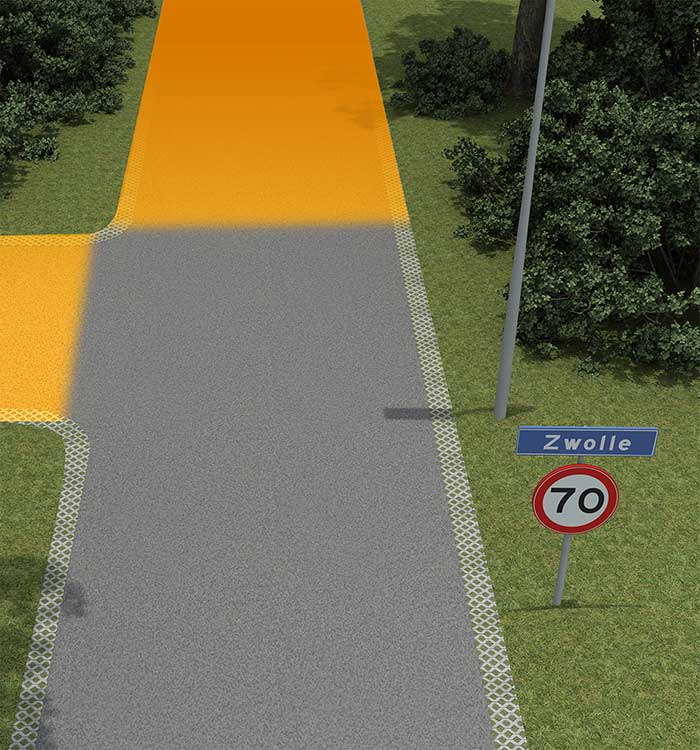
In this situation the sign is not repeated, and you are only allowed to ride 50 km/h on the coloured sections.
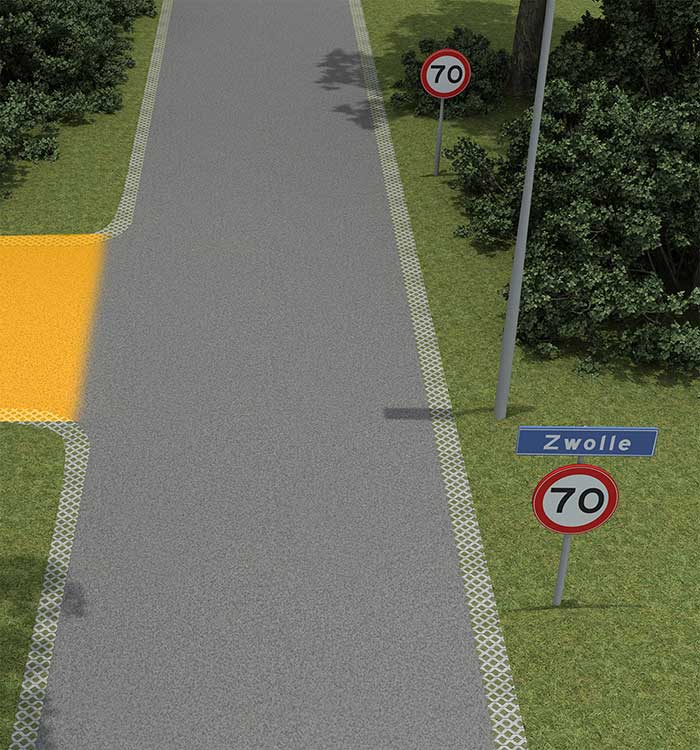
Here, the sign is repeated, and you are still allowed to go 70 km/h after the intersection.
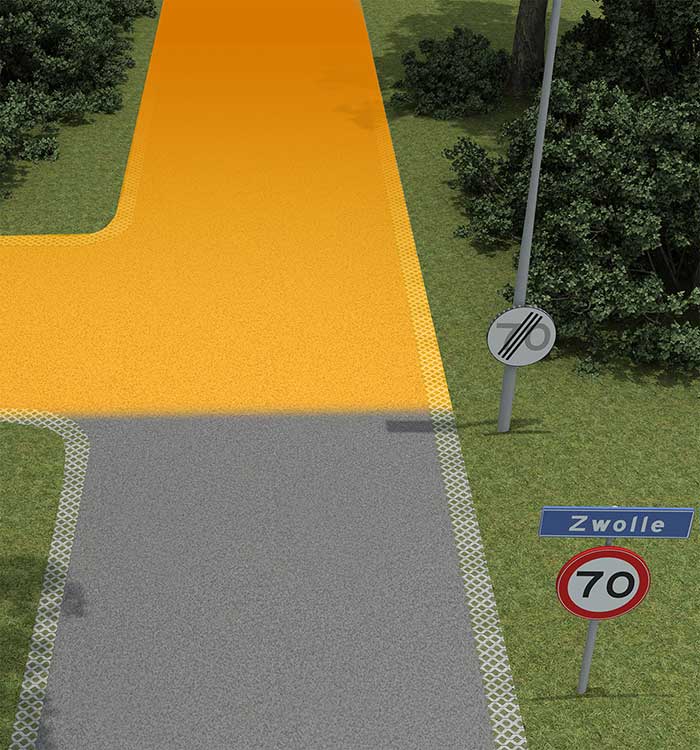
Here, the speed limit of 70 km/h has ended before the intersection due to the sign ‘end 70 km/h’ and you are only allowed to ride 50 km/h in the coloured section.
Zone sign
The effect of a zone sign is different than from an individual sign. The word ‘zone’ indicate that the sign keeps its validity until you leave the zone. This is indicated by the ‘end zone’ sign.
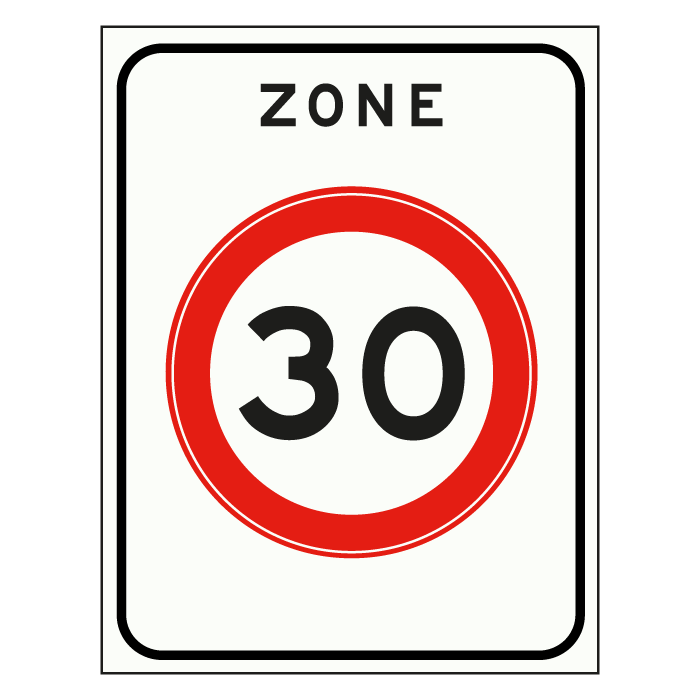
Zone sign A-1 - Applies up to the ‘end zone’ sign.
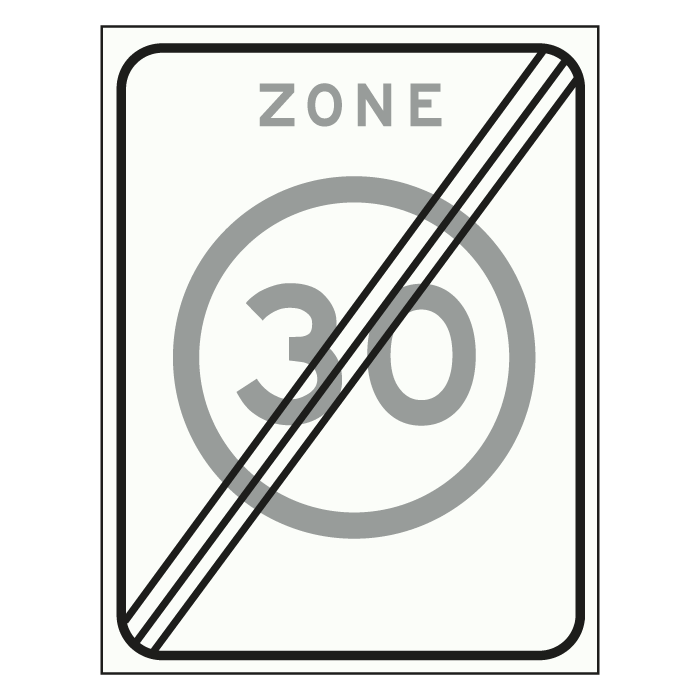
End zone sign A-2 - End of the previously indicated zone.
If the E-1 sign (prohibited to park) is executed as a zone sign, the sign no longer applies to just that side of the carriageway, but for both sides of the carriageway for the entire zone. As with individual E-1 signs, an exception applies to all places intended for parking, such as parking spaces, parking lanes and parking bays.
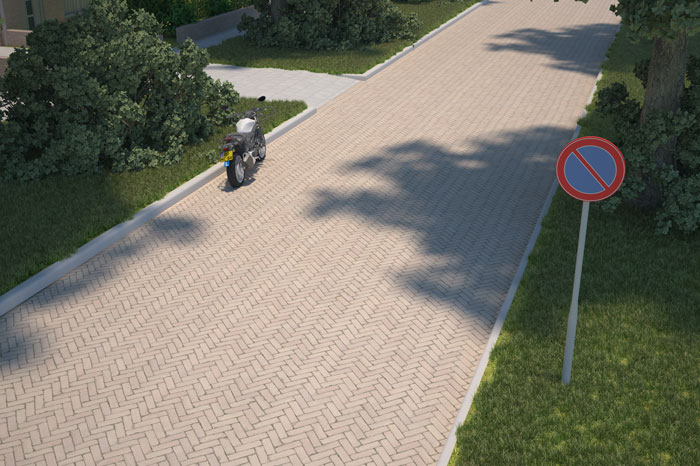
The E-1 sign indicates that it is prohibited to park on the right side of the carriageway. The motorcycle is allowed to be parked on the left side of the road.
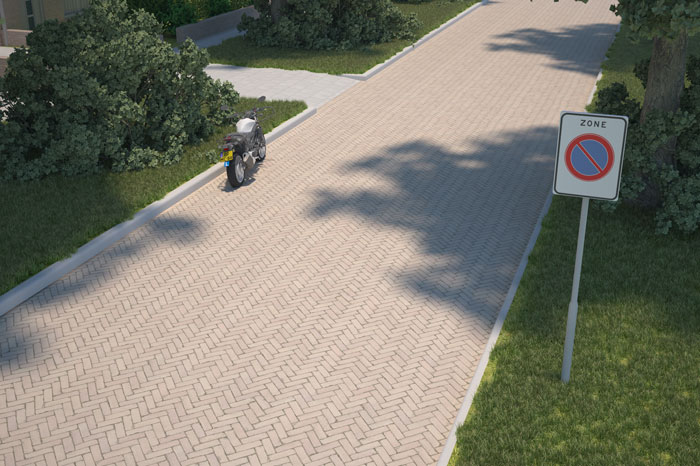
The E-1 zone sign indicates that parking is prohibited on both sides of the carriageway for the entirety of the zone. The motorcycle is not allowed to be parked here.
Supplementary plate
A sign can be combined with a supplementary plate. There can be different things on this supplementary plate:
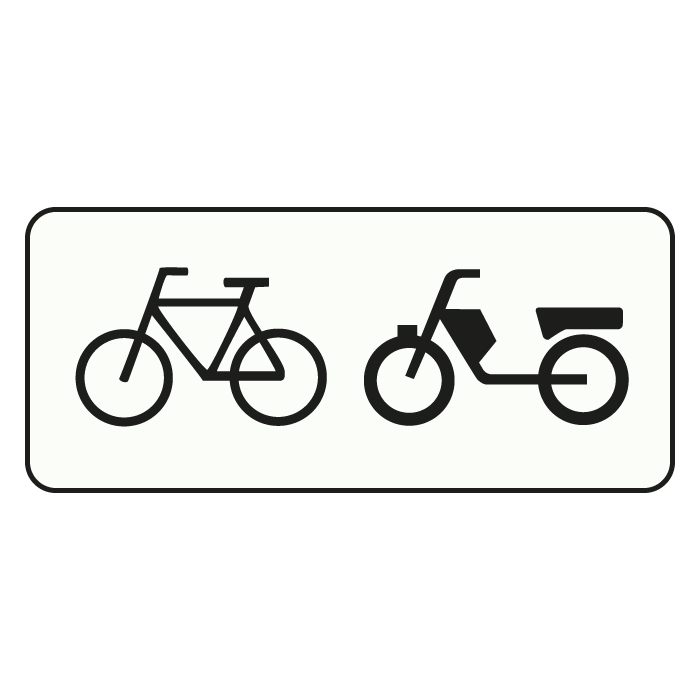
Road users to whom this sign applies.

Road users to whom this sign does not apply.
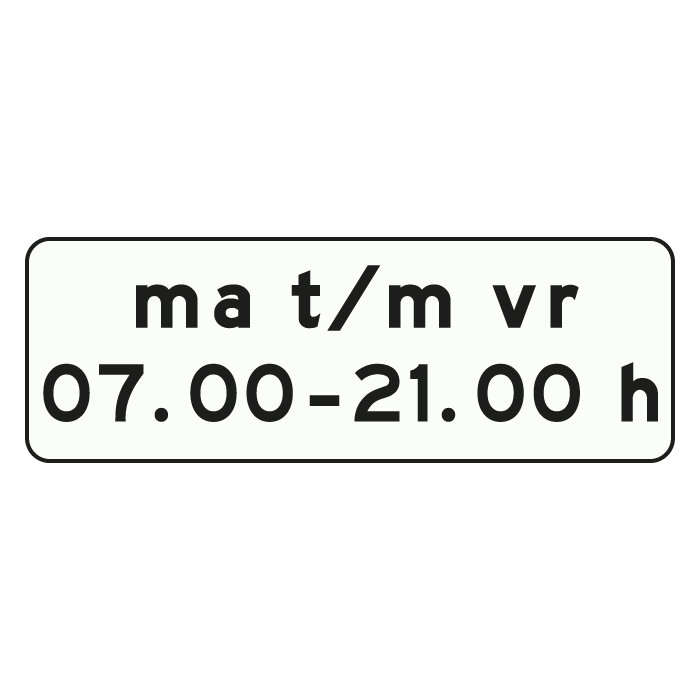
Days or times when the sign is valid or not valid.

Additional explanation of the traffic sign.
All this can be represented by means of texts or pictograms, or a combination of both.
Multiple indicated speed limits
It could be that multiple speed limits apply to one situation. For example, you may normally ride 50 km/h within the built-up area, but there could also be a 30 km/h sign. In that case, the 50 km/h sign expires, and you may only ride 30 km/h.
There are signs that only indicate a speed limit:
A-1 zone sign - 30 km zone
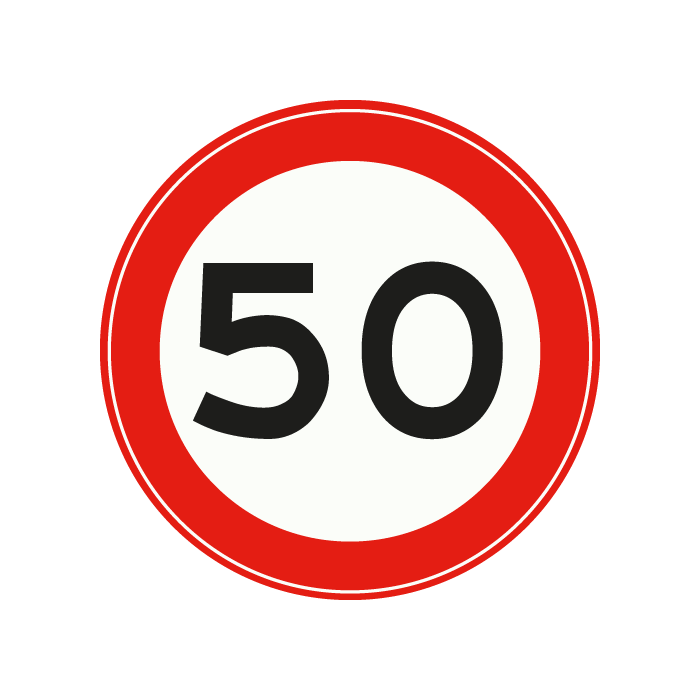
A-1 - Speed limit of 50 km/h
A-1 - Speed limit of 70 km/h
If two of these signs with different speed limits are placed close to one another, the lowest indicated speed limit always applies. It does not matter whether this is an individual sign or a zone sign. This may occur, for example, in case of a temporary lowered speed during roadworks.
There are also different signs that say something about the speed limit, without the speed limit indicated on them. They indicate a road type with a corresponding speed limit.
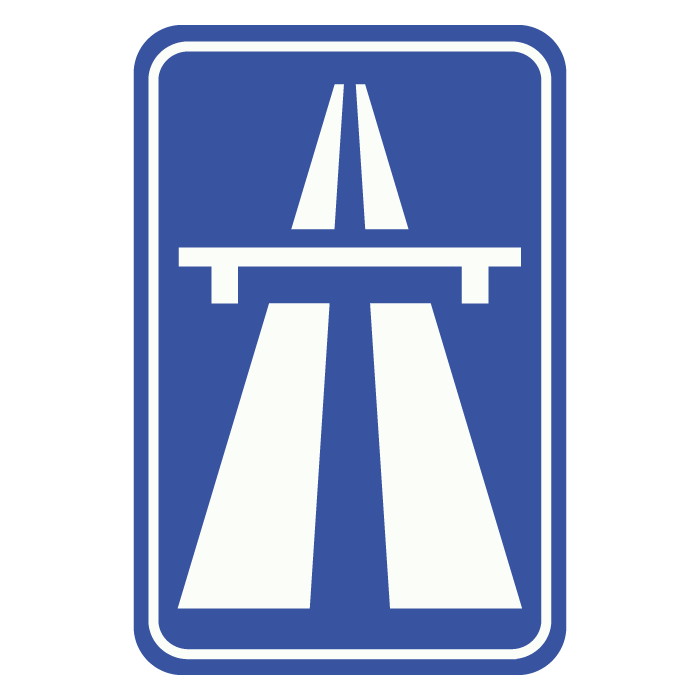
G-1 - Motorway; speed limit of 130 km/h unless otherwise indicated.

G-3 - Autoweg; speed limit of 100 km/h unless otherwise indicated.
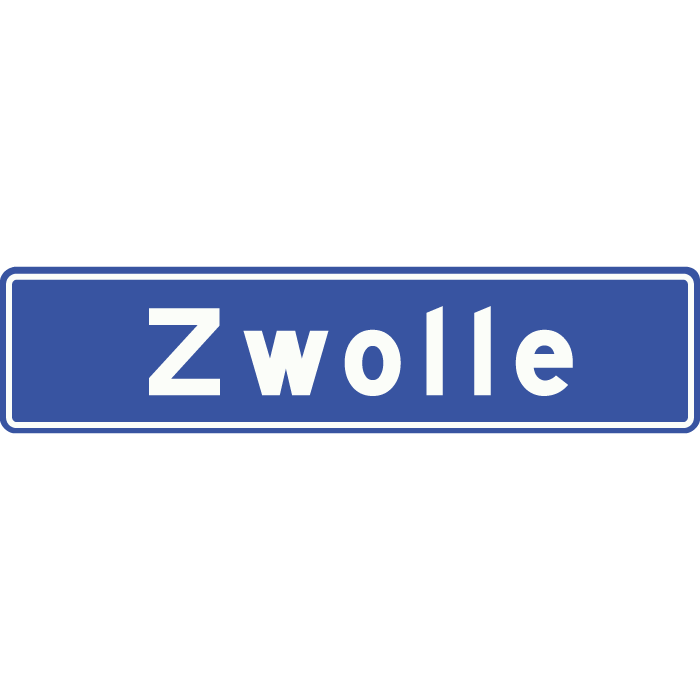
H-1 - Built-up area; speed limit of 50 km/h unless otherwise indicated.
If one of these signs is combined with a sign which does indicate a speed limit, then the indicated speed limit applies. Even if it is higher than the speed limit for this road type (for example, within the built-up area).

Here, the speed limit is 70 km/h.
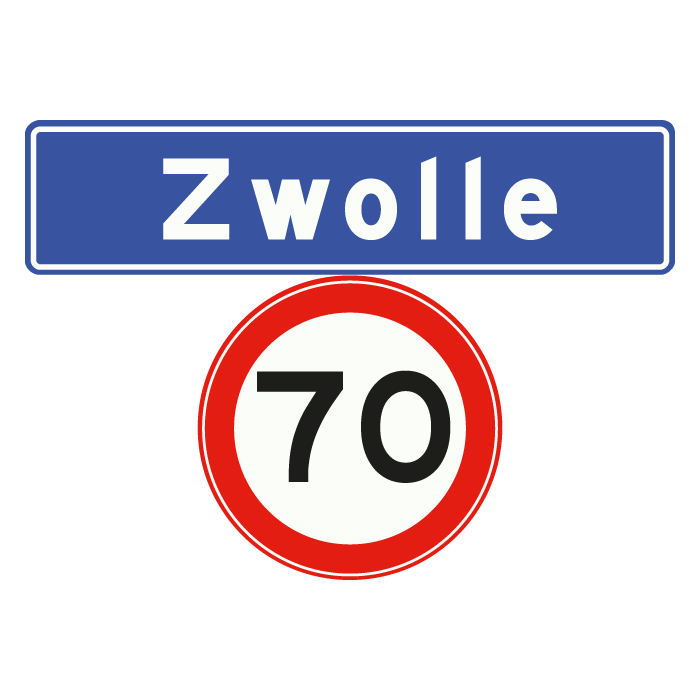
Here, the speed limit is also 70 km/h.
If other signs are combined with each other, the lowest indicated speed limit also applies here. Such as an autoweg combined with a built-up area sign.
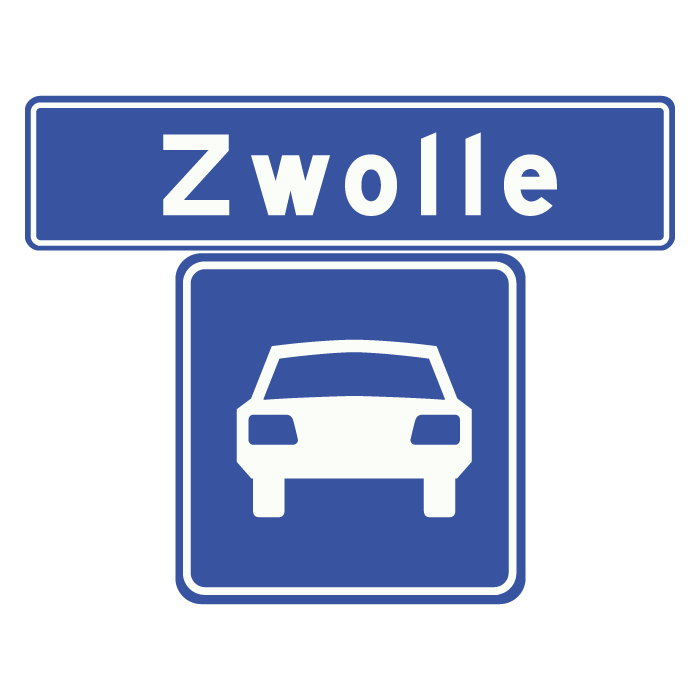
In this situation, the speed limit is 50 km/h.
Of course, a vehicle may never drive faster than is permitted for that type of vehicle. Even if the speed limit on the motorway is 130 km/h, a lorry may only drive a maximum of 80 km/h here.
Recommended speed
Beside the speed limit, a recommended speed can also apply. Recommended speeds are indicated on a square blue sign with a number on it. Sometimes, it is indicated for what situation this recommended speed applies. For example, with a warning sign, or a supplementary plate.
Recommended speeds are safe speeds in good road and weather conditions. In poorer conditions, for example during rain or snowfall, it is wise to ride even slower than the indicated recommended speed. Even the recommended speed can then be too high.
It is not required adhere to the recommended speed, but it is advisable. A recommended speed ends immediately after the situation to which it applies to ends. If the situation is not mentioned, then a sign ‘end recommended speed’ could also be placed.
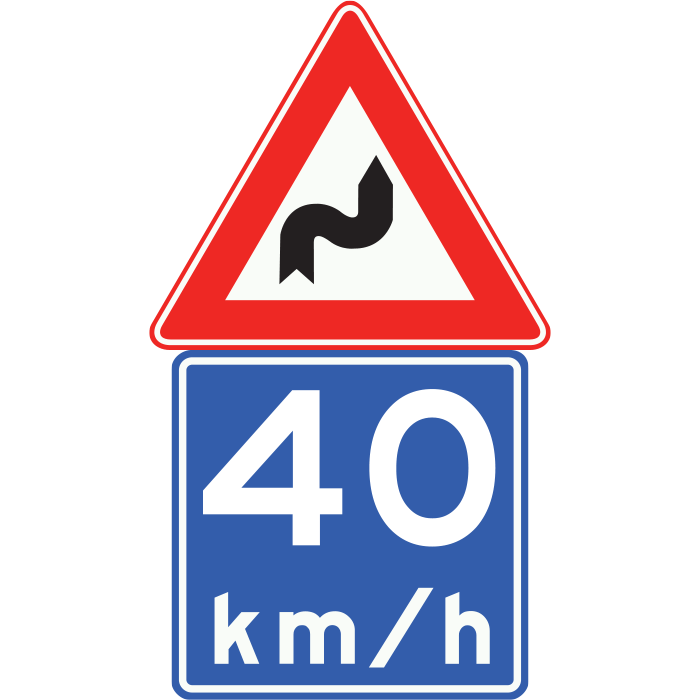
Recommended speed because of an S-bend.
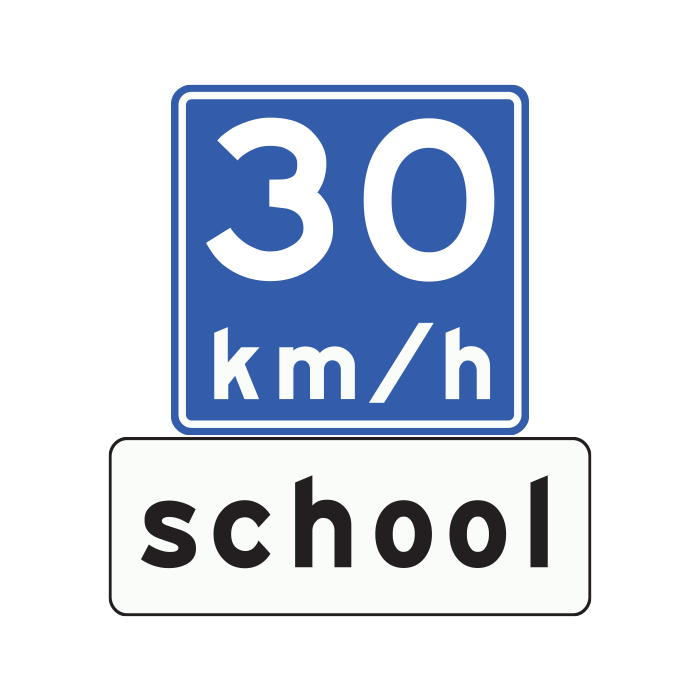
Recommended speed because of a school.
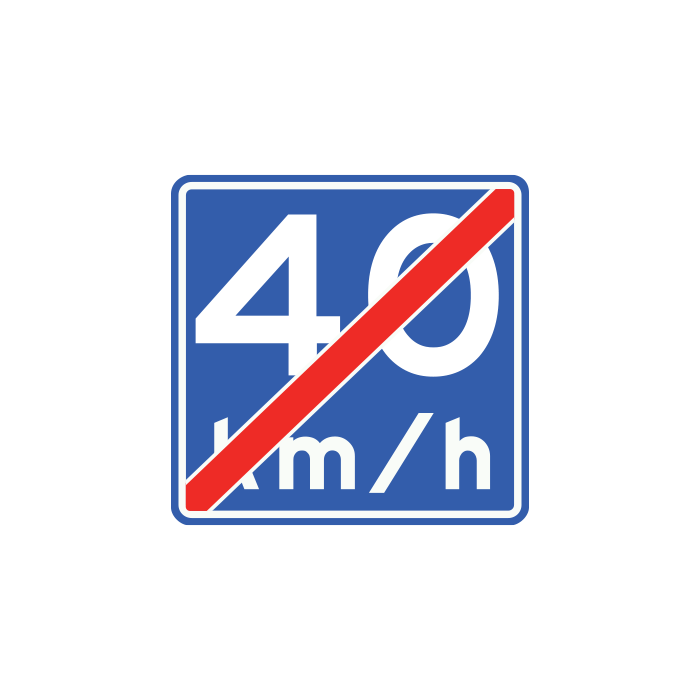
End recommended speed.