

Beaconing
Beaconing includes signs that provide information about the course of the road and point you should pay extra attention to.
Hectometre signs
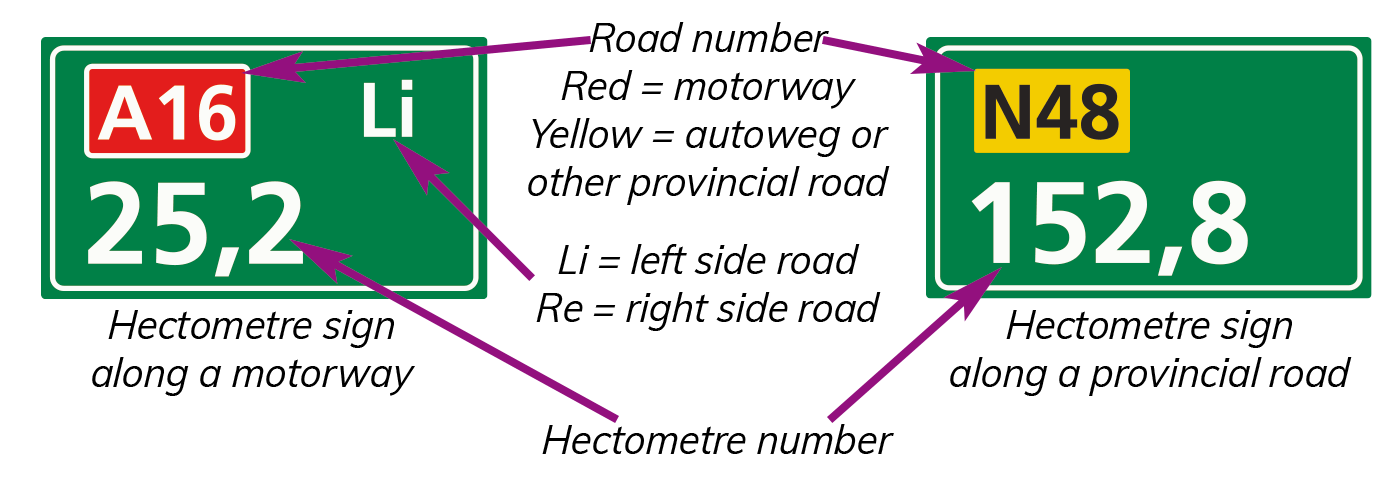
Hectometre signs are alongside motorways, autowegen and bigger provincial roads. They are meant to quickly see where you are. This can be vital in case of an accident. In that case, you can communicate to emergency services where they need to go. Hectometre signs are placed one hectometre apart. So, one sign every 100 metres. The signs are numbered, this hectometre number indicates the distance in kilometres from the beginning of the road.
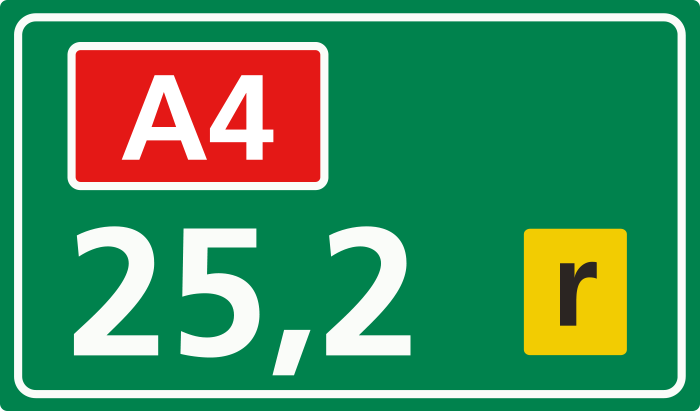
In addition to this information, hectometre signs can also be provided with a letter in the bottom right corner. This means that you are riding on an acceleration or deceleration lane of a motorway or autoweg, and not on the main carriageway. It is important to also pass on this information to emergency services in case of an accident.
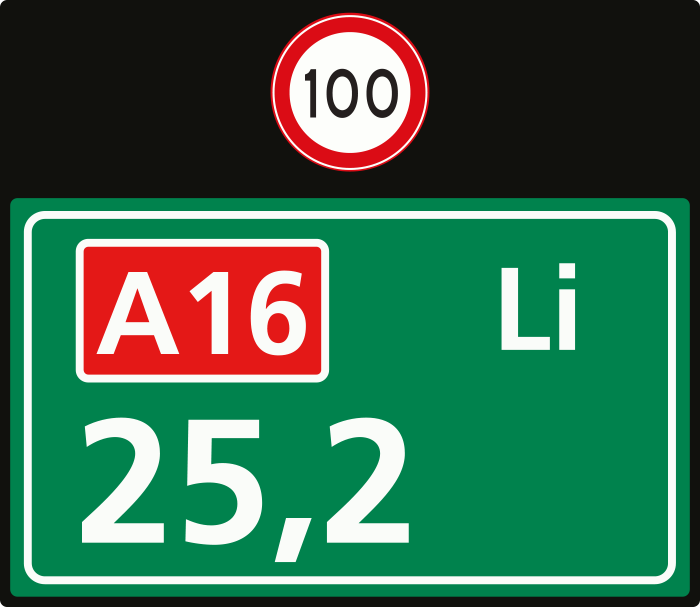
Alongside motorways or autowegen, the speed limit is often placed on top of the hectometre signs. Do keep in mind that it does not apply if a different speed limit is indicated next to or above the road with normal or electronic matrix signs.
Exit signs and chevron signs
If you are riding on a motorway or autoweg, it is important to be able to see where the deceleration lane ends, or where roads split up. After all, you have to decide about where to go well before then. That is why there is an ‘UIT’ (exit) sign placed at the end of a deceleration lane and a chevron sign a fork of two equivalent flow roads.

Exit sign - Exit of a motorway

Exit sign - Exit of an autoweg
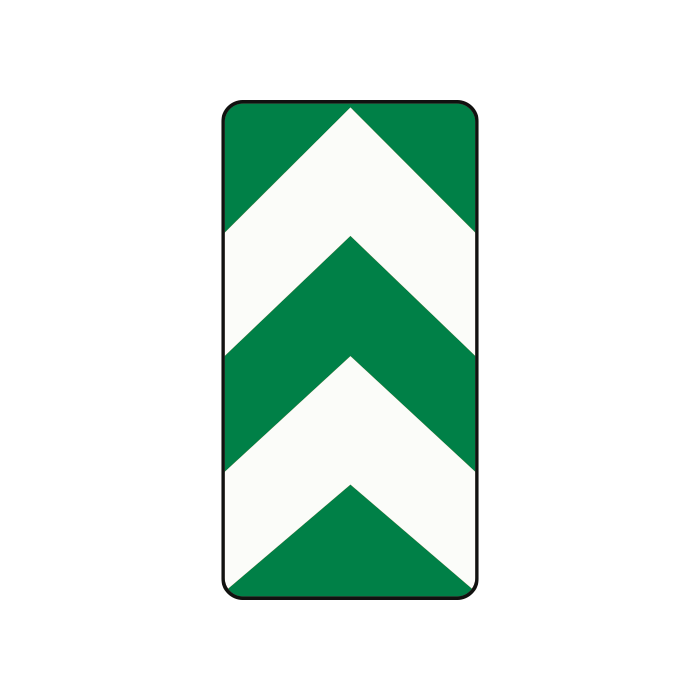
Chevron sign - Fork of equivalent flow roads (the fork of a motorway or autoweg)
Missing hard shoulders and shortened acceleration lanes
There is a hard shoulder alongside the motorway. In some places the hard shoulder can be temporarily narrowed or even completely gone. For example, under viaducts, on bridges or in tunnels. Because you can no longer swerve to the right, it is indicated by a sign with diagonal black stripes.
If the acceleration lane is shorter than normal, it is also indicated by a sign. A short acceleration lane is often the result of a narrowed or absent hard shoulder, or roadworks. In the last case, the sign will often be yellow.
If there are lay-bys instead of the hard shoulder, then these are sometimes indicated by the lay-by sign. Two versions exist. You can find these, for example, alongside provincial roads such as 80km roads and autowegen.
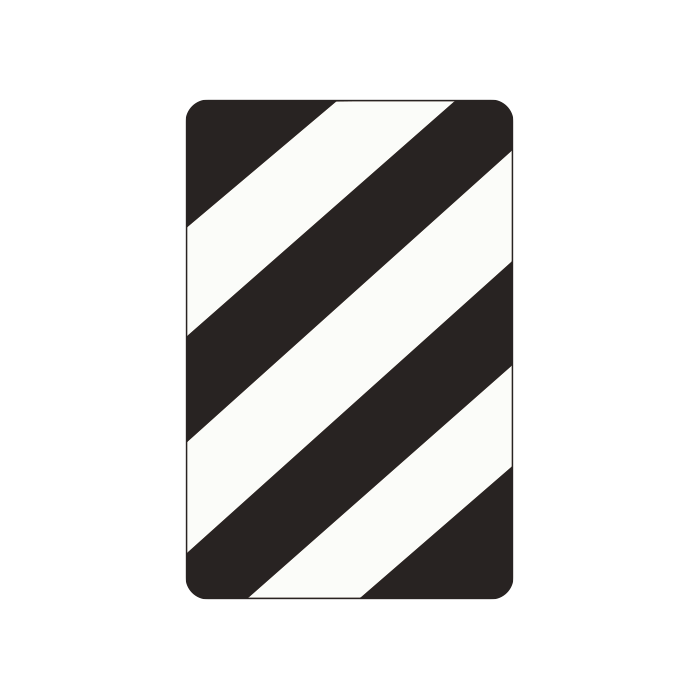
End or narrowing of the hard shoulder
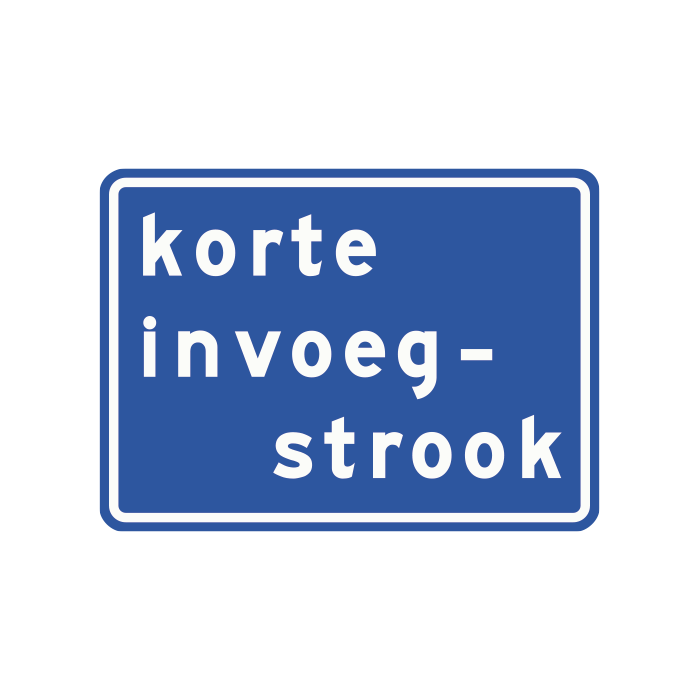
Shorter acceleration lane (shorter than 200 metres)
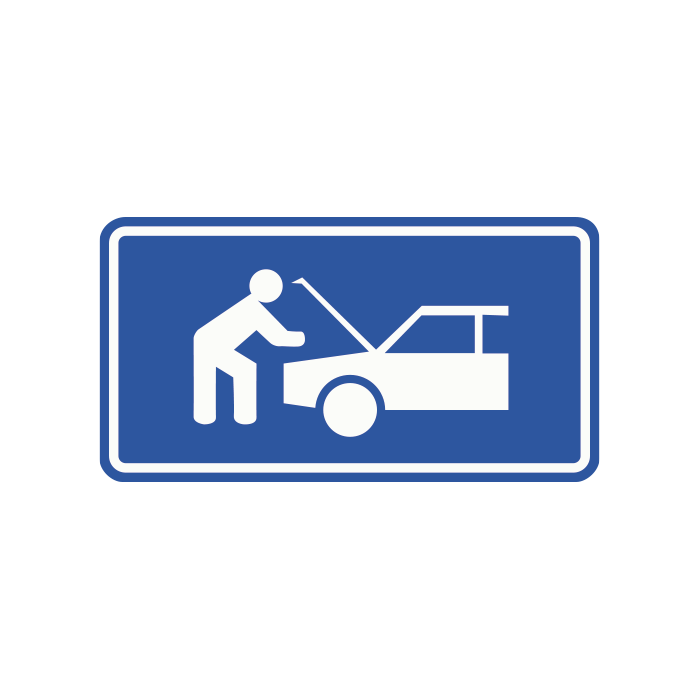
Lay-by - Only use in case of emergency
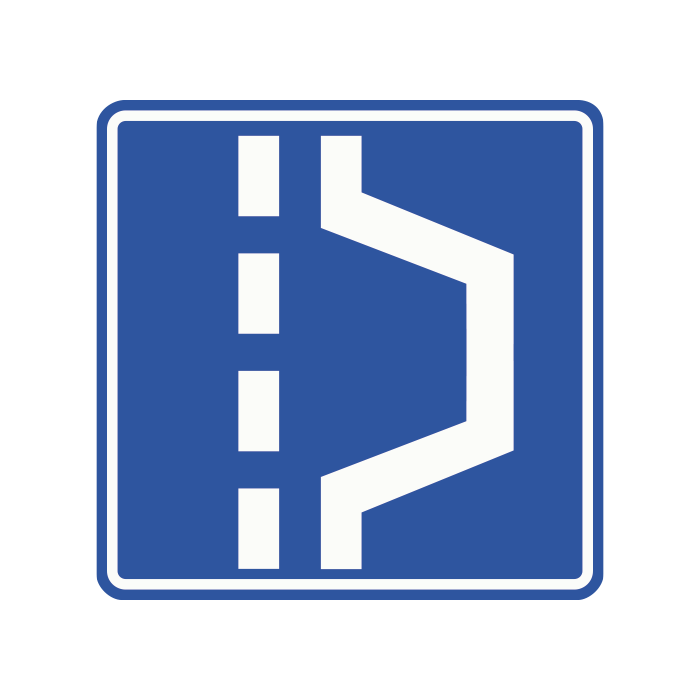
Lay-by - Only use in case of emergency
Level crossing and bridge markings
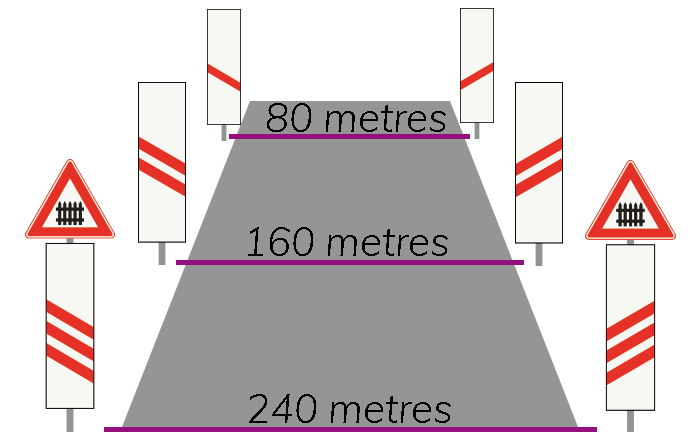
To timely indicate a level crossing or bridge, signs are placed alongside the road that indicate in about how many metres you can expect the level crossing or bridge. The number of diagonal stripes on the sign indicates how many metres you are removed from the level crossing. Each stripe represents 80 metres.
Reflector posts
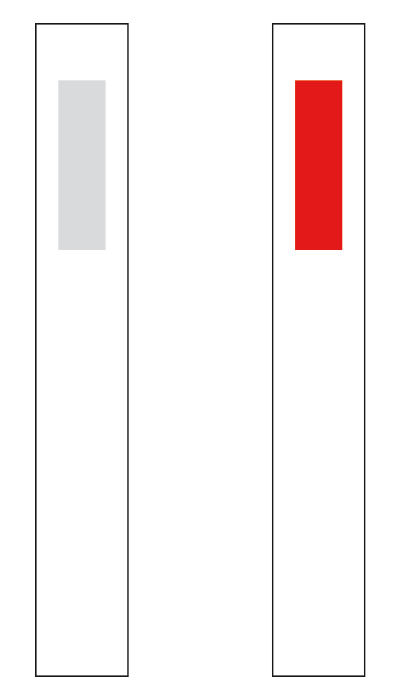
Reflector posts are meant to indicate the verges and edges of the road. By looking at these posts you can see bends earlier when it is dark. On the right side of the road are posts with red reflectors. On the left side of the road are posts with white reflectors.
You can remember this by remembering that on your side of the road (the right side) you will mainly see red rear lights. On the left side of the road, you will mainly see the white headlights of oncoming traffic.
Bend signs and barriers
You can recognise sharp bends and the end of a road by the bend signs and barriers. On bend signs, red arrows indicate which way the bend goes. These can be single or double arrows.
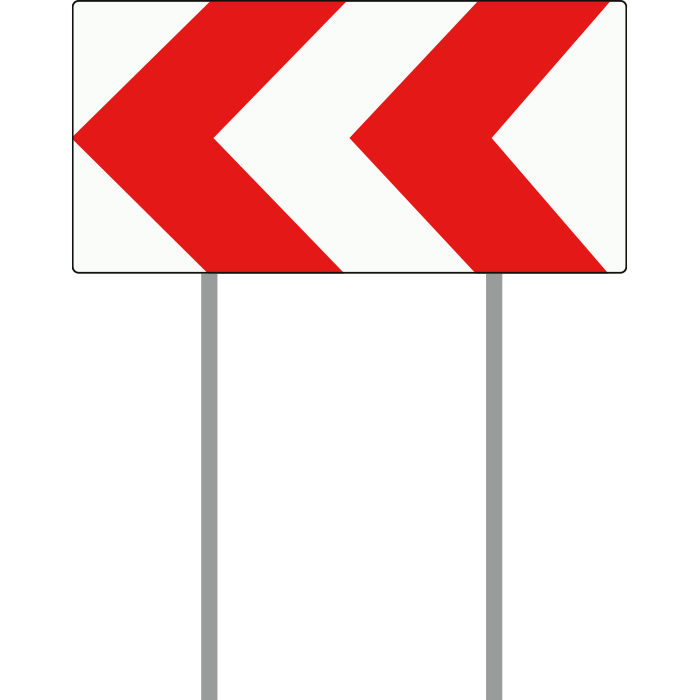
Bend to the left
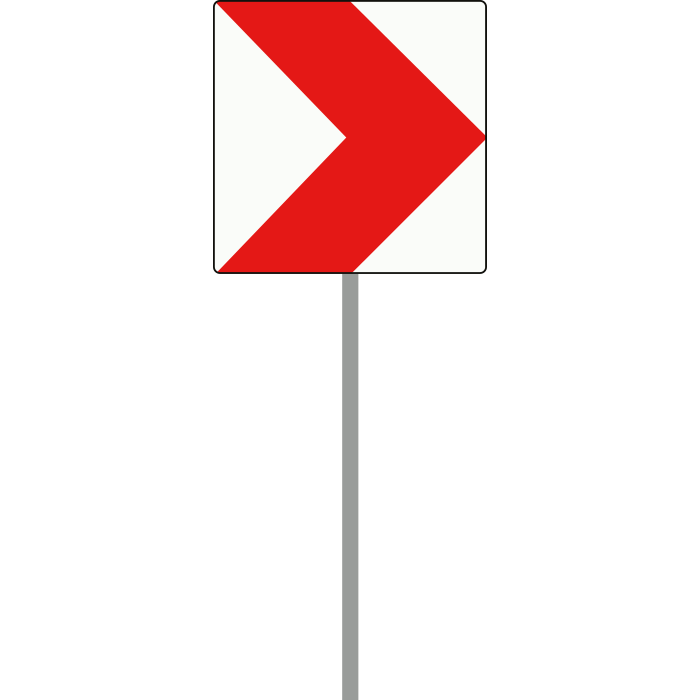
Bend to the right
At T-junctions or sharply angled bends, the barriers are provided with red arrows from which you can see which way you can go. These signs can also be single or double.
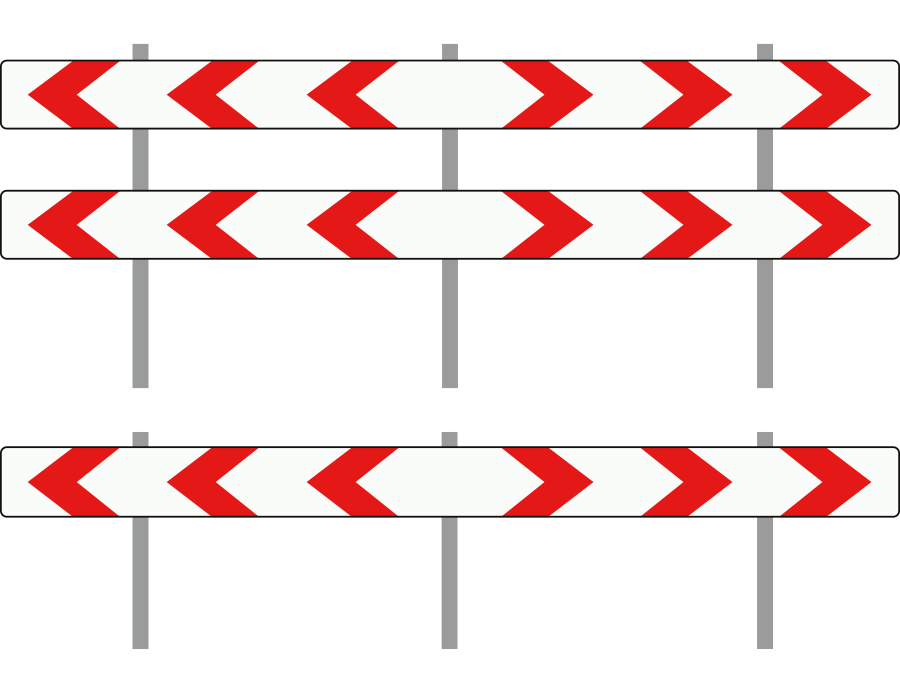
T-junction
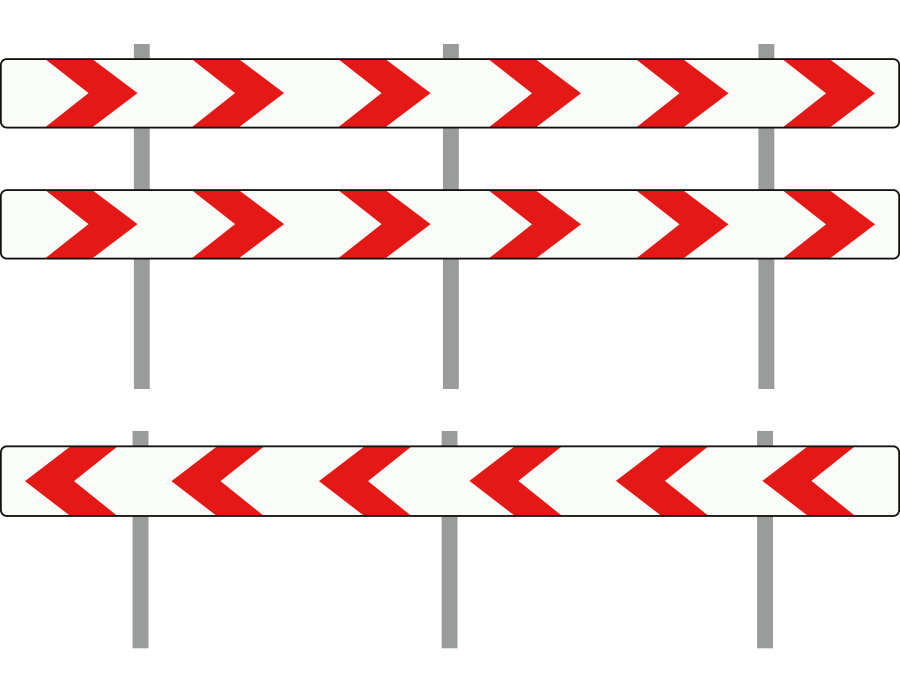
Sharply angled bend to the right (top) or left (bottom)
If a road ends completely, or if it is temporarily closed, then the barriers are provided with red areas instead of arrows.
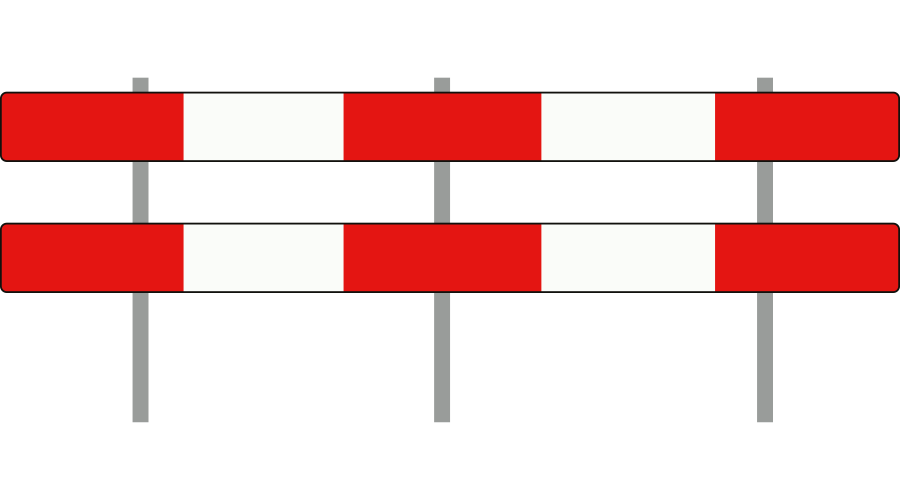
Signage
To find your way more easily in unfamiliar areas, there are several signs that can help you. The signs ‘Doorgaand verkeer’ (through traffic) point you to the through area roads. The signs P-route or P-ring point you to parking areas that are usually on the edge of the city centre. The signs that indicate an alternative route (with a U and a number), are fixed signs. As soon as there are traffic jams or closures on a flow road, the traffic information service can indicate via which alternative route you can go to avoid these traffic jams or closures. You will therefore find these signs in places where this type of problem occurs more often.
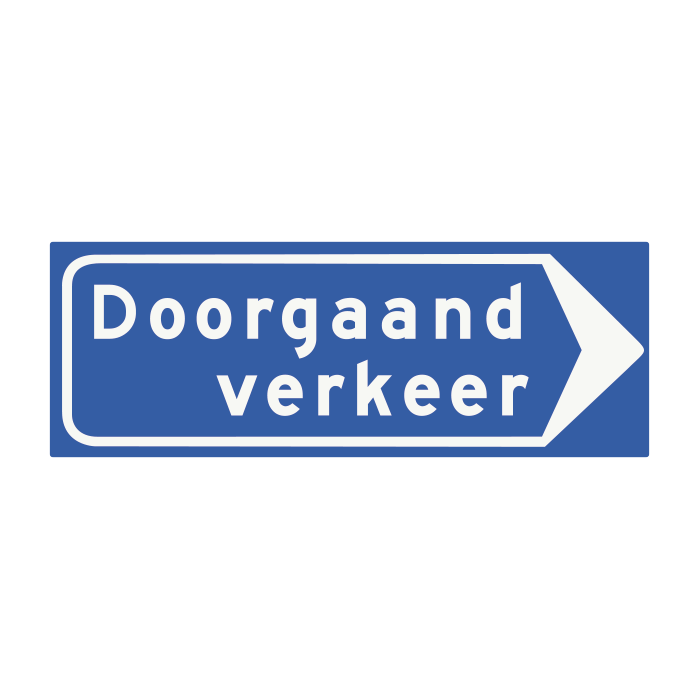
Route motorised through traffic; follow arrow
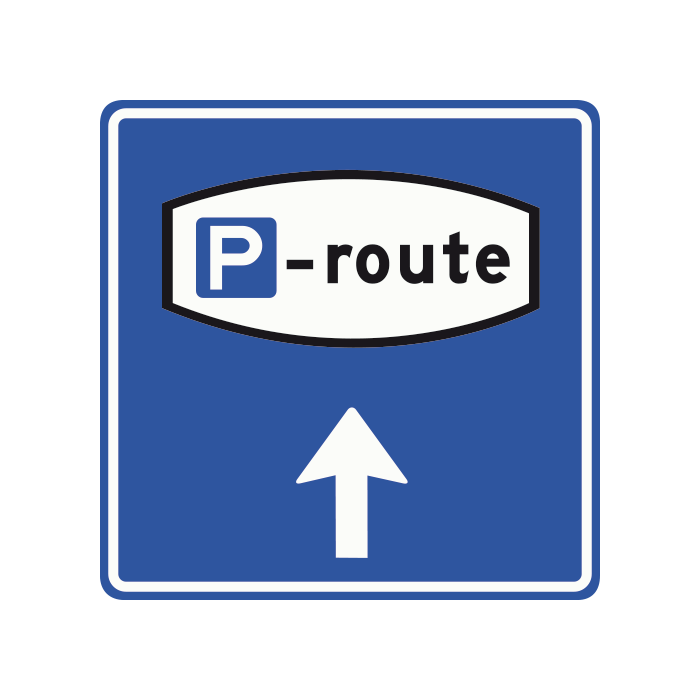
Parking area; follow arrow
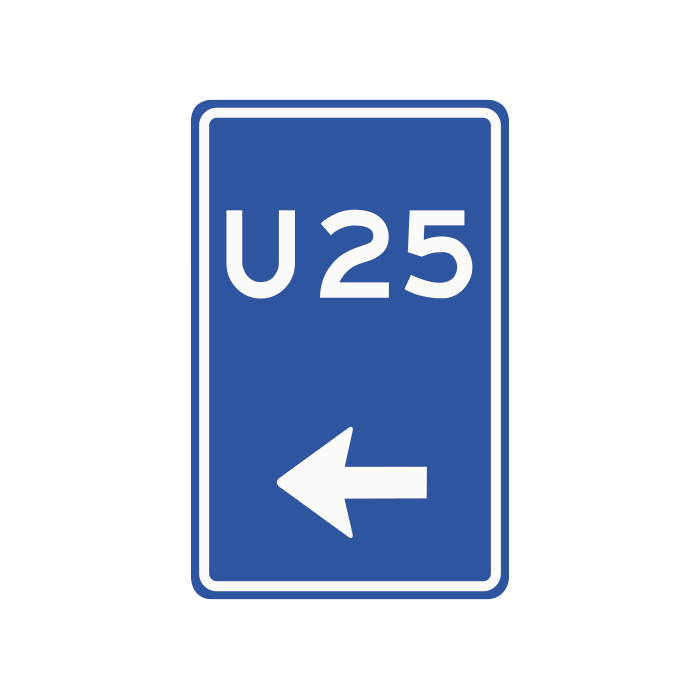
Alternate route; follow arrow
Yellow signs are always temporary signs, for example during roadworks. They can indicate that it is best to follow a certain number or letter to reach a city or village.
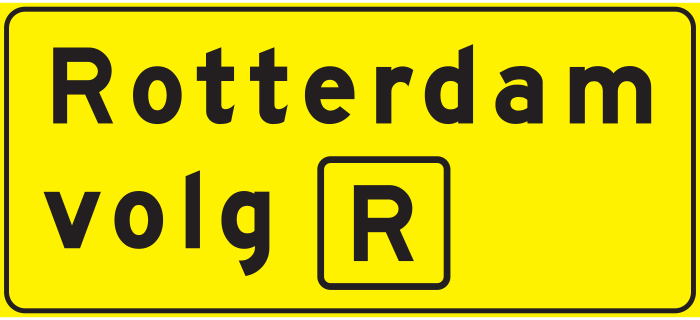
Information about the detour route to follow
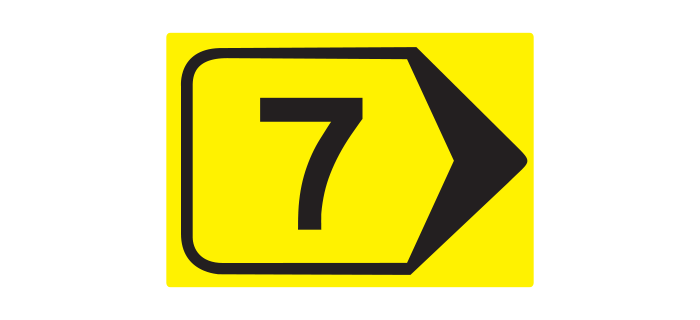
Indication sign on the detour route

Detour route (not mandatory)
Dynamic route information panel (DRIP)
A DRIP is placed alongside the road and shows traffic information to drivers. The purpose of a DRIP is to improve traffic flow and reduce traffic jams, among other things. There are several messages that can be displayed on a DRIP, such as:
- current travel times or delays on the route;
- parking information such as free spaces;
- unforeseen circumstances such as traffic jams (marked in red), road closures, accidents, detours, extreme weather conditions or bridge openings;
- information during events, such as routes and parking facilities;
- national or regional messages or announcements, such as campaign texts.
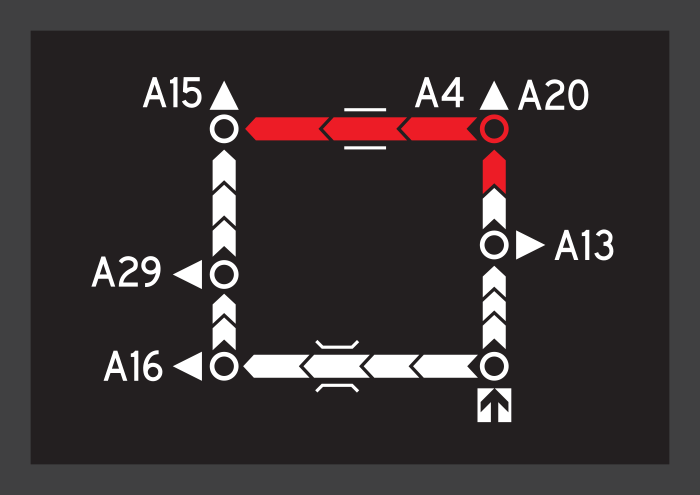
This DRIP indicates how many traffic jams you encounter on the possible routes.
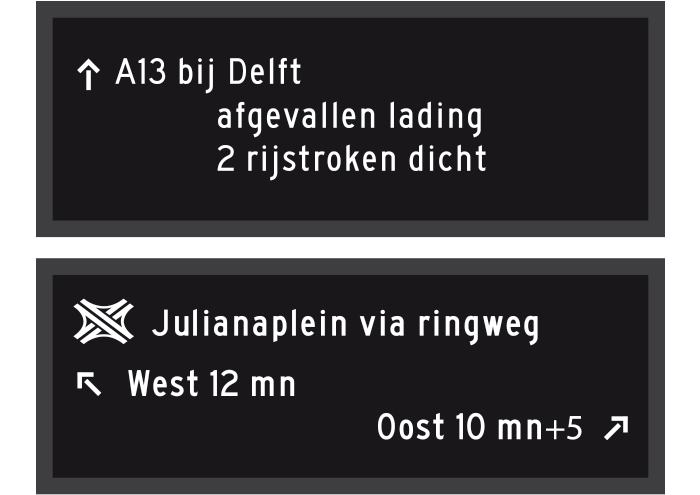
The upper DRIP displays information about an accident. The lower DRIP indicates the normal travel time and how much additional travel time you should expect, depending on which route you take.

When no messages are displayed on a DRIP, it is normal to display a dot (interference dot). This allows a road user to see that the panel is in use and not out of order.
As space is limited on a DRIP, abbreviations and pictograms are used. The following abbreviations are used for this purpose:
| minutes | min | junction | knp |
|---|---|---|---|
| hour | h | intersection | krp |
| direction | ri | alley (laan) | ln |
| north | N | square | pln |
| east | O | street | str |
| south | Z | boulevard | blvd |
| west | W | tunnel | tnl |
| kilometre | km | road | wg |
City names can also be abbreviated. For example, Utrecht is shortened to Utr and Rotterdam becomes R’dam.
When a route is shown it can be provided with symbols (such as a bridge or a tunnel) or a red colour to indicate a traffic ja.
Symbols on signs
Just like on a DRIP, symbols can also occur on signs. The most important ones are explained below:

Junction

Exit

Viaduct/bridge

Tunnel

Airport

Business park
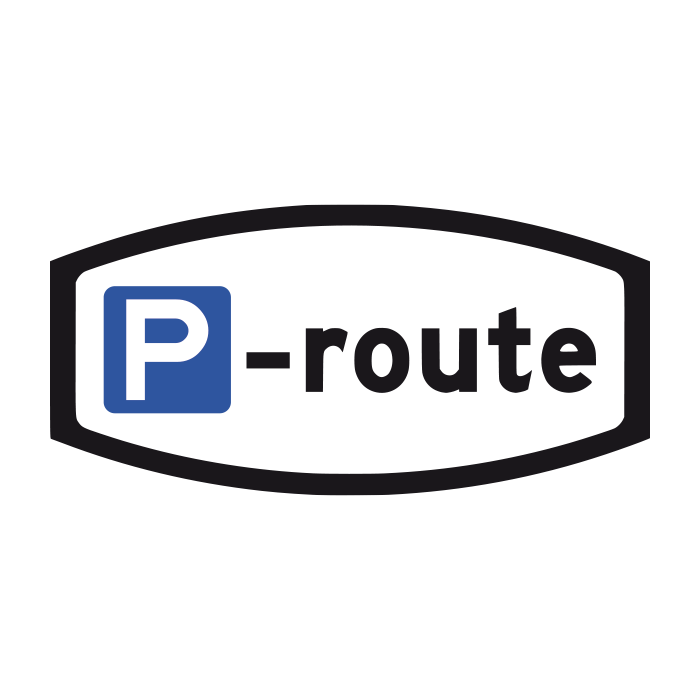
Parking route

Ring road (bypass around the city

Parking and traveling (railway station)

Hospital