

Special vehicles - Trams, trolley buses and special transport
Trams
A driver of a tram also has a few special rights in traffic:
- On equivalent intersections, trams may always go before other road users.
- When turning off, a tram may go before other road users.
However, the driver of a tram must adhere to the traffic signs and markings on the road surface. For example, a tram driver must wait for a pedestrian wanting to cross at a pedestrian crossing. The tram driver must also give way to intersecting drivers on a priority road.
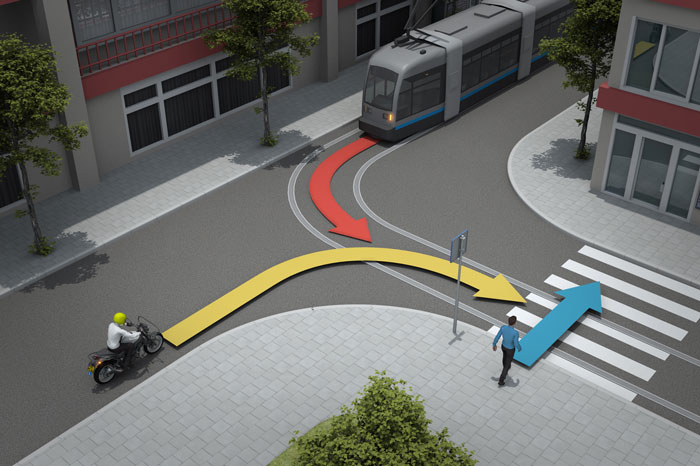
The driver of the tram does not have to give way to the motorcyclist but does have to give way to the pedestrian.
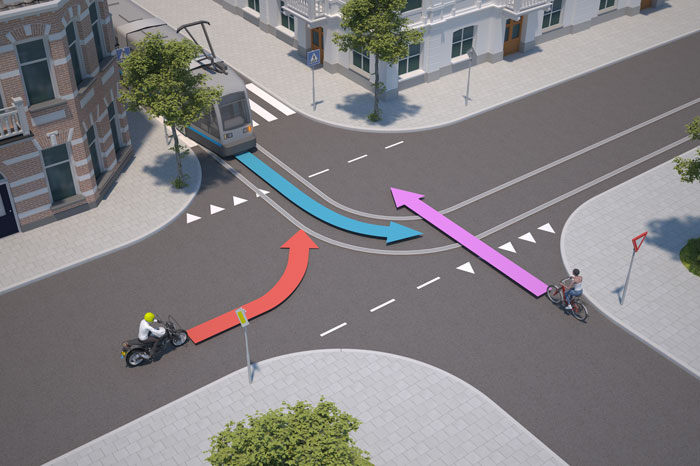
The driver of the tram must give way to the motorcyclist, because they are riding on a priority road. It does not have to give way to the cyclist.
Trolley buses
A trolley bus is a public bus that is electrically powered by means of electricity cables above the road. They do not run on tracks but, just as a public bus, on the road. That is why they do not fall under rules for trams. Instead, they follow the rules of public buses. They have fewer rights than a tram, but you do have to give way to them if they indicate to leave a bus stop within the built-up area.
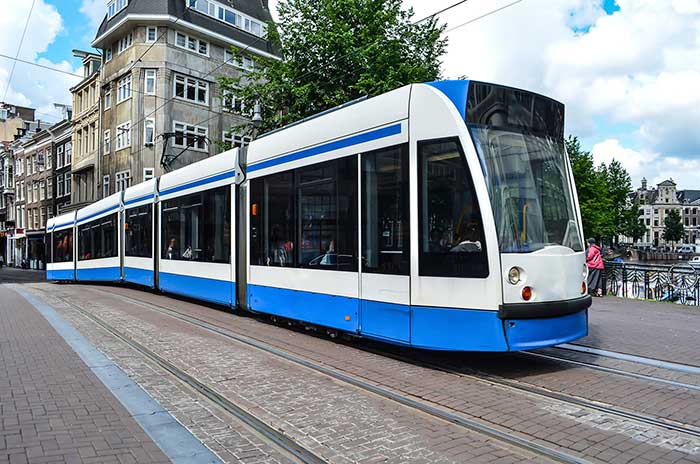
Drivers of a tram have special rights in traffic. For example, they may always go first on equivalent intersections.
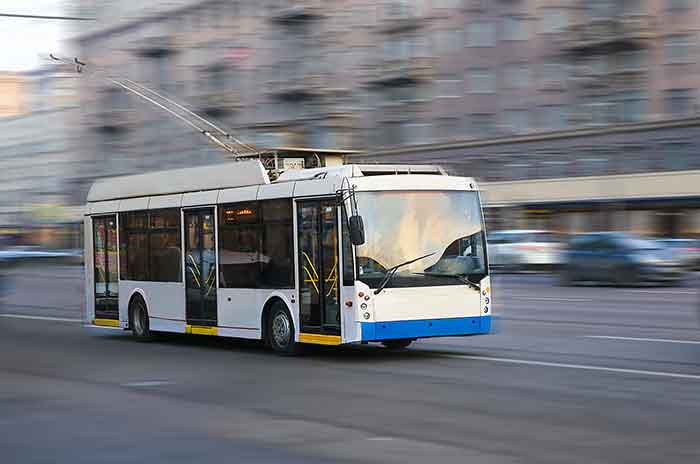
The driver of a trolley bus follows the rules of public buses and does not have as many special rights as a tram driver.
LZVs and special transport
In addition to normal lorries, there are also bigger lorries. These are called Long Heavy Vehicles (LZV) and are mainly intended for transport over motorways.
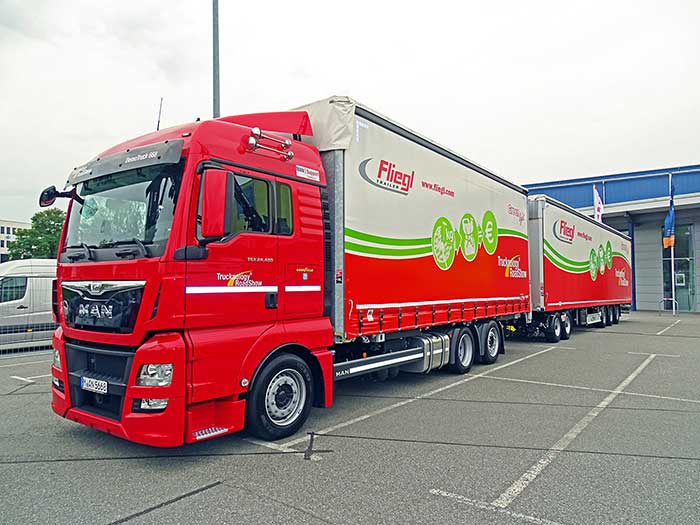
LZVs are pretty long and are not allowed to drive everywhere.

They can be recognised by these marking signs.
Normal lorries are 16.5 to 18.75 metres long and weigh a maximum of 50 tonnes (50,000 kg). LZVs may be a maximum of 25.25 metres long and weigh a maximum of 60 tonnes (60,000 kg).
They can be recognised by a warning sign on the rear with the text: ‘Let op! Extra lang.’. (Note! Extra long.). This is mainly important to know if you want to overtake them. Due to the increased length, the overtaking manoeuvre takes longer.
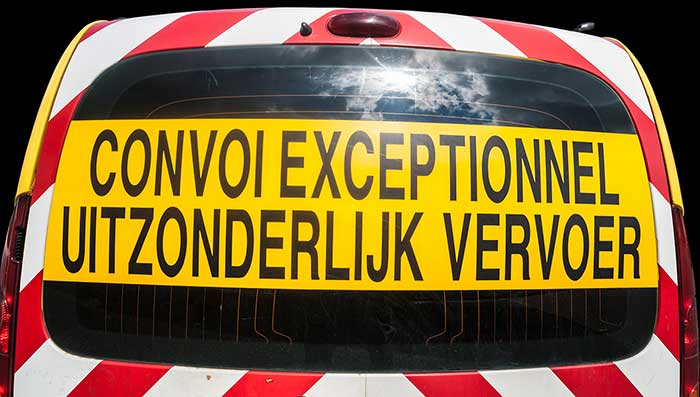
Big transports are often guided by extra vehicles.
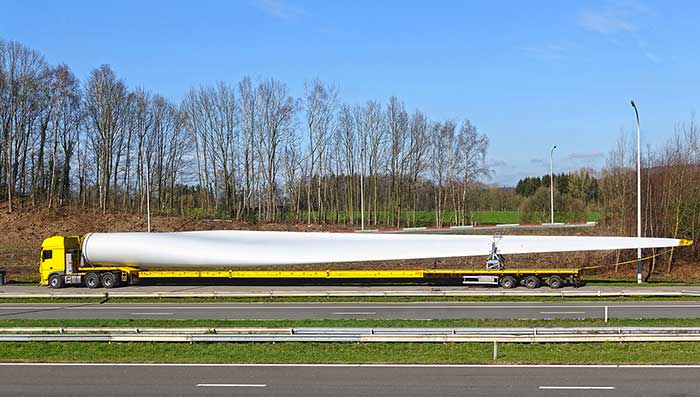
Big transports can be extra long, such as this one, but also extra wide. Or both.
When something extra big or extra heavy needs to be transported, then permission must be requested in advance. These transports are called ‘convoi exceptionnel’ or ‘uitzonderlijk vervoer’ (special transport). They are usually guided by guide vehicles with orange flashing lights.
Consider these kinds of transport. Do not overtake them if there is not enough space to do so and keep your distance.