

Special roads
During riding on public roads, you encounter different roads. Some are wider, some are narrower. In addition to that, you may ride much faster on one road than on another road. On several roads adjusted rules apply.
The most important special roads with adjusted rules are:
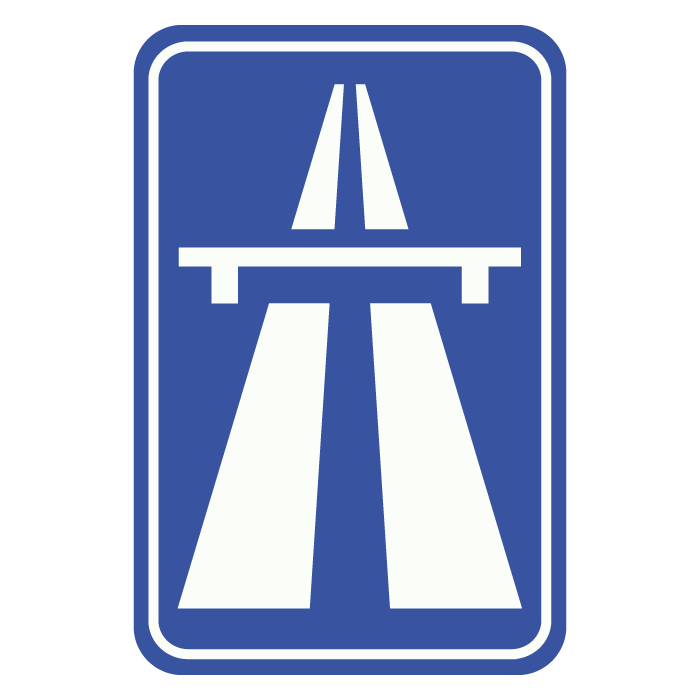
Motorway
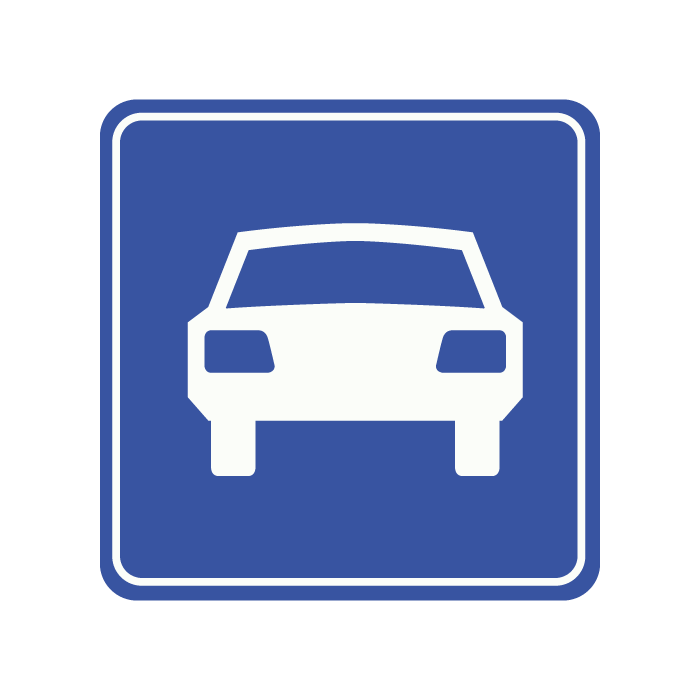
Autoweg
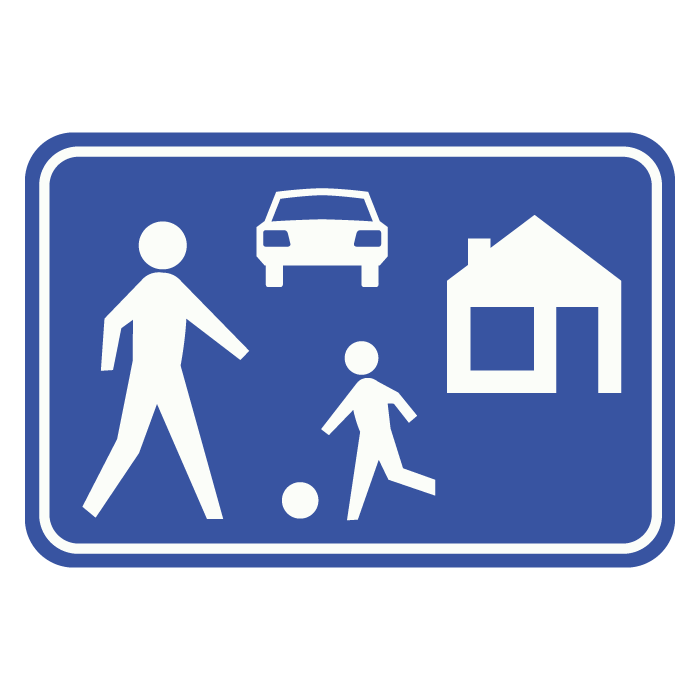
Erf
Motorway and autoweg
The allowed speed limit on a motorway is 130 km/h. On an autoweg this is 100 km/h. These speeds only apply when no other speed is indicated. On these roads, it is dangerous to ride much slower than the other traffic. That is way not all vehicles are allowed to drive on these roads:
- Only motor vehicles that are able to and are allowed to drive a minimum of 50 km/h are allowed to use the autoweg.
- Only motor vehicles that are able to and are allowed to drive a minimum of 60 km/h are allowed to use the motorway.
You are therefore not allowed to ride on an autoweg or motorway with a moped. Even if it has been modified and therefore can go 50 or 60 km/h. Because a moped may only go a maximum of 45 km/h. So, if you motorcycle cannot go faster than 40 km/h due to technical problems, you are not allowed to enter the autoweg or motorway. Even though it is allowed to go faster than 60 km/h.
On autowegen or motorways, legal speed limits of respectively 100 km/h and 130 km/h apply. These apply, unless lower speed limits are indicated. This means that if there are signs along the road that indicate a lowered speed, that lowered speed applies. This is currently the case on most motorways. Here, a lower speed limit of 100 km/h applies during the day (between 6:00 AM and 7:00 PM). This is always indicated by signs.
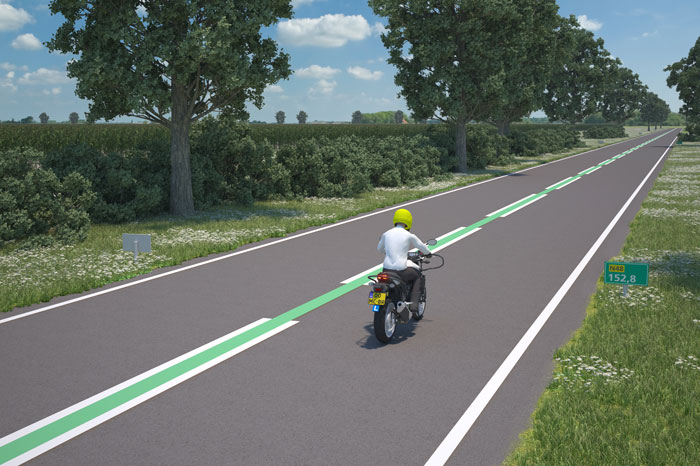
A lot of autowegen are recognisable by the green axis line, the line in the middle of the road.
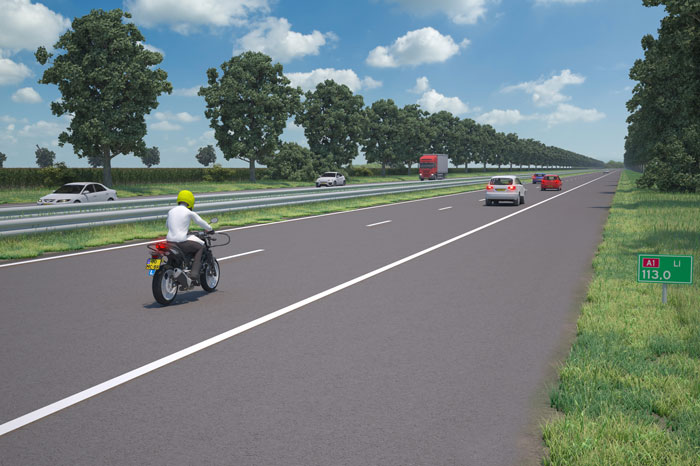
Motorways consist of multiple lanes and (almost) always have a hard shoulder.
So, there is no minimum speed on an autoweg or motorway itself. The speed you are supposed to ride on an autoweg or motorway mostly depends on the density and speed of the other traffic.
On a quiet motorway, everyone normally drives between the 80 and 130 km/h. If you ride on your motorcycle at a speed of 60 km/h, then you are a danger on the road. Due to Article 5 of the Road Traffic Act, this is not allowed.
Other rules have also been established to ensure safety on the autoweg or motorway. You may not:
- turn around or reverse;
- stop on the carriageway (stop due to a traffic jam is of course allowed);
- ride or stop on the hard shoulder, a lay-by or the verge, unless it is an emergency.
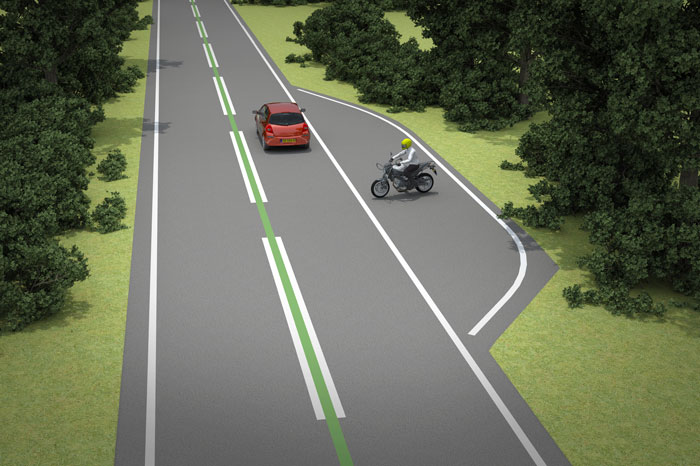
Turning around on an autoweg is prohibited and extremely dangerous.
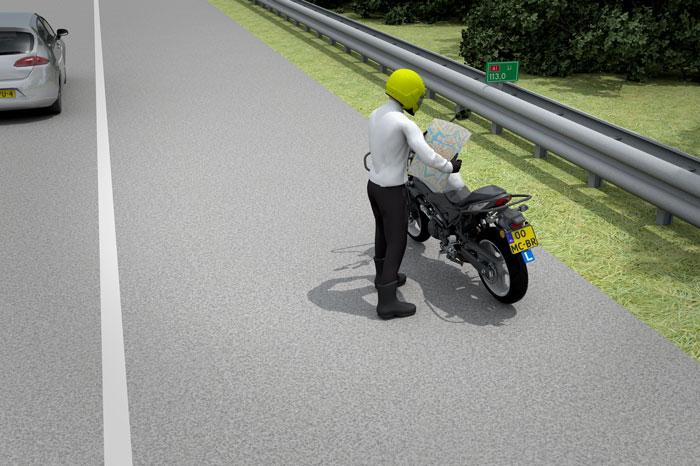
Stopping on the hard shoulder is only allowed in case of emergency. Stopping to read a roadmap or to set you navigational system is not allowed here.
For drivers of bigger vehicles or vehicles with trailers (combinations) one different rule applies. They are only allowed to drive on the two rightmost lanes. Unless they must use a different lane to pre-sort. This rule only applies to combinations longer than 7 metres and lorries. Motorcycles with trailers are never longer than 7 metres and therefore do not fall under this rule.
Rush hour lanes
On motorways you regularly encounter rush hour lanes. This is an extra lane on the left side of the carriageway, but it could also be that the hard shoulder is used as an extra lane. By the signs alongside the road and the matrix signs above the lanes, you can see whether the rush hour lane is opened or not. Do you see a red cross? Then you are not allowed to ride on that lane. Also note the speed limit. This can change as soon as the rush hour lane is opened.
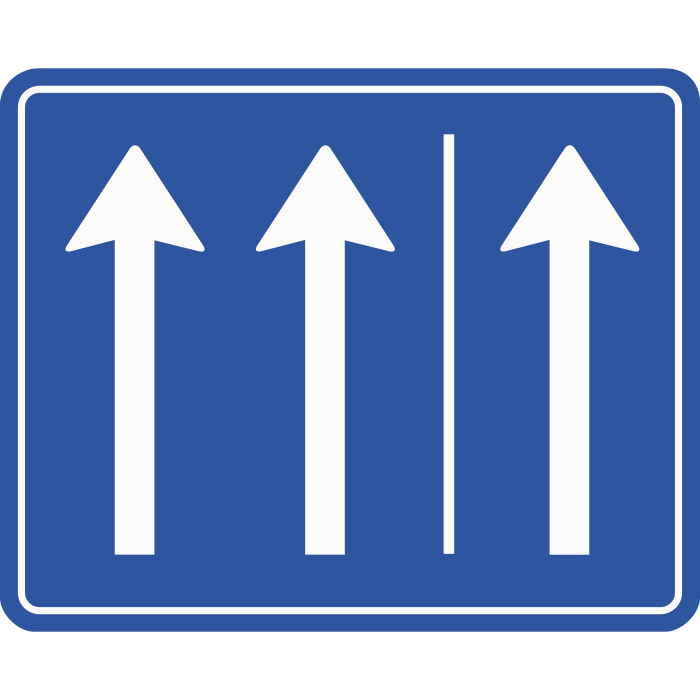
Rush hour lane open
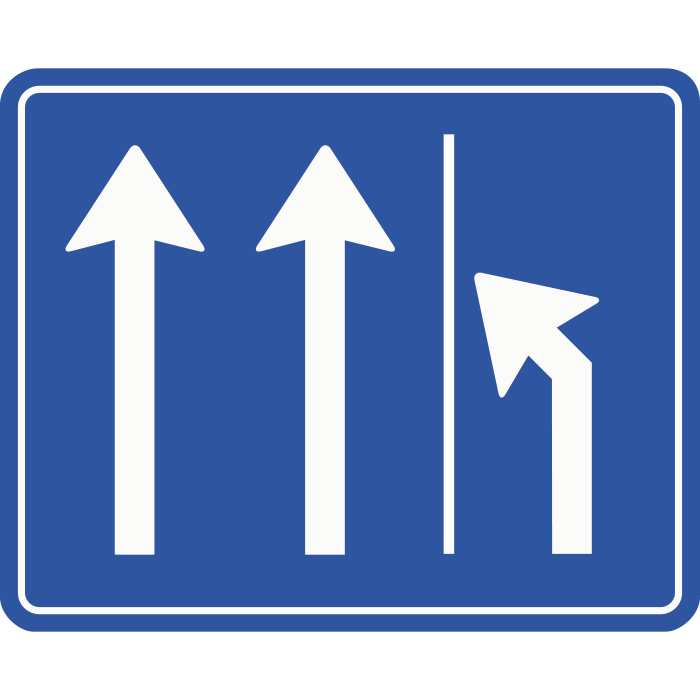
Clear rush hour lane
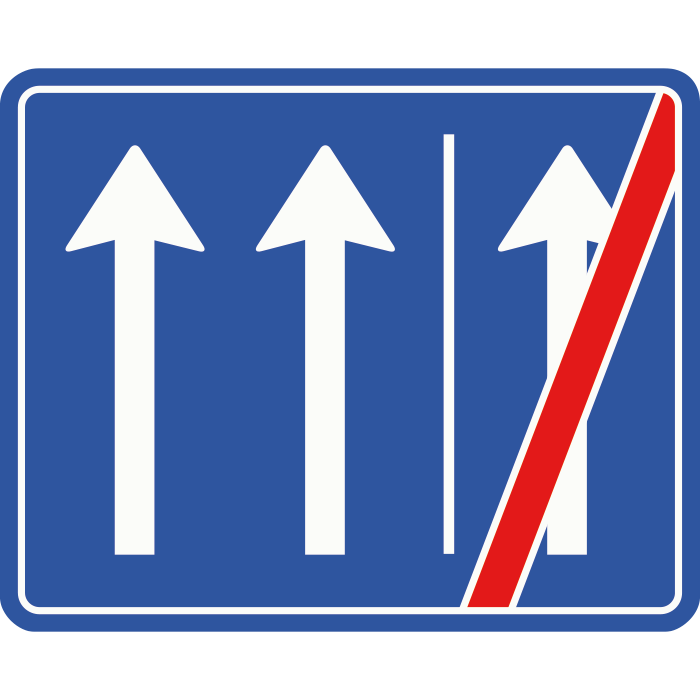
End rush hour lane
Erf
It is often thought that, within an erf, pedestrians may always go first. This is not the case. Within an erf, the normal priority rules apply as they do on normal roads. With an erf, the entrances and exits are usually designed as entrance and exit constructions. When entering an entrance construction and when exiting an exit construction, you must give way to all other traffic (including pedestrians).
G-5 - Erf
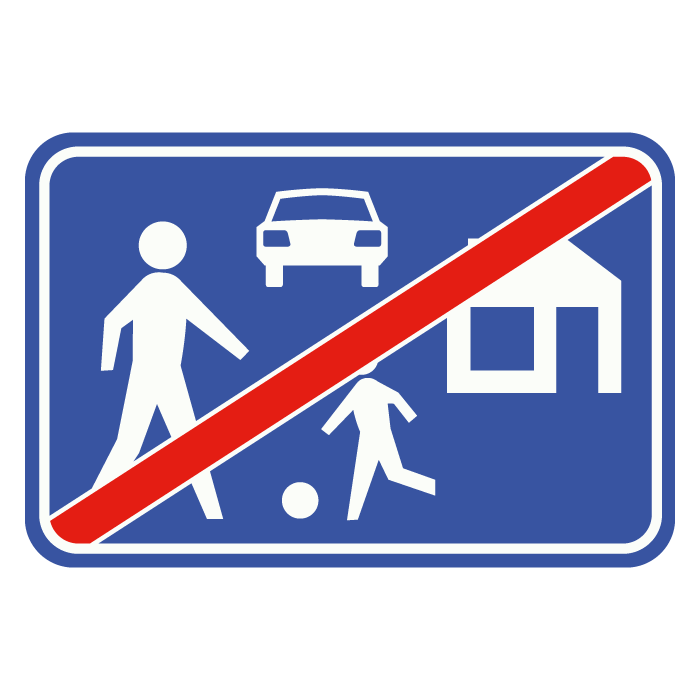
G-6 - End erf
Within an erf, a few other rules apply:
- Pedestrians may use the entire width of the road. They do not have to walk on the side. This is because there are no pavements within an erf.
- For drivers, the speed limit is 15 km/h.
- Drivers of motor vehicles are only allowed to park in spaces that are indicated as parking space. This is usually indicated by a sign with a P, or by a P applied on the road surface. Parking outside these areas is thus not allowed.
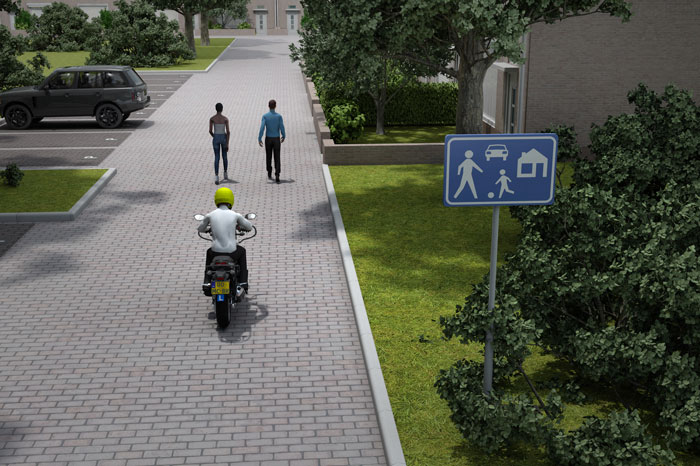
Within an erf, pedestrians may use the entire width of the road.
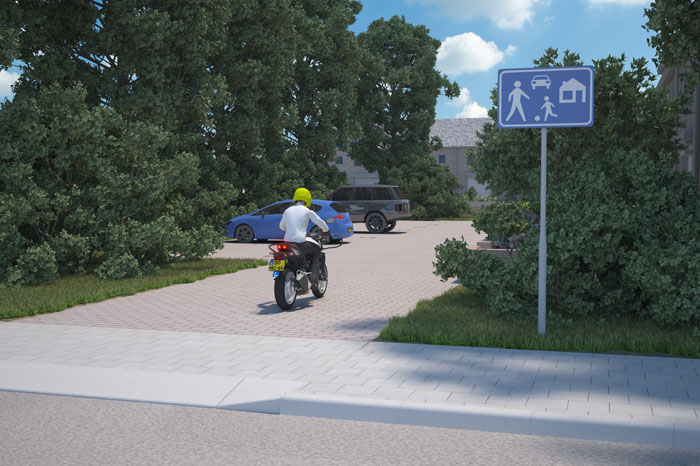
You enter or exit most erfs over an entrance or exit construction.