

Involuntary stopping and voluntary stopping
Using the public roads does not only mean that you are riding on it, but also that you are allowed to park or stop on it. There are many reasons to stop. We distinguish between voluntary stopping and involuntary stopping (stopping out of necessity).
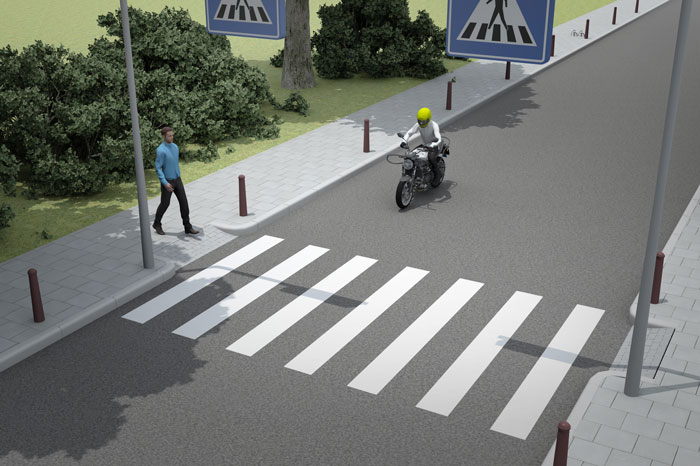
Stopping to let someone pass on a pedestrian crossing (zebra crossing) falls under involuntary stopping. This is allowed here and even required.
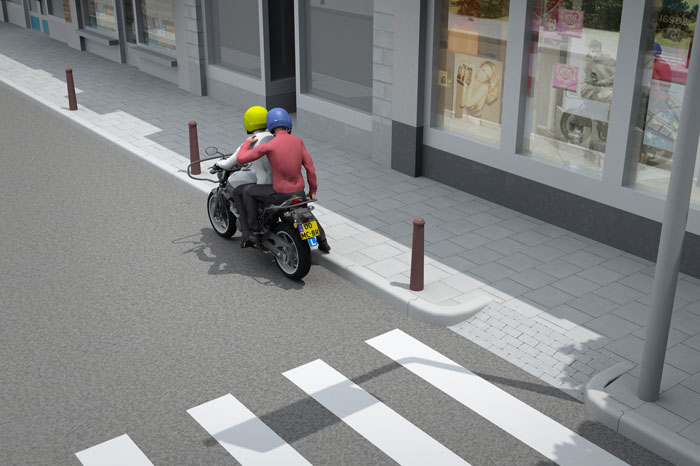
Stopping to let a passenger get on or off falls under voluntary stopping. This is not allowed here because you are within five metres of a pedestrian crossing.
Involuntary stopping
Involuntary stopping means that you stop out of necessity. For example, to give priority to someone or because you must wait for a traffic light, because you are in a traffic jam, or because of an open bridge.
The most important rule with involuntary stopping is that you cause as little hindrance as possible when stopping. You are not allowed to block roads or paths. You are not allowed to, for example, stop on an intersection or level crossing, a cycle path, cycle/moped path or crossing. Sometimes, the places where you are not allowed to stop are indicated by a white cross on the road surface. When you are involuntary stopping, you are also not allowed to be on the road section for oncoming traffic.
Voluntary stopping
Stopping to let a passenger get on or off, or to load or unload goods fall under voluntary stopping. For the latter, it is important to know that the goods must be of some weight or size. Stopping to post a letter does not fall under this.
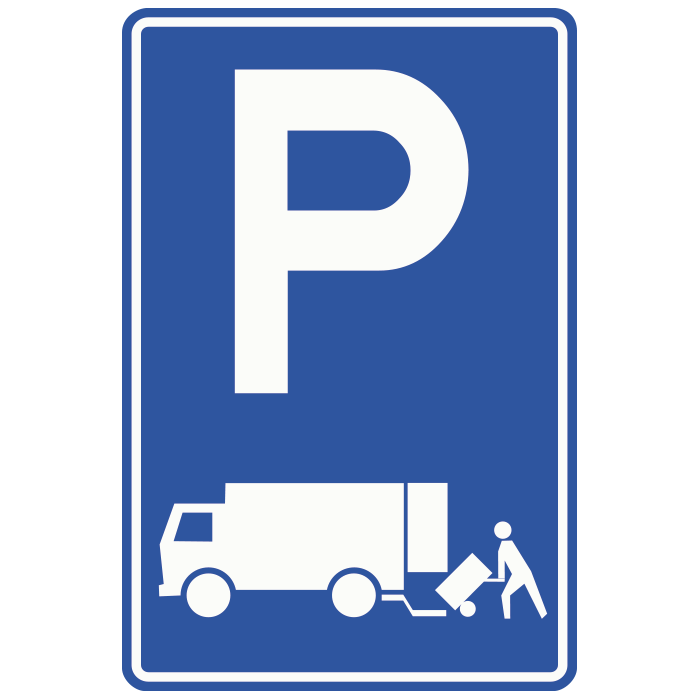
E-7 - Opportunity for the immediate loading or unloading of goods
Normally speaking it is allowed to use both sides of the road to voluntarily stop, but the right side of the road does have the preference because it usually is safer. Or in a space indicated by sign E-7, if present. These spaces are not only for loading and unloading, but you are also allowed to let passengers get on or off here. Parking is prohibited here.
Voluntary stopping is not allowed in the following places:
- on an intersection or level crossing;
- on a cycle lane or on the carriageway next to the cycle lane;
- on a crossing or within five metres from the crossing;
- in a tunnel;
- at the sign for a bus stop at the blocked markings or, if these marking are not present, withing 12 metres of the bus stop sign;
Do note, there is one exception to this: stopping to immediately let a passenger get on or off is allowed at a bus stop. - on the carriageway next to a bus lane;
- next to a solid yellow line, usually present on kerbs.
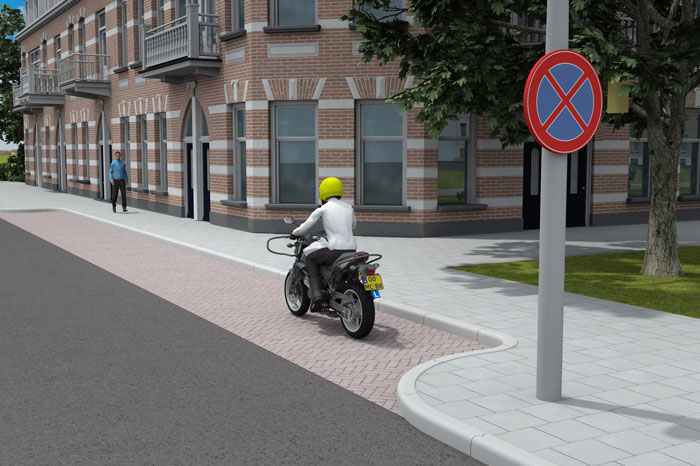
This E-2 sign means ‘prohibited to stop’. These signs do not apply to parking spaces and parking bays present. Therefore, stopping where the motorcycle is standing is allowed.
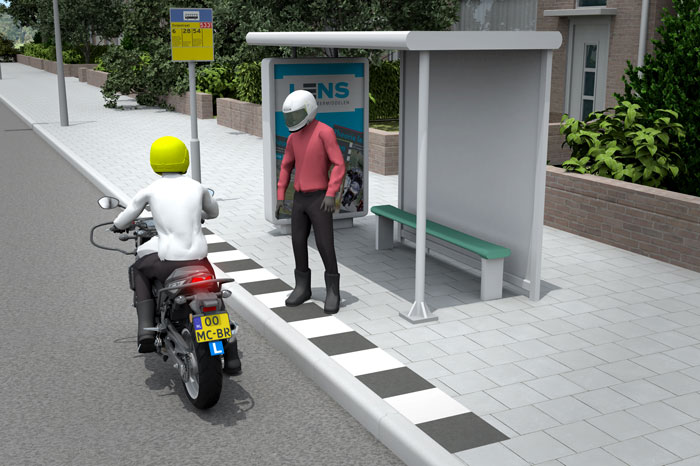
Letting passengers get on or off is the only thing that is allowed at a bus stop regarding stopping and parking. Every other form of stopping is prohibited here.
You are also not allowed to stop in places where you are not allowed to go with your vehicle, such as the pavement, hatched road markings, dividing points and target lanes for other target groups such as a bus lane.

E-2
Sign E-2 indicates a prohibition to stop on the side of the road the sign is placed. In that case, stopping is allowed in places destined for that, such as parking places, parking lanes and parking bays or in the verge.
Stopping during a breakdown or accident
Stopping during a breakdown or because of an accident falls under involuntary stopping but is an exception in this. During normal involuntary stopping certain rules still apply. For example, you are not allowed to stop on a bus lane or on an intersection. If you suddenly experience a breakdown or are involved in an accident, then you may be left with little choice.
Try to adhere to the rules of involuntary stopping as much as possible. If this is not possible, then focus on preventing hinder or danger. Try and place your motorcycle as much to the side of the carriageway as possible. If there is no hard shoulder, then place your motorcycle all the way to the side of the carriageway or in the verge.
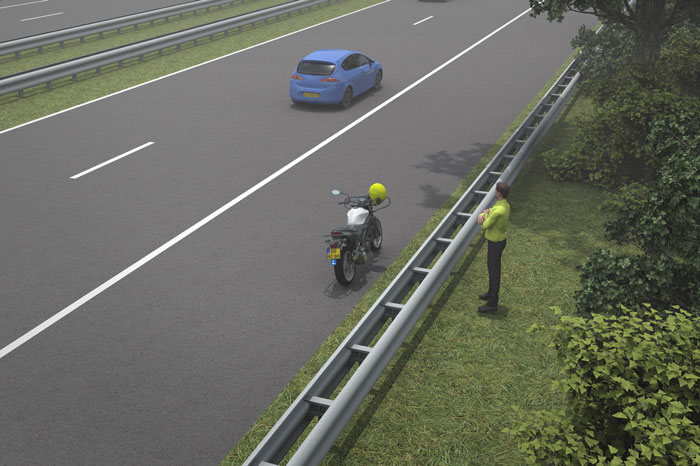
During a breakdown, place your motorcycle aside as much as possible and stand behind the crash barrier yourself.
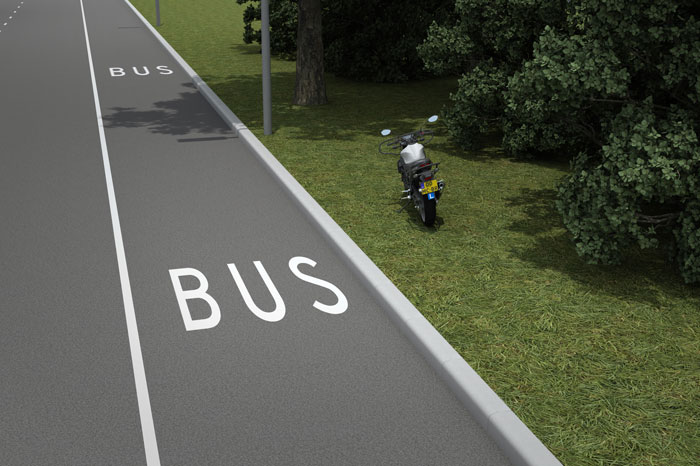
If possible, try and get your motorcycle of the through carriageway and place it in the verge during a breakdown.