

Roundabouts
A roundabout is a special intersection. It consists if a circular through road with a few side streets. The direction of travel is always counterclockwise. The priority rules on roundabouts are the same as at an intersection. Again, it depends on whether or not there are signs, how priority is arranged.
If there are not signs, the rule ‘drivers coming from the right have priority’ applies. In that case, drivers on the roundabout must give way to drivers entering the roundabout. This is not very common anymore. On most roundabouts, priority is regulated by means of priority signs and markings on the road surface.
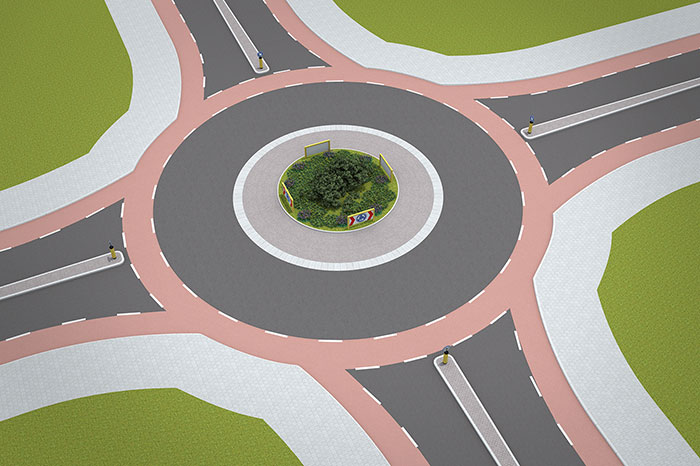
On this roundabout, priority is not regulated by signs. Drivers from the right, so the drivers that enter the roundabout, have priority over the drivers driving on the roundabout.
This kind of roundabout is not very common.
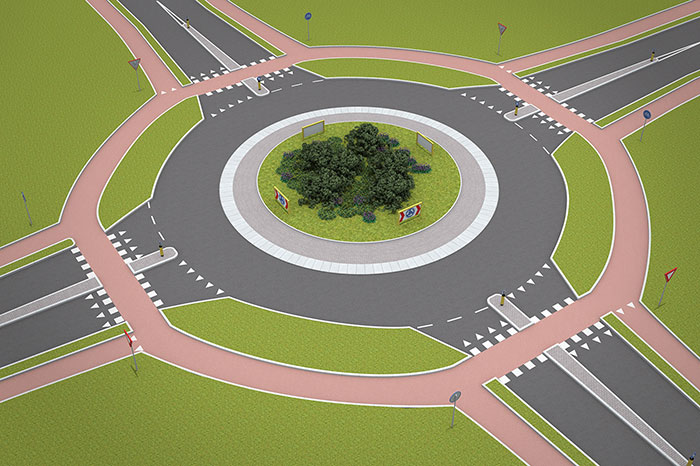
On this roundabout, priority is regulated by signs (B-6). Drivers on the roundabout have priority. This also applies to the separated cycle path.
Entering a roundabout
If you approach a roundabout, usually sign B-6 is placed: ‘give way to drivers on the intersecting road’. Almost always, priority triangles are also applied, both on the carriageway and the cycle/moped path. In that case, drivers following the roundabout have priority over drivers that want to enter the roundabout.

B-6
Give way to drivers on the intersecting road.
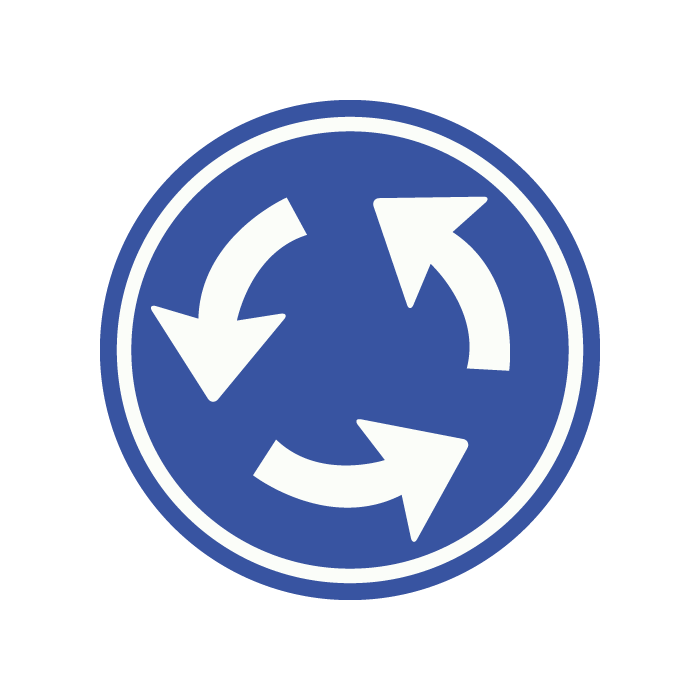
D-1
Roundabout, mandatory direction of travel.
Pay close attention to where you should drive with your vehicle, for example, on the separated cycle path if you have a snorfiets, or on the cycle/moped path if you operate a moped or speed pedelec. If there are no separated paths, then you ride in the middle of the carriageway with a moped or speed pedelec. With a snorfiets you use the cycle lane, if present. If you have a brommobiel, then you always choose the carriageway, of course.

When entering a roundabout, you do not have to give way to the crossing pedestrian. After all, they are not a driver.
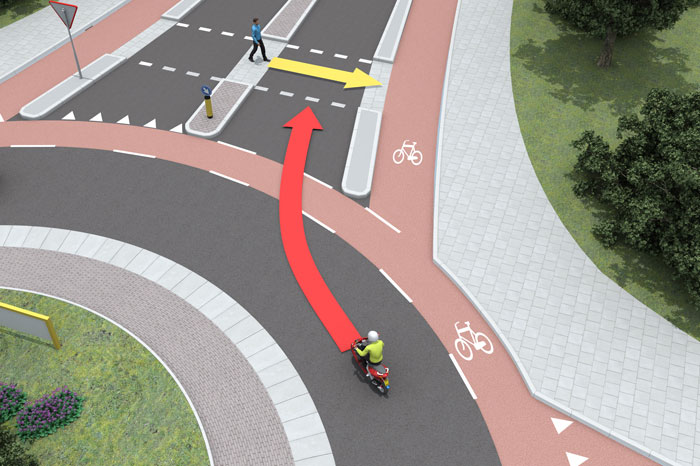
When exiting a roundabout you do have to give way to the pedestrian, they keep following the roundabout you are exiting.
Exiting a roundabout
You should see exiting a roundabout as turning right. You should therefore always indicate direction if you want to exit a roundabout. You should also give way to traffic that continues to follow the same road (i.e. the roundabout). This includes pedestrians on the pavement and drivers on the separated cycle path or cycle/moped path.
At some roundabouts, snorfietsers, cyclists and pedestrians do not take part in the roundabout. In addition, this could also apply to moped riders and drivers of speed pedelecs. The cycle paths or cycle/moped paths are then further away from the roundabout. They are not circular and diverge from the roundabout.
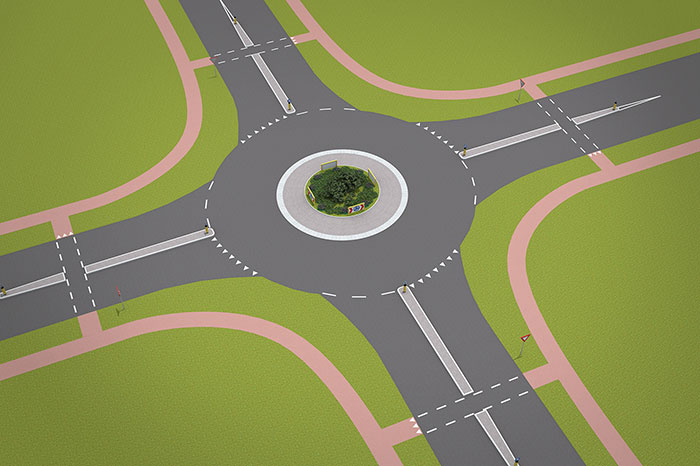
At this roundabout, the drivers on the separated paths do not partake in the priority on the roundabout. They must give way when crossing.

The crossing snorfietser must wait for the brommobiel that exits the roundabout. The snorfietser is not on the roundabout.
Where the cycle path and footpath or pavement crosses the road, it should be seen as a separate situation. In that case, the cycle path usually has sign B-6 and priority triangles. In that case, when you exit the roundabout, you do not have to give way to the snorfietsers, cyclists and pedestrians.
A roundabout can also be designed as a multi-lane roundabout. In that case, most new roundabouts are designed as ‘turbo roundabouts’. This is a spiral roundabout where you can, if you choose the correct lane, automatically exit the roundabout at the right place. When doing so, choosing the correct lane is important. You often cannot change lanes on the roundabout itself.
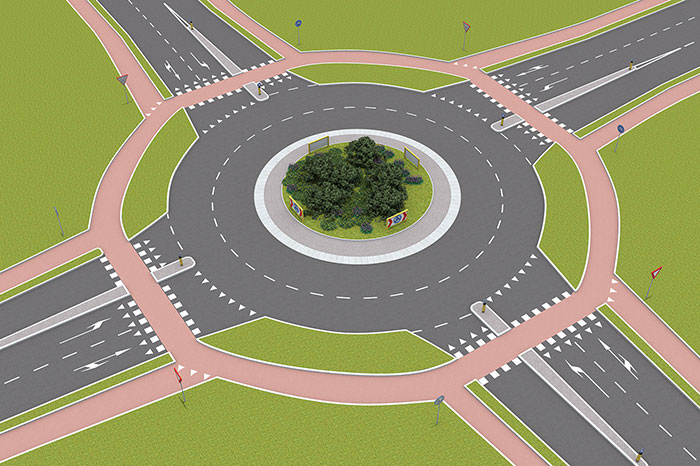
This roundabout consists of several lanes. If you want to go three-quarters with your brommobiel, you should start on the inner lane on the roundabout and move up to the outer lane halfway through the roundabout.
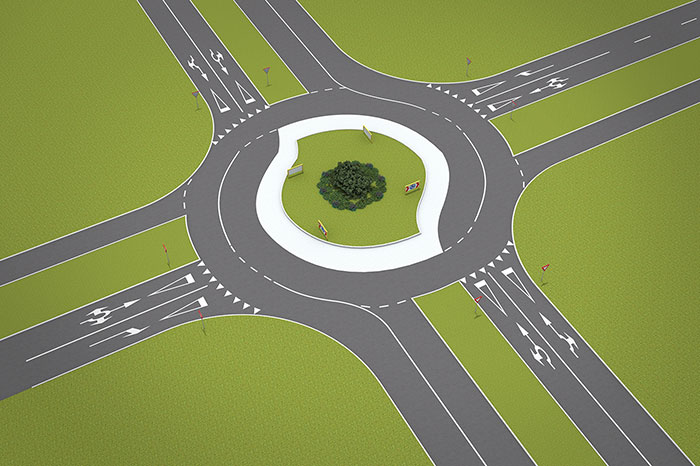
This roundabout is designed as a multi-lane turbo roundabout. If you choose the correct lane before you enter the roundabout, you will not have to change lanes on the roundabout.
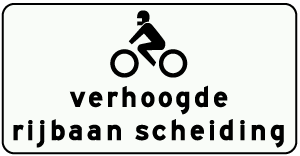
You should pay extra attention here: lanes are often separated by raised lane separators, a kind of kerb in the road surface.
On the lead road to the roundabout, there are usually arrows on the road that indicate which lane to take for which direction.

Turn left

Turn left and straight on

Turn left, straight on and turn right

Straight on
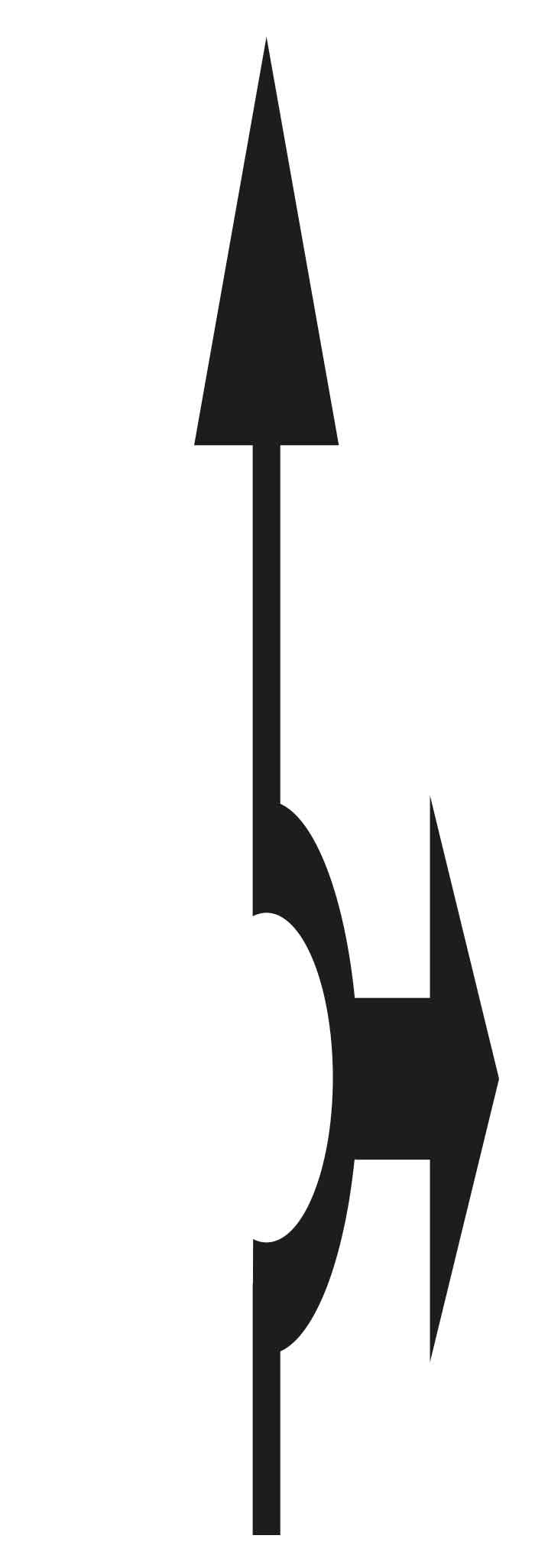
Straight on and turn right

Turn right