

Code of conduct
- Term moped
The term ‘moped’ not only includes the scooter that can reach 45 km/h, but also the snorfiets, brommobiel and speed pedelec. To keep the lesson materials clear, the general term ‘vehicle’ is used for information about all moped types. If it specificallly refers to one of the vehicles, this will be indicated.
- Roads
All roads or paths on which public traffic can drive or walk on. This includes bridges and tunnels. Paths and verges are also considered part of the road.
This means that a road is everything from ditch to ditch or façade to façade. The pavement also belongs to the road, as does the cycle path that is separated from the carriageway by a verge or pavement.

When you participate in traffic, you must keep to certain rules of conduct. These are general rules compiled to ensure that:
- it stays safe on the road;
- the road remains usable;
- the environment is impacted as little as possible;
- fraud is prevented.
- Authorised person
Persons who may regulate traffic and ask for official documents. These are:
- public prosecutors;
- police officers;
- military personnel of the Royal Military Police;
- officials of the State Tax Authority;
- officials of the Road Traffic Service;
- officials of the National and provincial water authorities;
- investigators falling under different ministries.
Directions
Every road user is obligated to follow directions given by authorised persons. In addition, there are traffic controllers (also known as lollipop men or women, or crossing guards) of which you should follow the directions. They are only allowed to stop you.
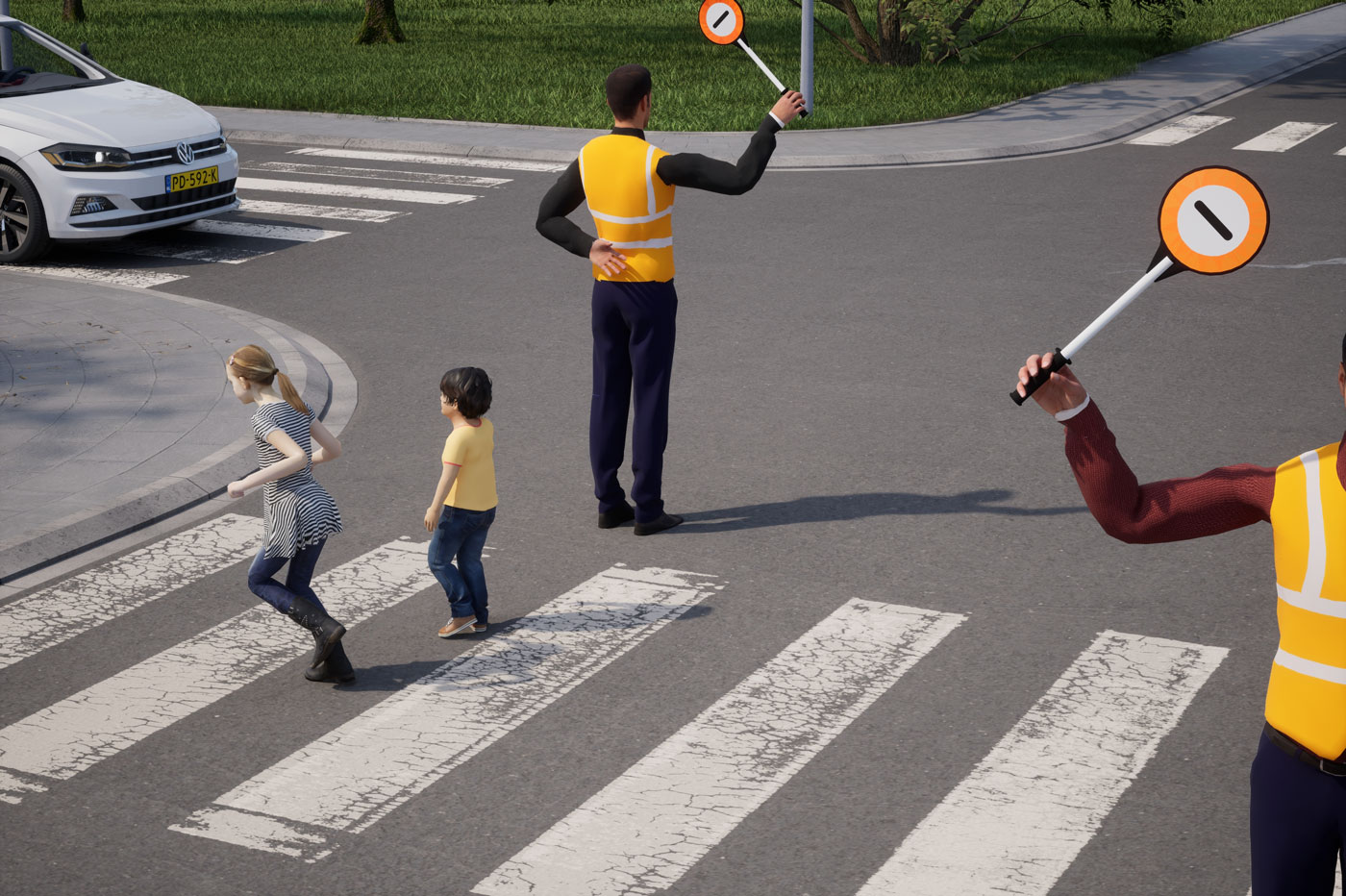
A traffic controller may only stop you.
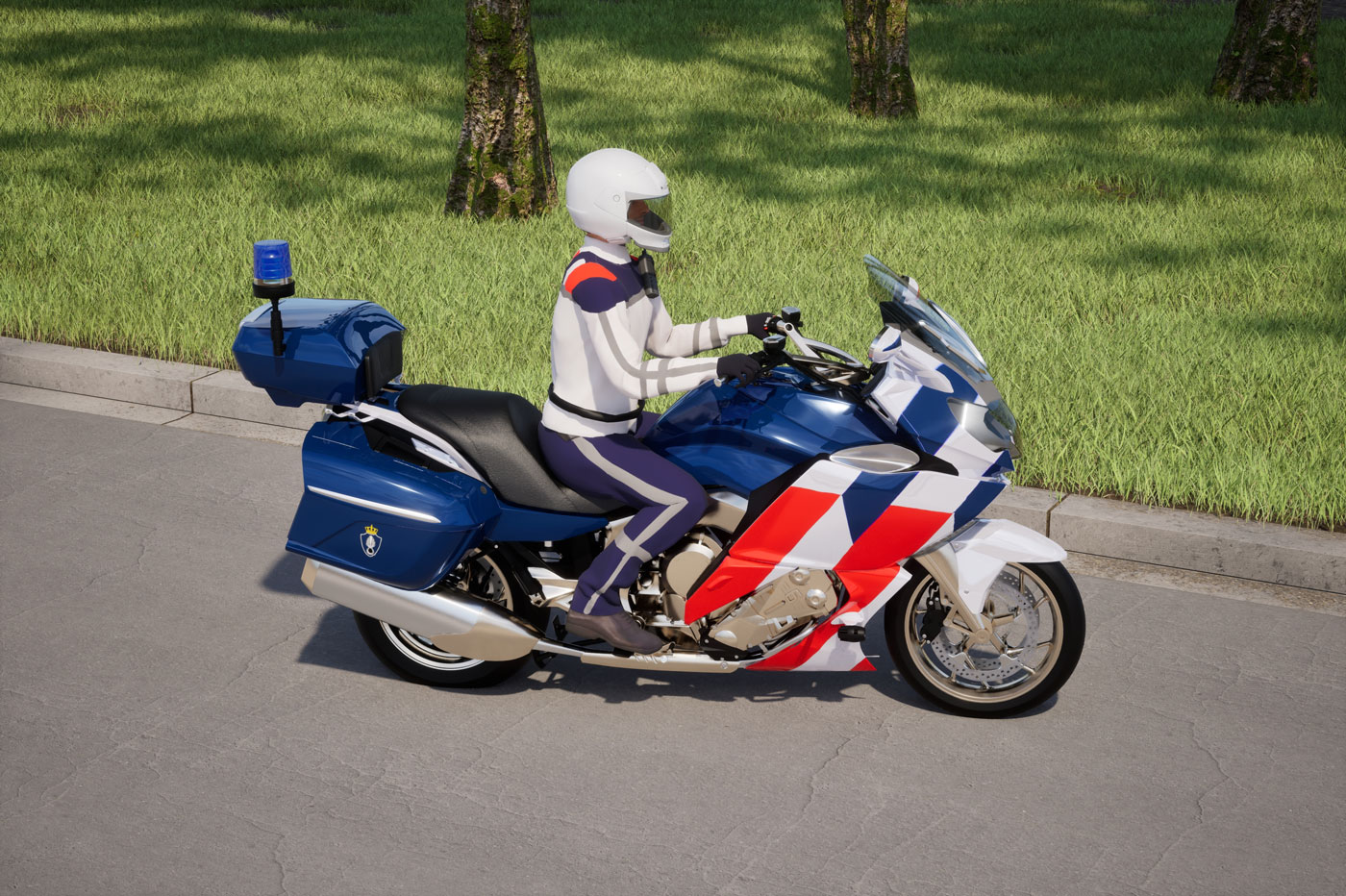
A member of the Royal Netherlands Marechaussee may give directions that you must follow. He may also ask to see your official documents.
Mandatory cooperation
When you are stopped by a police officer or another authorised person, they are allowed to ask you for several documents. You are required to carry these documents and to show them when this is asked. These documents are:
- the driving licence;
- the vehicle registration card of the vehicle you are traveling with;
- a disabled card if you need it for the vehicle you are driving or the place where you park.
In addition, an authorised person may require you to cooperate in an investigation into alcohol, drugs, or medication use.
This means that you are required to cooperate with a breath analysis (a breathalyser test), exercises to check if you can still see and speak properly, or a saliva test for the detection of drug use. You may even be required to have blood drawn, for example, if you refuse a breathalyser test or if the breathalyser test fails. There must then be a good reason to think you have had alcohol or drugs.
Causing hinder or danger
There are a lot of rules in the legislation. Here, it is clearly mentioned what is and is not allowed. For example, you are not allowed to drive faster than is allowed, you must adhere to the traffic signs and you are not allowed to run a red light. But there are many other obstructive and dangerous behaviours that are not literally mentioned.
For this behaviour, Article 5 of the Road Traffic Act is meant. Herein is stated that no one is allowed to act in such a way that causes, or may cause, hinder or danger on the public road. How this hinder or danger is caused, does not matter for this rule. This rule also applies when you are not participating in traffic yourself.
- Kapstokartikel
Article 5 of the Road Traffic Act prohibits you from causing hindrance or danger in traffic. It is also called ‘kapstokartikel’. It is called like this, because all dangerous driving behaviour that is not literally mentioned in the legislation, can be ‘hung’ on this article. If you do something that is not immediately prohibited by a sign or a traffic rule, but you do cause hinder or danger on the public road by doing so, then you can still be punished under Article 5 of the Road Traffic Act.
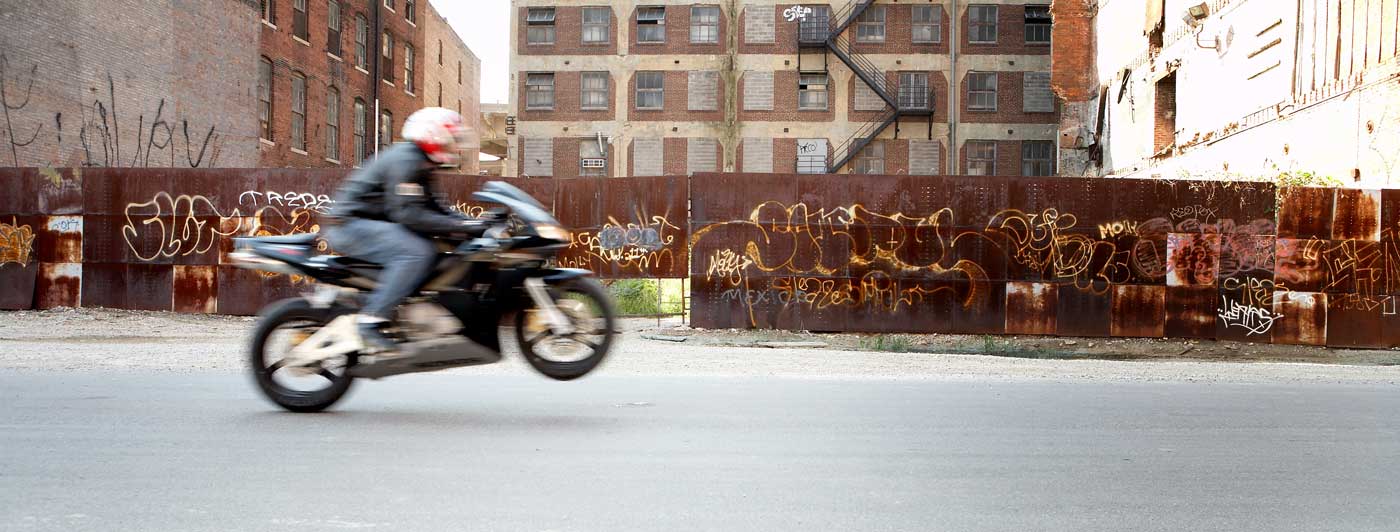
Doing a wheelie may cause hinder or danger and is therefore prohibited under Article 5 of the Road Traffic Act.
Leaving an accident
Did something happen anyway and were you involved? Then you are not allowed to leave the place of an accident until you have given your details and the details of the vehicle involved in the accident to the other people involved or the police.
If you do leave without leaving behind your details, you are committing a crime. Only if you voluntarily go to the police within 12 hours of the accident, you can still get out of your punishment. You must not have been apprehended as a suspect by the police before then.
Leaving the place of an accident and therefore leaving a victim in a helpless state is always punishable. Even if you report yourself later. This also applies if you have only seen the accident happen!
In addition, you are also obligated to provide whatever help you can. This includes, for example, calling 112, providing first aid if you are able, keeping bystanders at a distance if necessary and direct aid workers to the accident. Never start filming or take pictures of the accident or the victim. Spreading these kinds of materials is also straight up anti-social behaviour.
Road race
You are not allowed to race another driver on public roads. For example, you are not allowed to create a competition on who can accelerate the fastest at a traffic light. In that case, not only the driver, but also the owner or holder of the vehicle, is responsible.
- Confiscation of driving licence
The police can confiscate your driving licence. This means that your driving licence will be taken from you if you have been stopped for misbehaving in traffic. They will send your driving licence to a public prosecutor.
- Disqualification from driving
A prohibition for driving motor carriages, also known as a driving licence suspension. This is a prohibition of multiple months up to several years. This can be imposed on you by a public prosecutor or by a judge, after you have misbehaved in traffic.
The disqualification from driving can last up to two years for lighter offences and up to five years for more serious offenses or crimes. With the latter, you should think of death or injuries at fault, driving under the influence and driving during a driving licence suspension. If you are at fault again within a short time, these penalties can be doubled.
- Invalidation of the driving licence
Are you repeatedly at fault, or are you no longer fit or able to drive for any other reason, then your driving licence may be invalidated. You are then no longer allowed to drive any motor carriages for which you need this driving licence. In that case, you are still allowed to ride a bicycle, or drive in or on a vehicle that does not need a driving licence. You can also receive an invalidation for just one category of the driving licence, where the other obtained categories will still be valid.
Life-threatening driving behaviour
If you purposefully do not follow a traffic rule, which could cause someone to die or be gravely injured, it can be punished extra heavily under Article 5 of the Road Traffic Act, even if no one got hurt. This makes it easier to take tougher actions against reckless driving behaviour. Behaviour that falls under reckless driving includes, dangerous overtaking, running a red light, ignoring a red cross and holding a mobile phone.
Enforcement on driving behaviour
Your driving licence may be confiscated if you misbehave yourself too much in traffic. This means that it is taken from you by the police. Your driving licence will be sent to a public prosecutor. They will decide, within 10 days, whether you lose your driving licence for a while or if the driving licence will be returned. In both cases, a judge may be asked to determine the final sentence. They can impose a fine or a disqualification from driving.
During the period that you are disqualified from driving, you may no longer driver any motor carriage.
The confiscation of your driving licence based on your driving behaviour is done when you:
- exceed the speed limit by 30 km/h or more;
- cause hinder or danger.
In those cases, a notification can also be made to the CBR (Central Bureau of Driving Proficiency). In that case, they will investigate whether you are still fit and able to drive a moped.
The abbreviation CBR stands for Central Bureau of Driving Proficiency. The CBR decides whether or not someone receives a driving licence. The CBR also decides whether or not you can keep your driving licence as soon as there are doubts about your fitness or ability to drive. The CBR takes both theory and practical exams. A separate department of the CBR is the BNOR, the Bureau of Further Investigation Driving Proficiency. You end up here when you, for example, fail your practical exam four times in a row.
Prohibited to drive
If you still drive in or on a motor carriage during a disqualification from driving, you are committing a crime. This also applies when you start driving in a vehicle for which you need a driving licence while this driving licence has been invalidated.