

Driving through tunnels
When driving through tunnels, it is important to know what to do and – especially – what not to do. This is particularly crucial when coming to a stop in a tunnel or in the event of an accident.
Lighting
Using dipped headlights is mandatory when driving through tunnels. Do not use automatic lighting, as this only enables dipped headlights when it is already dark – so after you enter the tunnel. Turn on the dipped headlights manually, well before entering a tunnel. Never use the rear fog lights or full-beam headlights inside a tunnel, as this may blind other traffic.
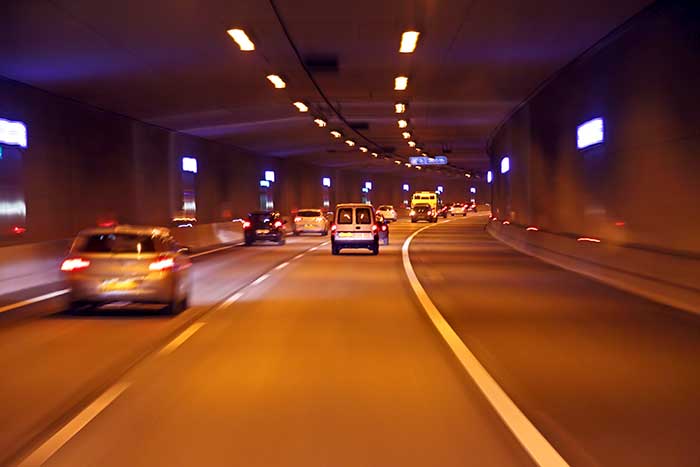
Using dipped headlights is mandatory, also in illuminated tunnels.
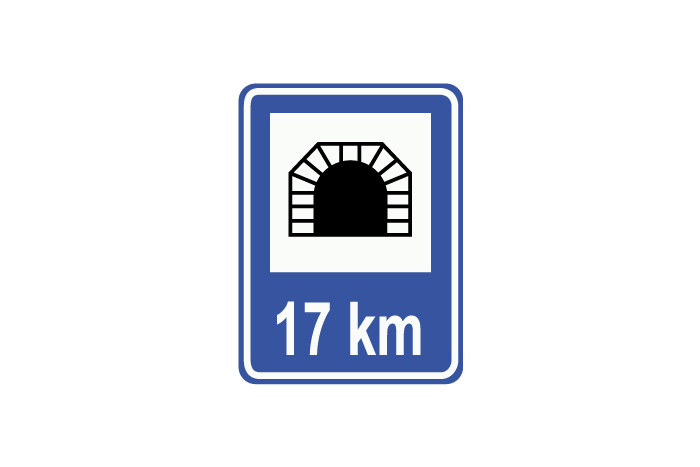
This sign indicates the length of the tunnel you are approaching.
Behaviour
There are few swerving options when it comes to potential problems in tunnels. Never overtake using the lane used by oncoming traffic. Avoid taking risks and drive extra defensively. Aggressive and antisocial driving behaviour is especially dangerous inside tunnels as it presents an increased risk of (fatal) accidents.
Breakdown
If you break down in a tunnel, try to leave the tunnel first. If you risk hindering or endagering other traffic – for example if the vehicle cannot be driven at normal speed or may stop at any time – turn on the hazard lights.
If leaving the tunnel in the vehicle is not possible, turn on the hazard lights immediately and leave the car stationary on the right side of the tunnel. Never allow passengers to sit in or stand directly next to the vehicle. Stand at least 50 metres away from the vehicle to ensure safety in the event other traffic driving through the tunnel does not see the stationary vehicle in time.
Walk in the direction of traffic to the nearest emergency telephone. Use the telephone to contact the traffic controller and follow their instructions. Calling with your own phone is often impossible due to poor signal reception inside tunnels.

Lay-by (emergency refuge) equipped with emergency telephone and fire extinguisher

Emergency telephone
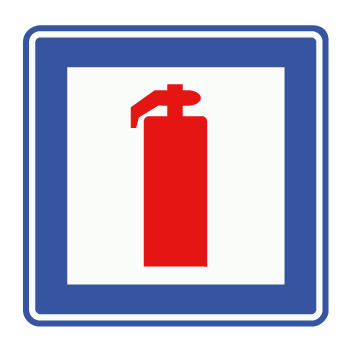
Fire extinguisher
Accident
In case of an accident in a tunnel, a number of things are very important:
- Always think of your own safety first
If there is smoke or fire in the tunnel, it is very dangerous. In that case, try to leave the tunnel directly via the escape route or tunnel tube. Pay attention to other traffic. Never turn the car around and never reverse in an attempt to exit the tunnel! - Leave the key in the ignition
That makes it possible for the emergency services to move your vehicle if necessary, when you have to abandon your car in the tunnel. - Contact emergency services
Call 112 immediately. If you have no signal, exit the tunnel or find an emergency post with an emergency telephone to call emergency services. - Provide assistance
Try to warn other traffic and provide help to injured people if possible and necessary. Try to get everyone outside with smoke development.
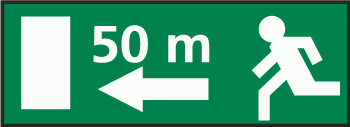
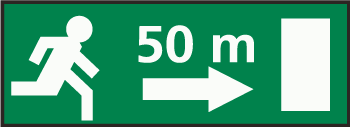
These signs show you in which direction you should go to find the nearest emergency exit. They also show the distance to this exit. Keep in mind that walking against the direction of travel in a tunnel is always more dangerous than walking in the direction of travel. In the latter case, approaching traffic will see the stationary car first and are more likely to expect pedestrians on the carriageway.
Fire in a tunnel
To know what to do, but also what not to do in case of a fire in a tunnel, the ‘knowledge platform of tunnel safety’ made the information video above. The video is in Dutch, but it has English subtitles.