
Dealing with accidents and breakdowns
Anyone who participates in traffic may sooner or later be involved in a breakdown or accident. It is important to know what to do and what not to do in the event of these scenarios.
Equipment
Although it is not mandatory, useful equipment in a passenger car includes:
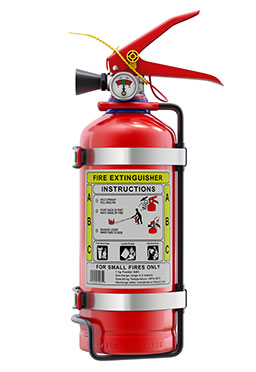
A fire extinguisher
For extinguishing small (beginning) fires. In the event of a large fire, exit the vehicle immediately and call the fire department.
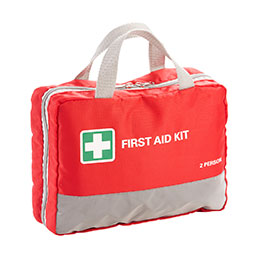
A first aid kit
In case of serious injury, pressure bandages can be life-saving. First aid kits, however, can be of little use with no knowledge of how to use the items contained. All drivers are therefore advised to take a first aid course, and regularly check the vehicle’s first aid kit for expiry dates and inventory of items.
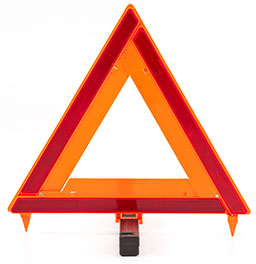
A warning triangle
In some cases when a vehicle comes to a stop, it may also present an obstacle that hinders other traffic. If this occurs and the hazard lights are not working, use of a warning triangle is mandatory. This also applies if the hazard lights are working but do not help in ensuring your vehicle can be seen in time by other road users.
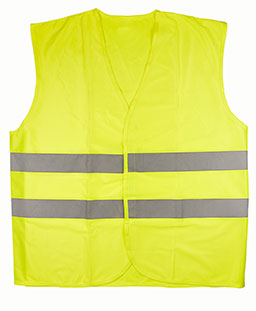
A fluorescent safety vest
In the event of a situation that results in drivers and/or passengers waiting at the side of the road, these vests help ensure passing drivers can see waiting persons. In some countries, wearing a fluorescent vest in the event of a breakdown or accident is mandatory for all occupants
of the vehicle.
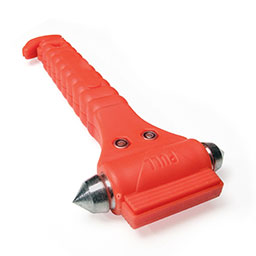
One or more safety hammers
In the event of driving into water in a passenger car, a safety hammer can be used to open the windows. Safety hammers can provide a quick exit for the vehicle occupants in case the doors will not open. Always strike the glass in the corner of the window, as this breaks more easily.
Ideally, hang safety hammers on the car’s ceiling, above the two front doors. This will make them easier to reach in the event of a collision.
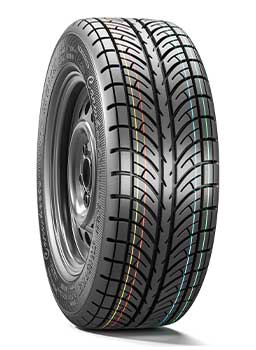
A spare wheel or tyre repair kit Carrying a spare wheel is not mandatory, but it is certainly useful. This can be either a full-size spare or a ‘space-saver’ spare. A space-saver is a narrower wheel that should be replaced with a standard tyre as soon as possible. It is only intended to get you home. You must not drive faster than 80 km/u when using one.
If your car does not come with a spare wheel, it is a good idea to carry a tyre repair kit. This usually consists of a can of sealant that can be sprayed into the punctured tyre. However, this is also only a temporary solution, and the tyre will need to be fully replaced afterwards.
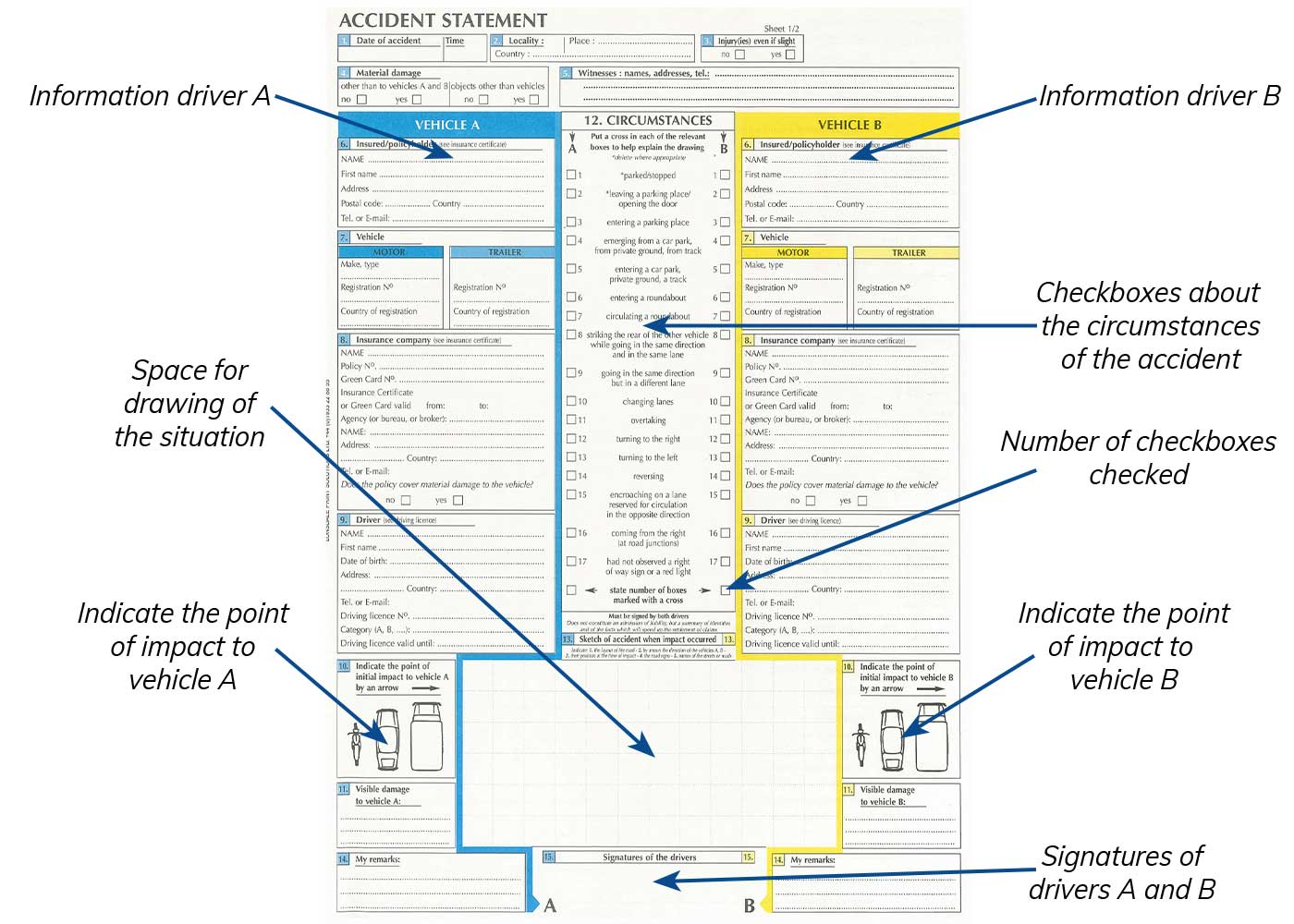
European damage claim form (accident statement)
Parties involved in an accident can fill out their information on a European damage claim form, which will then be processed by the insurance company. All parties should fill in the front of this form – including signatures – immediately following an incident. Divide the two sheets (the original and the transfer sheet) and take one copy each. Fill in the back of the form at home and send this to your insurance company.
The damage claim form is also available as an app on your phone. In this way, both parties can fill in the form in their own language. Discuss with the other party in which form you will complete the accident statement.
Using the hard shoulder
The hard shoulder should only be used in the event of a breakdown or accident or other emergency situation. However, it is not safe to remain on the hard shoulder for an extended period of time. If at all possible, drivers are advised to continue via the hard shoulder to the nearest exit, car park, or petrol station.
If this is not possible, drivers should stay as far away from the road as possible. If necessary, in the verge. Rijkswaterstaat may close a lane to facilitate repairs or have the vehicle towed. Contact the emergency services should you require either of the aforementioned.
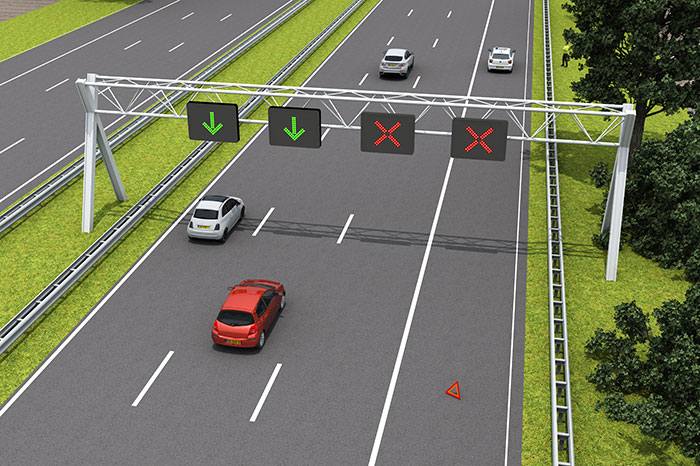
Due to the breakdown on the hard shoulder, the lane immediately next to it is also closed.
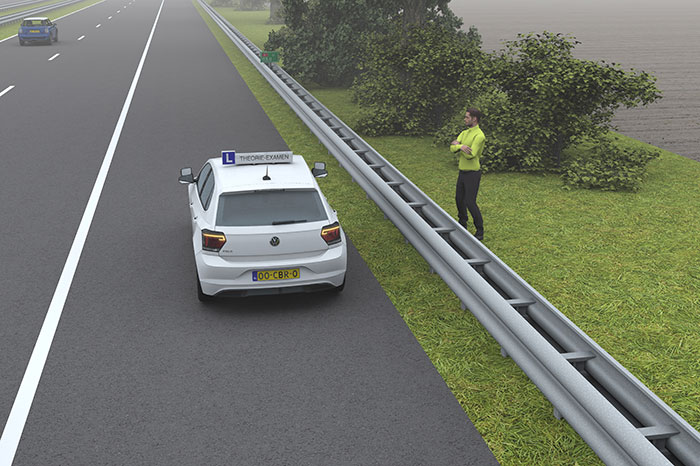
Do not stay in the vehicle if you have broken down on the hard shoulder. Find a spot behind the crash barrier.
Accident or breakdown on the motorway
In the event of an accident or breakdown on the motorway, attend to your own safety first. Never cross the motorway, even if you are in the central reservation as a result of an accident. In this case, wait for emergency services outside the vehicle, in the central reservation, as far away from the road as possible. Never remove vehicle parts from the carriageway yourself; leave this to the police or employees of Rijkswaterstaat.
Rules in the event of breakdown
- Park the vehicle as safely as possible in a parking space, emergency area, or emergency lane, or in the verge.
- Think about your own safety and that of your passengers, preferably wear a safety vest. Get everyone out of the car and take them to a safe place.
- If necessary, place a warning triangle and/or turn on your hazard lights. In dark or poor visibility, also turn on your side lights and rear lights.
- Fix the problem if you can do it safely or contact the emergency or breakdown service.
- Do not sit in the vehicle while waiting, but wait at a safe distance, for example behind the crash barrier.
Rules at the scene of an accident
- Always attend to your own safety first! Secure the accident scene if possible.
- Alert the emergency services.
- Provide first aid if necessary, always have this done by the person who has the most knowledge.
- Try to avoid an overload of ‘helpers’ by keeping spectators at bay and keep your distance if there is enough help on site.
- Listen to the emergency responders, follow their directions and do not get in their way!
Rules for driving into water
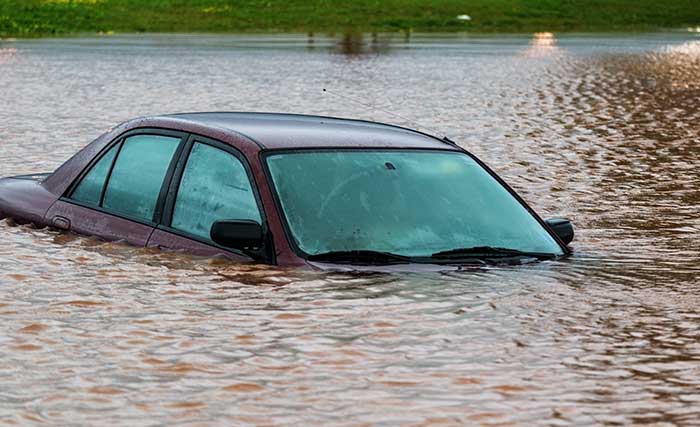
Upon impact with water when driving a vehicle, the following should be considered:
- Turn on all lighting
When the interior and exterior lighting is on, you can orient yourself better and the car is more visible. Leave the keys in the ignition. - Remove the seatbelt
If you cannot get the belt off because it blocks, cut it off with the safety hammer blade. - Open or shatter the side window
Or if this fails, a different window. The sooner you get out of the car the better. In most modern cars, the electric windows also continue to work in the water. If this no longer works, smash the glass with the safety hammer or other heavy object. Always strike the glass in the corner of the window. This will make it break easier. Leave the car. - Windows do not open and you are not able to break them
Only in that case you will have to wait until the car is also underwater from the inside. Only then can you open the door. Take a big breath of air just before the car is flooded and then push the door open. Leave the car. - Swim away from the car
First swim away from the car while facing the car. When you are at an appropriate distance, turn around and swim to the side. Climb out of the water and call the emergency services.
Emergency services
In the event of (possible) injury following an accident, always call emergency services on the emergency number, 112. While a person may appear unharmed, in some cases serious injury can develop unseen. Adrenaline can also hide pain and therefore mask hidden injuries.
When calling emergency services, always provide your location and which type of emergency help you need (police, ambulance, fire department). Always mention the street name and the hectometre sign at the side of the autoweg or motorway if applicable, or another indicator of your location. Stay on the line until advised otherwise and follow any instructions you are given.

If you need to report on which lane of the motorway an accident has occurred, count the lanes starting from the central reservation. The left lane is the 1st lane. On a three-lane road, the right-hand lane is therefore lane 3. It does not matter whether a lane is in use or not. You also have to count lanes with a red cross.
In the event you require police assistance or have a question but no life-threatening situation is occurring, call the national police line on 0900-8844.
Important telephone numbers
- Emergency: 112
- Police non-emergency: 0900-8844
- Animal police: 144
Providing first aid
Never move injured persons unless absolutely necessary. This means only if not moving the victim is more dangerous than moving them, for example if an accident has occurred on a railway track or there is a risk of fire. The same applies to victims wearing a helmet. Helmets should never be removed unless leaving them on poses a greater risk to the victim, for example if they need to vomit and thus cannot breathe.
Speak to and reassure the victim, ensure they do not move, and have another person hold the victim’s head in place in the event of a risk of neck injury. If the victim is unconscious, check whether they are still breathing. If the victim is not breathing, let the bystander with the most medical knowledge to resuscitate the victim. Report this to the emergency services as well.
If the victim is breathing but there is a risk of vomiting or another respiratory problem, place them in the recovery position.
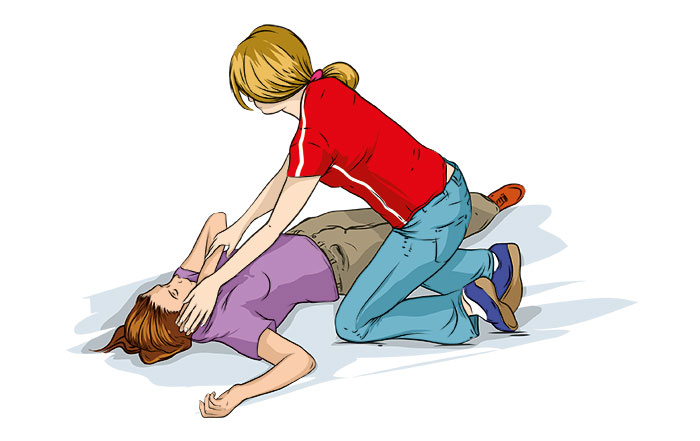
Step 1
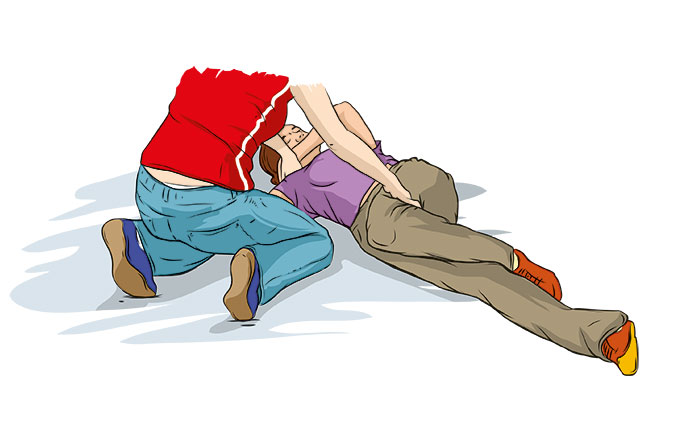
Step 2
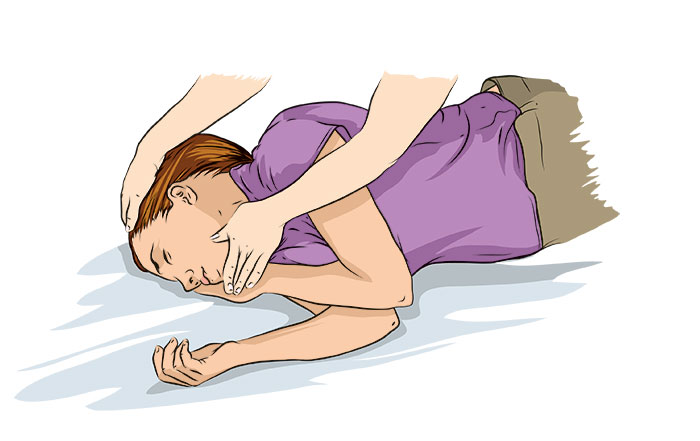
Step 3
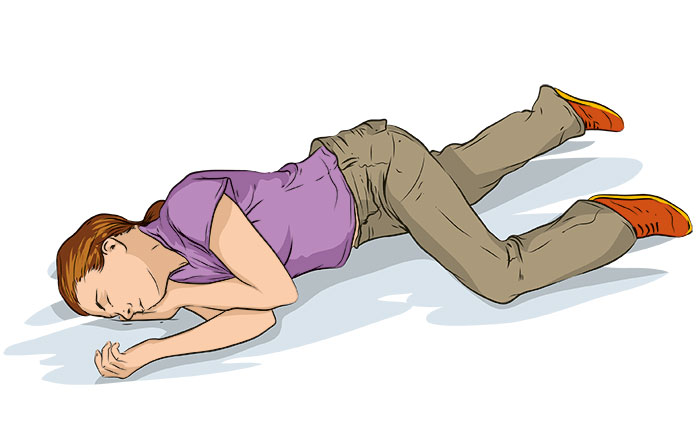
Recovery position
To be able to assist victims in practice, taking a first aid course is recommended.
Single-vehicle accidents
Reporting single-vehicle accidents is mandatory in the event of resulting damage to another person’s properly or to municipal property. This should be reported to the property owner if possible, or the police. Leaving the scene of a single-vehicle accident with resulting damage without providing your information is prohibited.
It is also mandatory to report collisions involving animals, such as cats, dogs, and wild animals such as deer. In the latter case, drivers should call the animal police on 144. This is a special division within the normal police.
Hazardous substances
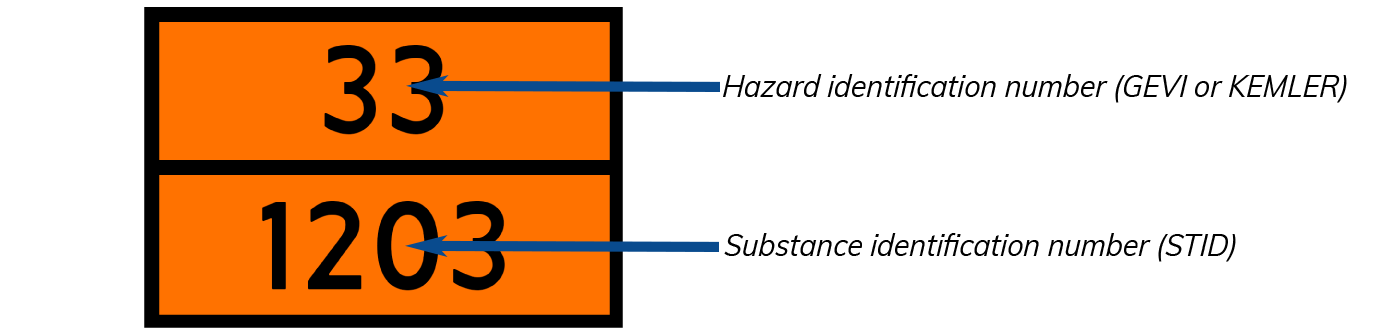
In the event of an accident involving a vehicle transporting hazardous substances, it is important to find out which substances the vehicle is transporting and what danger they present. This information is vital to emergency services and others.
The hazard identification number (GEVI, also known as KEMLER number) indicates the danger presented by the substance being transported. The substance identification number (STID) indicates which substance is being transported. Every substance has its own code, for example 1203 for petrol and 1202 for diesel. The hazard identification number (at the top) and substance identification number (bottom) are indicated on a sign on the lorry.