

Safe transport
If you drive a vehicle, transport passengers or cargo, or ride as a passenger yourself, it is important to do so as safely as possible. For this reason, certain rules have been established regarding the transport of goods and the use of seats, seat belts, and child restraint systems.
- Seat
Construction that can accommodate an adult. This can be an individual seat or part of a row.
Seats
It is mandatory that both the driver and the passengers sit on a designated seat while participating in traffic. You may not be in the boot or cargo area while the vehicle is being driven. Sitting or standing in a trailer or caravan while it is being driven is also prohibited.
There are a number of exceptions to these rules, for example:
- transport in a public bus;
- passengers in a wheelchair, if it can be secured properly;
- children under three years of age during transportation in a bus;
- transporting patients in ambulances or other laying-down areas (berths);
- passenger transport during parades at events;
- children older than eight years on the rear rack of a bicycle;
Note: this is not allowed on a snorfiets!
Passengers under the age of 8 may only be transported on bicycles, snorfietsen, and mopeds if they are seated in an appropriate seat with sufficient support for the back, hands, and feet.
Seat belts
The use of a seat belt is mandatory for all drivers and passengers of:
- passenger cars;
- company cars;
- three-wheeled motor vehicles with closed bodywork;
- brommobielen.
Never transport more passengers than there are seat belts. In today’s passenger cars, seat belts must be fitted on all seats. In most cases, these are three-point belts that run across the hip and obliquely across the chest and shoulder.
Belts are also compulsory for pregnant women. Without a belt, unborn babies are more at risk than with a belt. The belt must be worn correctly. The hip belt must be worn well under the abdomen and the shoulder part well above the abdomen. Running the belt over the abdomen does pose an additional risk to unborn children.
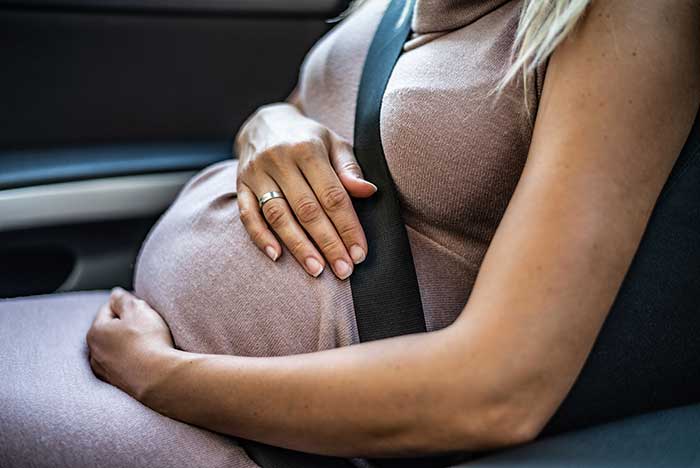
All drivers and passengers are obligated to wear a seat belt. Even pregnant women.
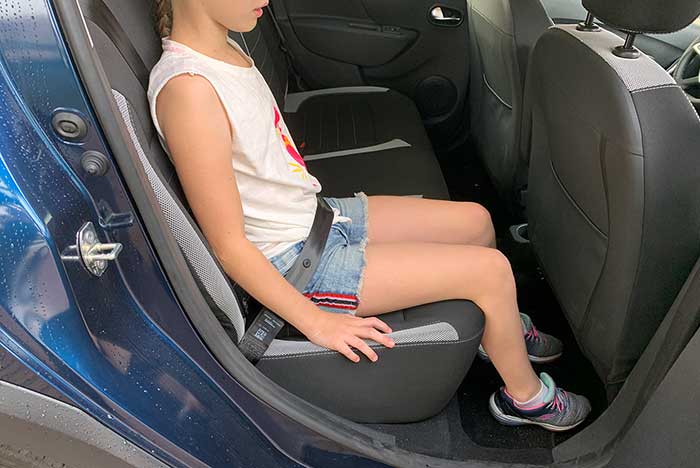
Children should not wear the three point belt as a hip belt only. It should also cross the chest.
It is always mandatory for all drivers and passengers of passenger cars to wear a seat belt while driving. This should be done correctly, so the three-point belt should run well across your hips and chest. You should not run the top of the belt behind your back or under your armpit.
Children under 12 years of age: driver responsible for seat belt obligation. Children aged 12 and older: self responsible for the seat belt obligation.
Wearing a seat belt
Wearing a seat belt prevents drivers and passengers from being launched forwards or upwards in the event of a head-on collision. Even at speeds as low as 30 km/h, drivers and passengers not wearing a seat belt may sustain fatal injures in a collision. Airbags are of little use when not wearing a seat belt, and in some cases may even cause additional injury.
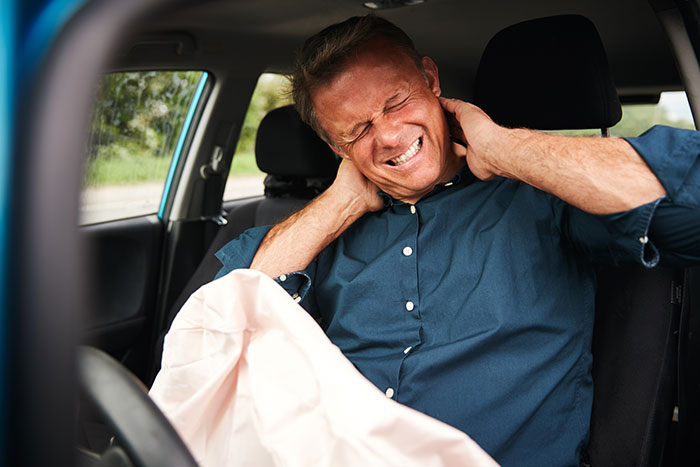
When no seat belt is used, the airbag can cause additional injury during an accident. Always wear your seat belt!
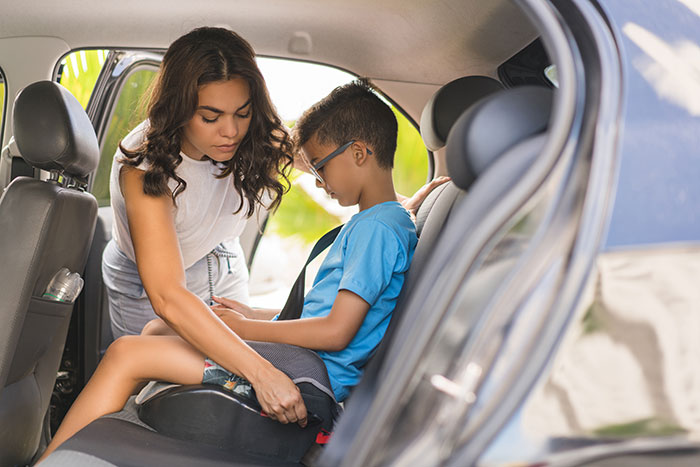
Children under the age of 18 and up to 1.35 metres in length, must use a child restraint system like a child seat, or in this case, a booster seat.
When putting on and wearing a belt, a number of things are important:
- Wear the seat belt as intended
So not only as a hip belt, or with the oblique part under your armpit. Make sure the hip part is tight over your hip and the oblique part is halfway between your neck and your shoulder. Many belts are adjustable in height at the top. - Pull the belt tightly after clicked into place
A belt that is too loose does not tighten properly or too late in a collision. - Take off thick sweaters and winter jackets
The thicker the clothes, the less the belt fits your body. This extra buffer ensures that the belt does not tighten as well or later in a collision. This will bring your body further forward.
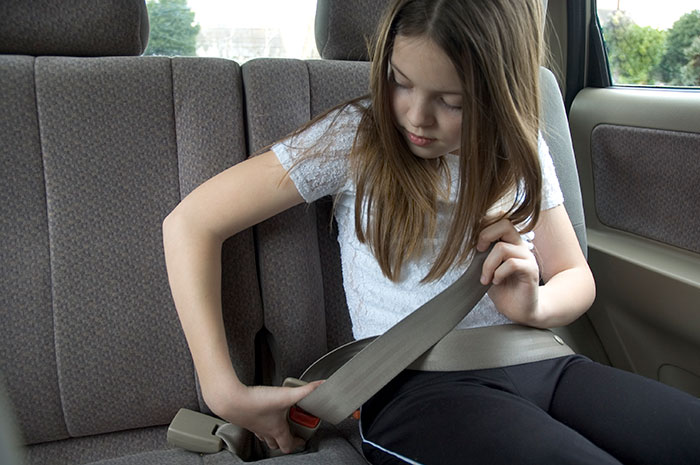
Always instruct children to wear the seat belt properly and check wether they do so.
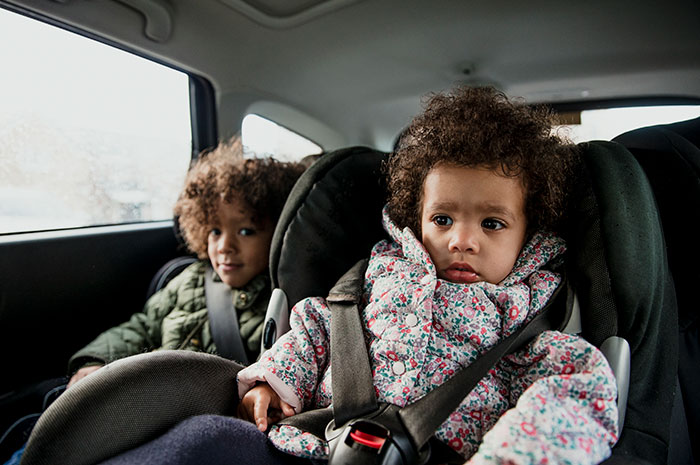
With a thick winter coat on, the belt no longer fits properly around the body. Transporting a child in this way is unsafe.
Wearing a seat belt when driving alongside water
It is often said that exiting a vehicle upon entering water is more difficult when wearing a seat belt. Of course, seat belts must be taken off before exiting a vehicle. However, not wearing a seat belt increases the chance that impact with water renders vehicle occupants seriously injured or unconscious. Obviously, this would make exiting the vehicle impossible. So even then, always wear your seat belt.
Using the headrest
Many people overlook the importance of headrests and thus fail to properly adjust them. However, a properly adjusted headrest can prevent head and neck injuries in the event of a rear-end collision.
The top of a headrest should align with the top of the head. If the headrest cannot be adjusted high enough, it should at least be as high as possible. Some headrests can also be tilted forwards or backwards, which can be used to reduce the distance between the back of the head and the headrest.
- Body
The steel construction that gives the passenger car its strength. It is, as it were, the ‘skeleton’ of the passenger car.
Child restraint systems
Children under 18 years of age and less than 1.35 metres must use an approved child restraint system adapted to the size and weight of the child. This consists of four groups: 0+, I, II and III.
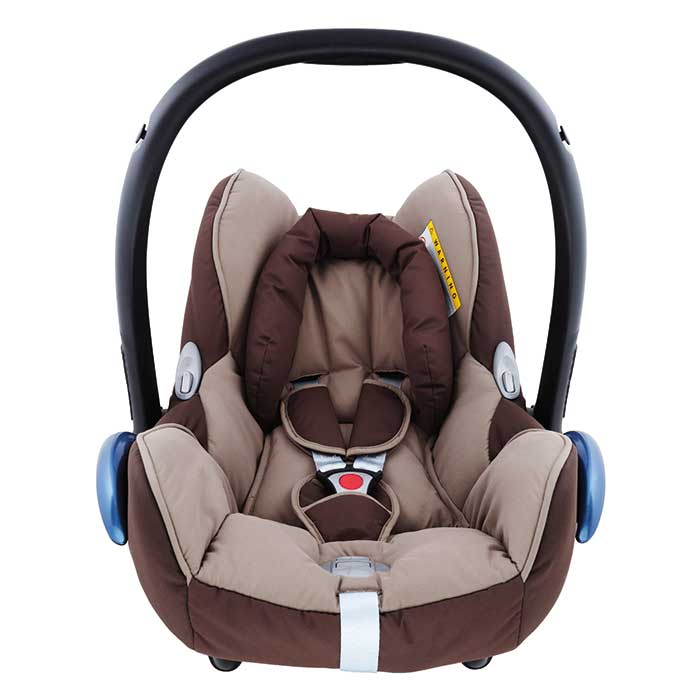
Baby car seat
Group 0+, 0-13 kg
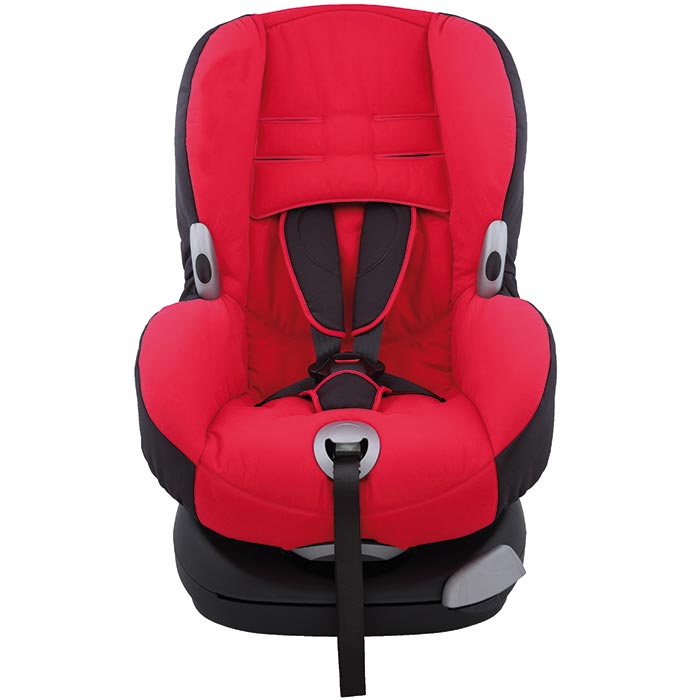
Child car seat
Group I, 9-18 kg
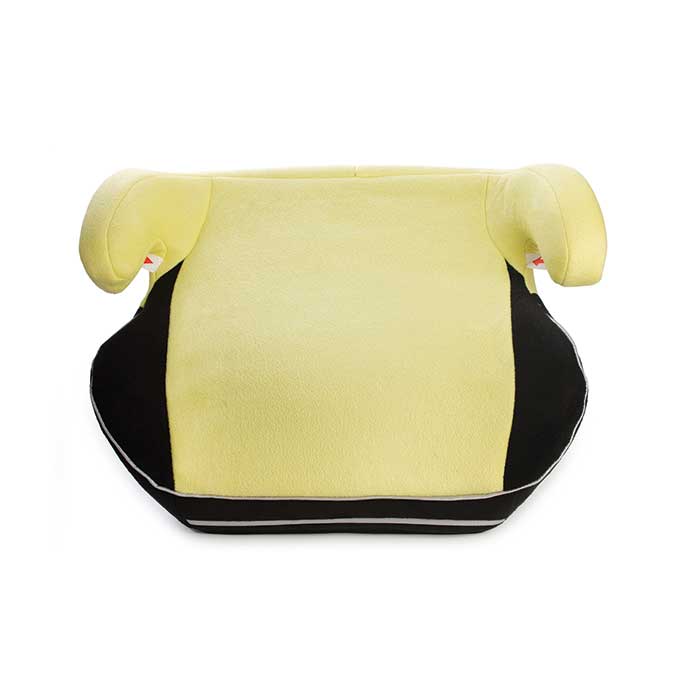
Booster seats (with or without backrest)
Group II, 15-25 kg
Group III, 22-36 kg
Baby car seat (Group 0+, 0-13 kg)
These car seats are for babies and small children up to about 18 months. These seats are mounted against the direction of travel and can be used until the child weighs about 13 kg, or sits with his/her head above the seat shell. Until then, this is the safest choice. The seats are secured in the passenger car by means of the seat belt or the Isofix system and are equipped with their own seat belt for the baby.
Child car seat (Group I, 9-18 kg)
These seats are usually mounted facing the direction of travel and are secured with the seat belt or the Isofix system. They are suitable for children from about one year old. The child is secured by means of a belt of the seat itself, or by means of a ‘restraint’. This is a kind of block that is secured in front of the abdomen and partly the chest with the normal three-point belt.
Booster seat with or without backrest (Group II, 15-25 kg / group III, 22-36 kg)
Usually these two groups are combined in one chair, a booster seat with or without (removable) backrest. It is wise to use the booster seat with backrest for as long as possible, because it provides the best protection. In this seats, the child is usually secured with the normal three-point belt. The booster seat must ensure that the belt is correctly positioned over the body.
Disabling airbags
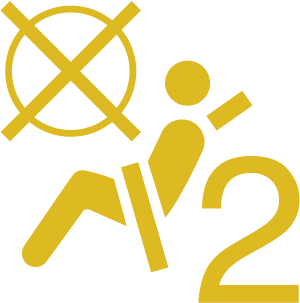
When using a seat that is placed in the opposite direction to the direction of travel, always deactivate the front airbag. These are the airbags that should normally protect the head in a frontal impact. These are included in the dashboard, but can also be located in the headrest of the front seat to protect the rear passengers. This airbag will launch the seat and thus the child through the car. It is therefore mandatory to deactivate this airbag.
When the airbag is activated, always use a seat that is placed in the direction of travel. In that case, put the car seat where the child seat is placed on as far back as possible.
Using child restraint systems
When using a child restraint system, pay attention to the following:
- Make sure the seat is properly secured
Seats with an isofix system are the most stable when properly secured. These are attached to the body of the vehicle with a special click system and will therefore almost never shift. A seat that you fasten with a belt is only properly held in the event of an accident if the seat is correctly positioned in the belt. Read the instructions carefully. - Disable the passenger airbag
If you are transporting a child in a child restraint system on the front seat against the direction of travel, deactivating the passenger airbag is mandatory. Not turning it off is very dangerous. Should the airbag deploy during an accident, the child could be fatally injured. - Take off thick sweaters and coats
A child sitting in a child seat with a winter coat is not so well protected. The child can even be launched from the seat in the event of an accident. In that case, the belts do not close tightly enough around the body. - Use a car seat of a certain group for as long as possible
Switching to a higher group early is less safe because every higher group offers less protection. The child must of course still be able to sit comfortably enough. - Exercise caution when using second-hand seats
With second-hand child restraints, always check whether they have been involved in an accident. As with belts, airbags and helmets, the functioning of a child restraint deteriorates if they have already provided protection in an accident. It is often impossible to determine whether something has ever happened to it. If you have any doubts about this, it is advisable not to use that chair.
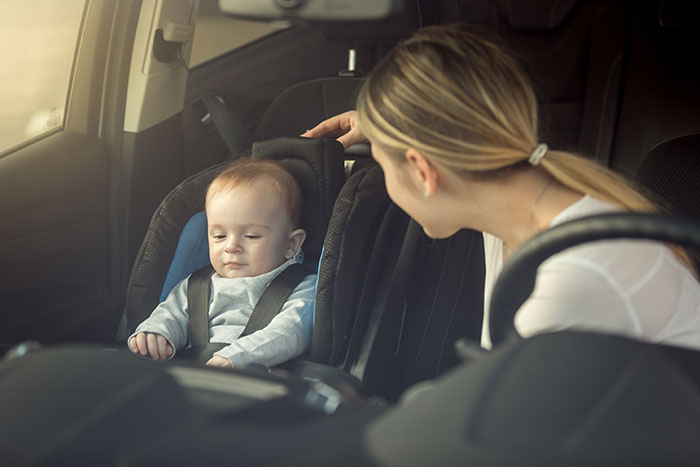
Disabling the passenger airbag is not mandatory in this case, but it is recommended. If this is not possible, move the passenger seat as far back as possible
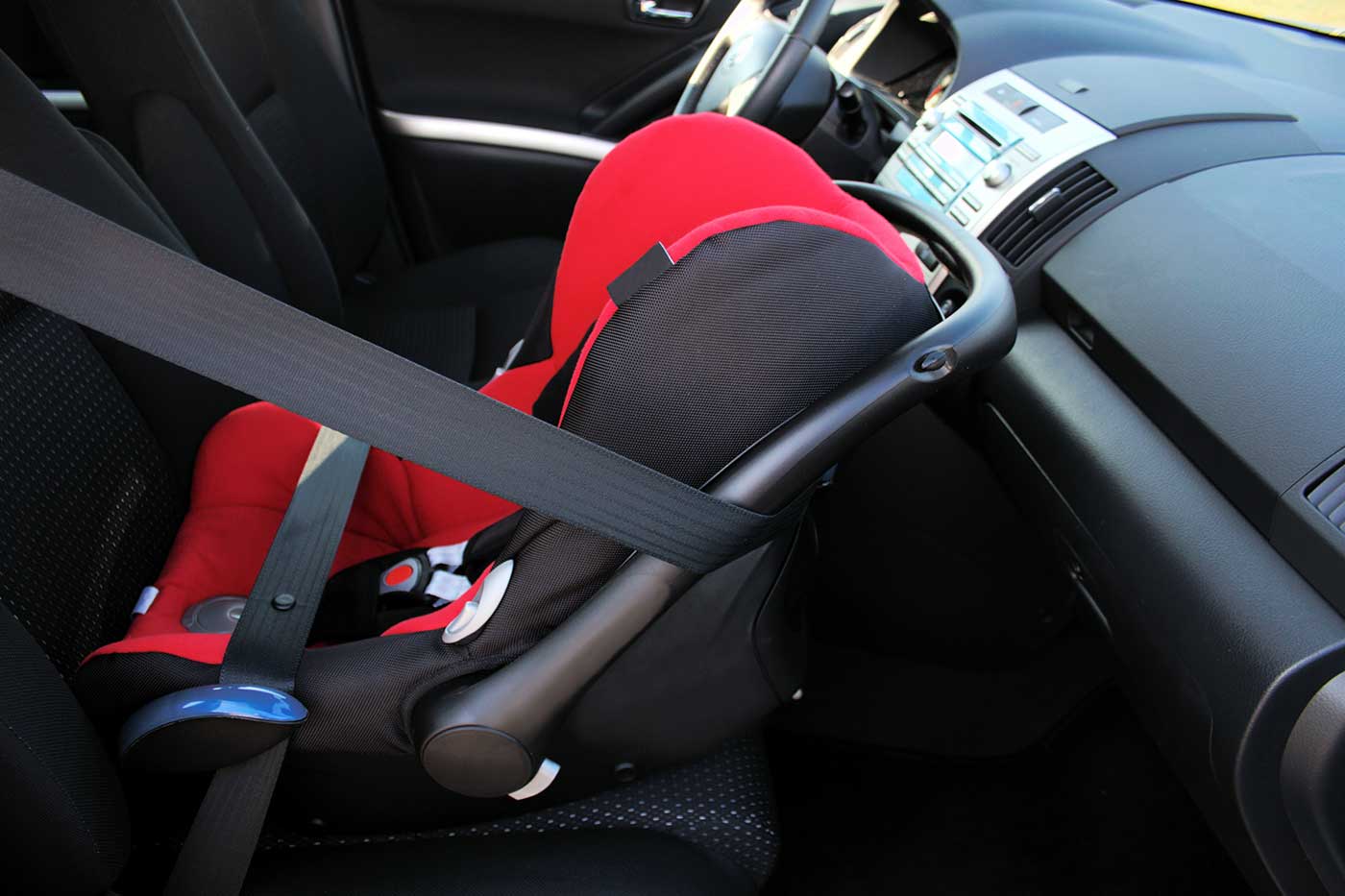
This child seat can only be placed here if the passenger airbag is disabled.
Child restraint system exceptions
Despite the fact that transport in a child restraint system is always the safest choice for children under 1.35 metres, in exceptional cases this may simply not be possible.
Therefore, a number of exceptions are included in the law:
- In taxis and public buses, their use is not mandatory, but they should not be in the front row of seats.
- If a third child seat no longer fits through the use of two other child restraint systems in the back seat, the third child may be transported with only a seat belt in the back seat. This is preferably the oldest child, but in any case a child older than three years.
- If there is incidental transport, such as a children’s party, then children, older than three years but less than 1.35 metres, can be transported in the back seat with only a seat belt.
Warning!
The fact that something is allowed by law does not mean that it is the best choice. If there is an option to use a child restraint system on a child under 1.35 metres, this is always preferable.
Responsibility passengers
Adult passengers have a responsibility to themselves when travelling in a car. Children aged 12 years and older are also responsible for wearing their seat belt. However, this does not absolve the driver of responsibility. As a driver, you are obligated to ensure the safe transport of any passengers and/or cargo. Drivers must also prevent risky behaviour such as passengers’ failure to wear a seat belt or children not remaining seated, and distractions such as loud conversations.
Drivers must remain focused while on the road. Do not allow passengers to rush you, and always follow the applicable rules and laws. If an incident occurs due to driver distraction, the driver will be liable for any damage caused.
Helmet requirement
For a number of motor carriages, instead of a seat belt requirement, a helmet requirement applies. These vehicles, which include mopeds, motorcycles, brommobielen without a closed body, motorised tricycles, and quads, often do not have seat belts. In these cases you are obliged to wear an approved helmet. Again, from the age of 12 the responsibility lies with the passenger himself. The driver is responsible for younger children.
Cargo/load
Cargo must never obscure a driver’s view. Secure all cargo so that it remains in place when accelerating, steering, and braking. Keep in mind that shifting and falling loads can distract you from driving. A vehicle’s lighting and number plate must never be obscured by cargo. Driving with the boot lid open when the vehicle’s number plate is on the boot lid and therefore not clearly visible is prohibited. Furthermore, if cargo falls out of your vehicle, you are likely to be liable for any damage it causes.