

Use of lighting while driving
Vehicle lighting is intended to aid visibility in the dark, and above all to be seen better by others. Sometimes lighting is mandatory and sometimes not. However, drivers are advised to use appropriate lighting both during the day and at night.
- Day
The period between sunrise and sunset.
- Night
The period between sunset and sunrise.
Dipped headlights

Dipped headlights is white or yellow lighting on the front of the vehicle and illuminates a good portion of the road in front of the vehicle. It does not shine straight forward and is not normally blinding. Dipped headlights are always permitted.
The use of dipped headlights is mandatory during the day in poor visibility and at night. This applies to drivers of motor vehicles, all types of mopeds and drivers of motorised disability vehicles. You also turn on the dipped headlights well before entering a tunnel.
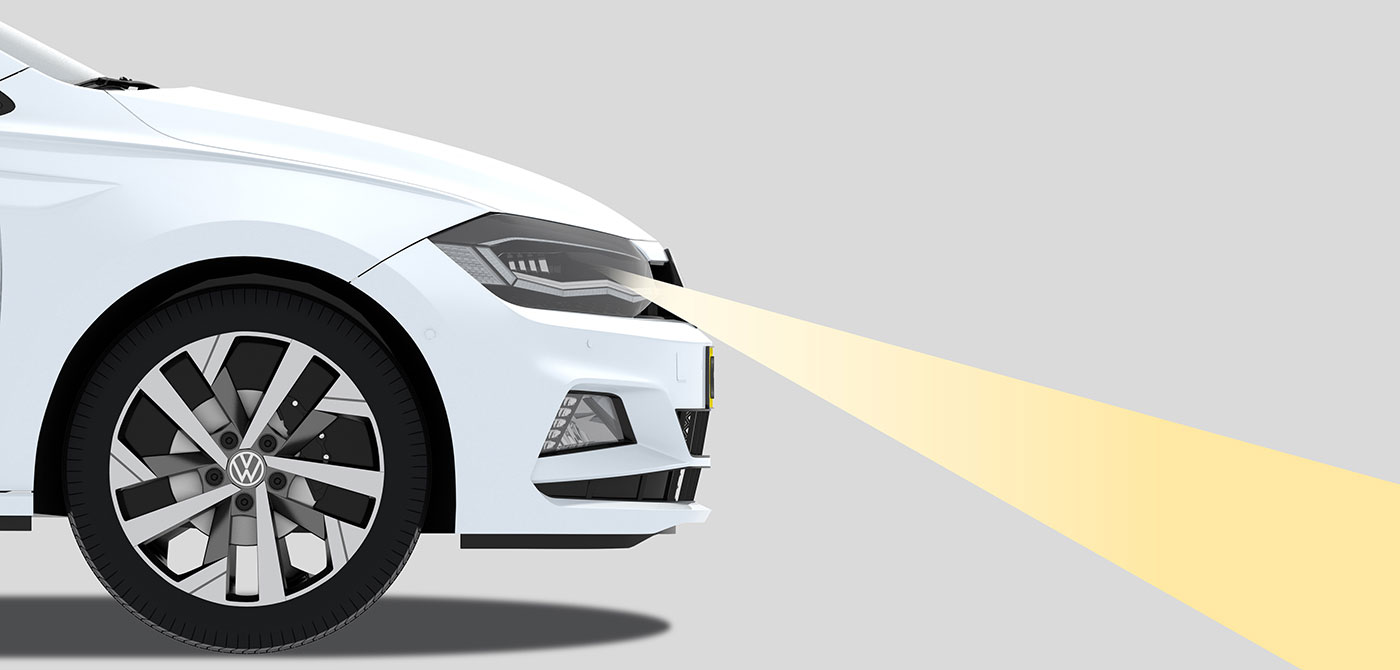
Dipped headlights illuminate a good portion of the road in front of the vehicle without blinding oncoming traffic.
Daytime running lights
Daytime running lights are available on all new passenger cars. In many cases, daytime running lights consist of LED lighting next to, under or around the headlamp. Daytime running lights may only be used if dipped headlights are not mandatory and if no other front lighting is switched on.
In most passenger cars, the daytime running lights are on when the light switch is turned off. As soon as you switch on other lighting, the daytime running lights switch off automatically.
Daytime running lights aim to ensure vehicles always remain clearly visible, even
when the dipped headlights are not switched on.
The disadvantage of older
passenger cars is that the rear lights are not always lit together with the daytime
running lights. This results in poorer rear visibility. With new passenger cars, it is
mandatory that the taillights are lit together with the daytime running lights.
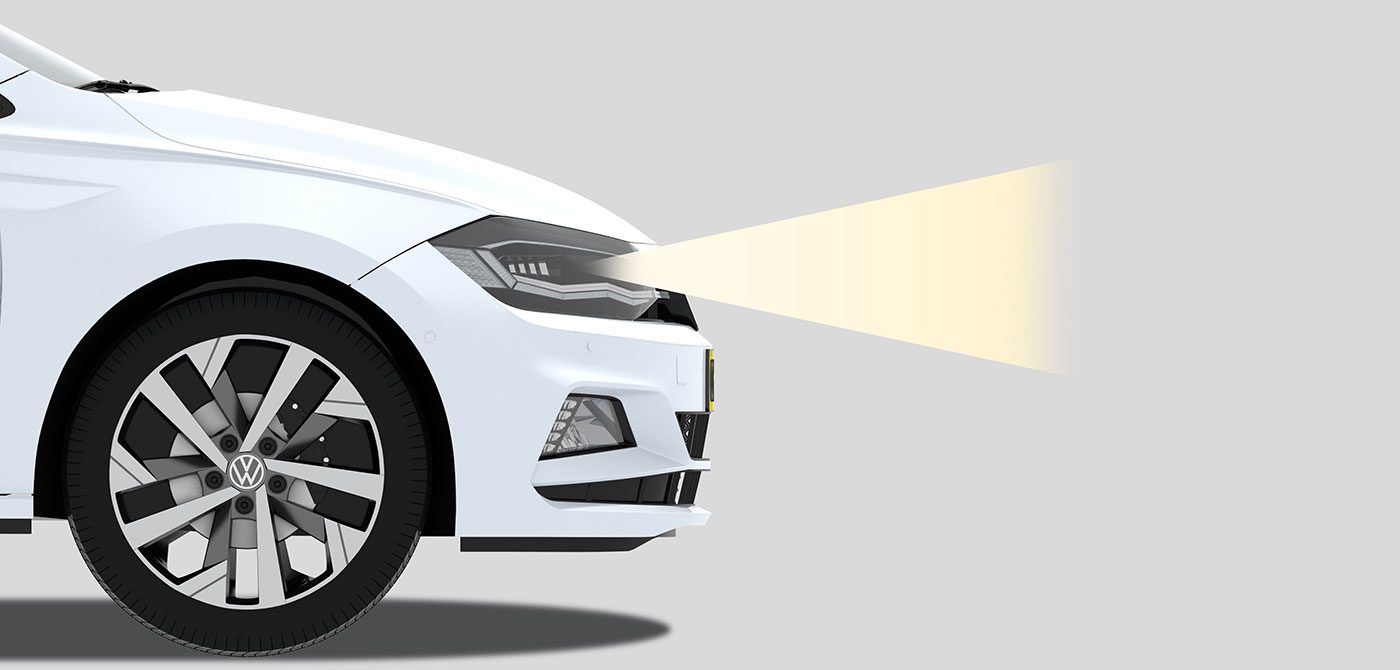
Daytime running lights mainly make the vehicle visible and illuminate a smaller portion of the road in front of the vehicle.
Full-beam headlights

If there is insufficient visibility with only dipped headlights, you can use full-beam headlights instead. Full-beam is not allowed:
- during the day;
- when encountering other road users;
- when driving closely behind another vehicle.
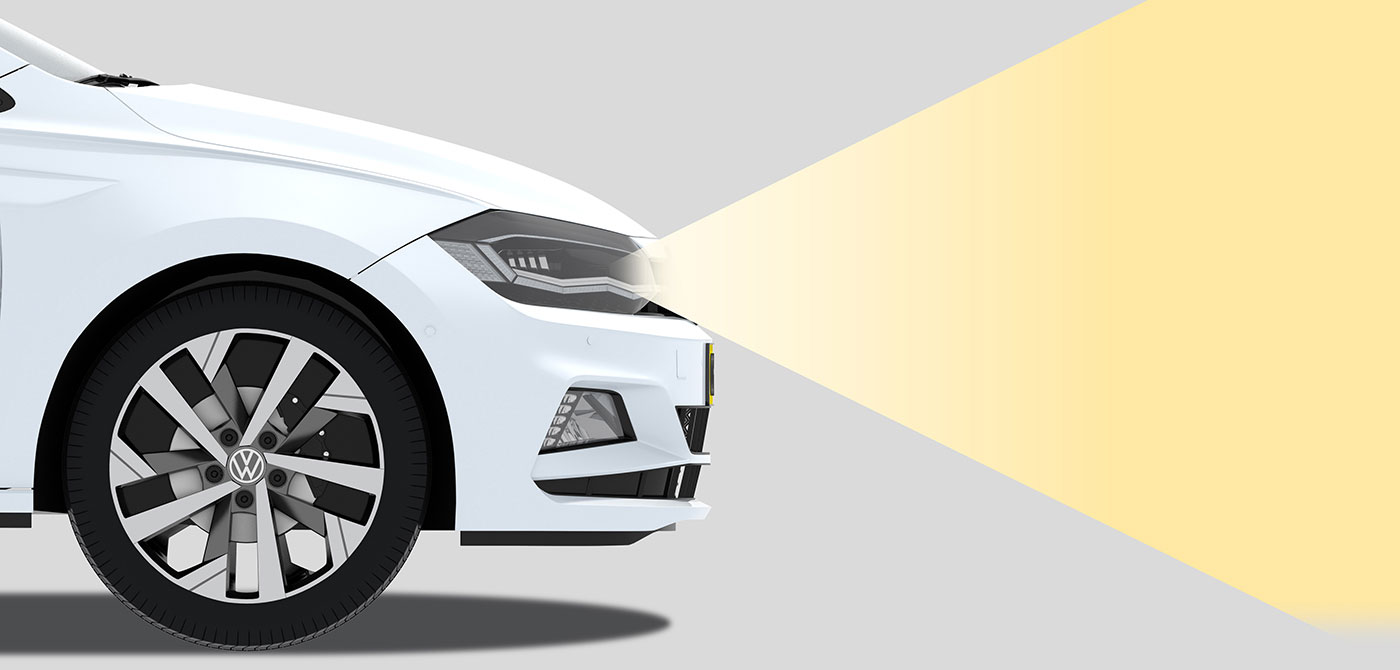
Full-beam headlights illuminate much more of the road and the surrounding area. The bright beam blinds oncoming traffic. Also, drivers of vehicles driving in front of you can be blinded.
In addition, the use of full-beam headlights is unwise in bad weather conditions such as heavy rain, snow or fog. In that case, you are very likely to be blinded by your own lighting.
Full-beam headlights are bright lights that shine straight ahead. That is why they quickly blind. If you are blinded by oncoming traffic with full-beam headlights, flash your full-beam to warn them.
If you are bothered by the full-beam headlights of a vehicle driving behind you, it is difficult to warn this driver. However, you can use the dimming mirror yourself, by folding the rearview mirror into the dimming position. Many luxury passenger cars nowadays have an automatically dimming rearview mirror. With some passenger cars even the wing mirrors dim.
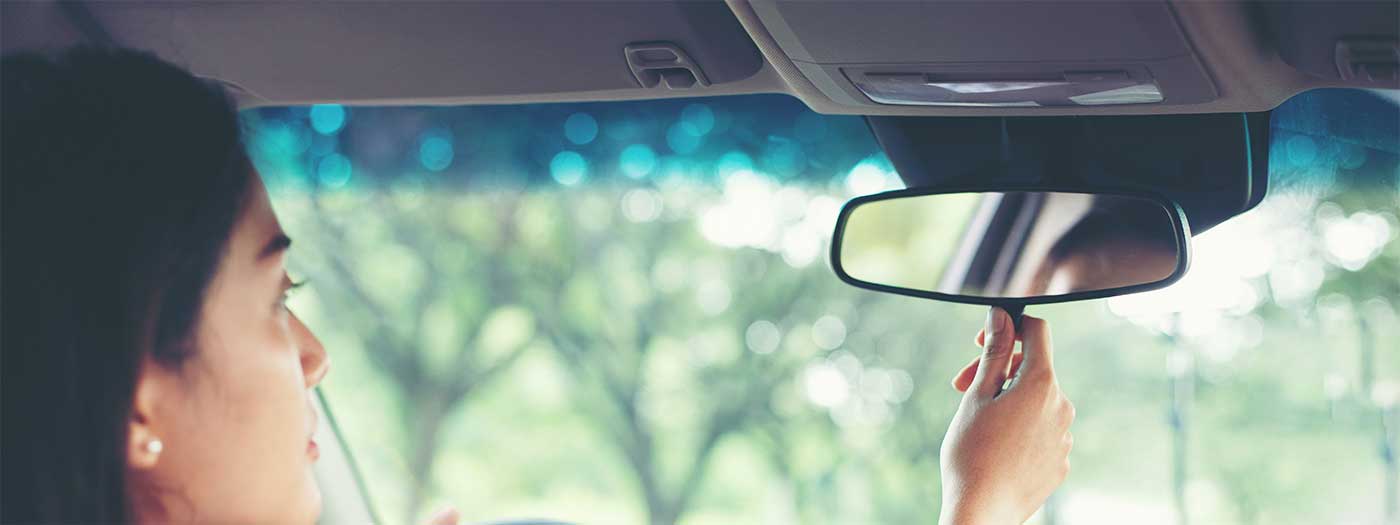
If you are blinded by lighting from vehicles behind you, you can set the rearview mirror to the dim position using the lever underneath. In some passenger cars, the rearview mirror dims automatically.
Front fog lights

As the name says, this lighting is mainly intended for use during fog. They should only be used if visibility is severely obstructed by fog, snow or rain. In addition to fog light, you can use either dipped headlights or sidelights. In very dense fog, even dipped headlights can have a blinding effect and are therefore not mandatory with fog lights.
Front fog lights face downwards and are therefore not blinding. The disadvantage is that the light only shines close to the passenger car. Not all passenger cars are equipped with a front fog light.
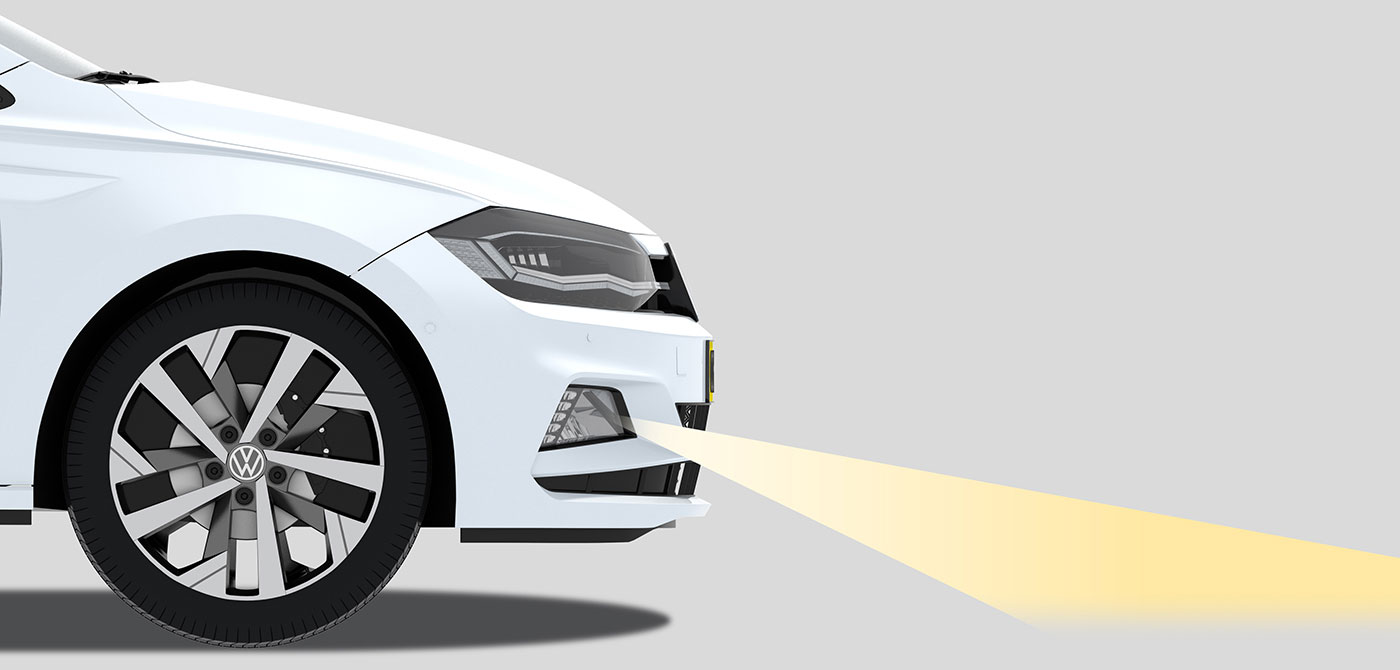
Front fog light illuminates the road just in front of the vehicle. Because the lamps are low, they partly shine through under the fog banks.
Rear fog lights

Rear fog lights consist of one or two bright red lamps at the rear of the passenger car. Because these are very bright, they are sometimes confused with the brake light. Because the rear fog light is so bright, it should only be used if visibility is very poor. This is when the visibility is less than 50 metres.
Reflector posts along the road are usually 50 metres apart. If you drive past a reflector post and you only see the next post after that, you can switch on your rear fog light.
It is also important to know that this is only allowed in fog or snow. During rainfall, the use of a rear fog light is not allowed as it can blind traffic behind you. A warning light in the dashboard will come on when you turn on the rear fog light. This way you cannot accidentally have it switched on.
Sidelights

Sidelights provide little light. They are white or yellow lamps on the front of the vehicle. In most passenger cars, the light switch has the sidelights between the ‘OFF’ position and the dipped headlights. As already mentioned, sidelights can be used in combination with front fog lights.
Besides that, sidelights are seldom used. Usually the sidelights are the same as the parking light.
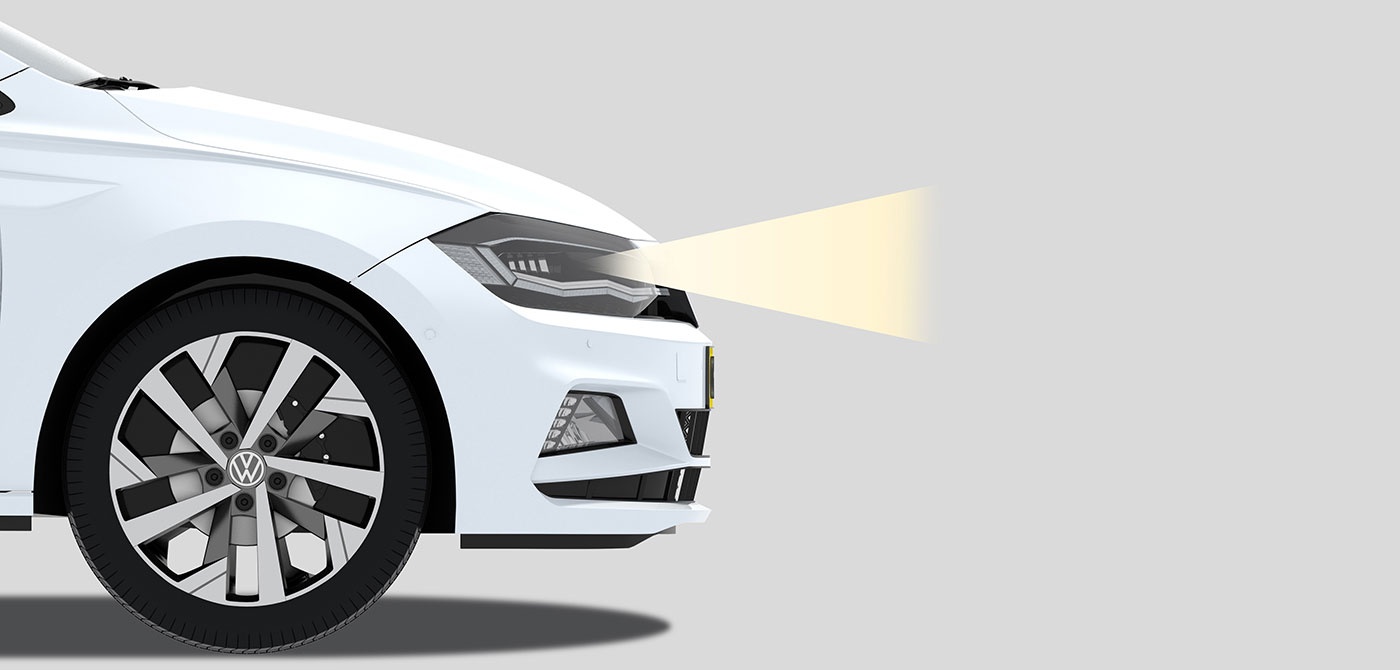
Sidelights emit little light. They are mostly the same lights as parking lights.
Rear lights
These are the normal red lamps on the back of the passenger car. These should always be on when full-beam or dipped headlights, sidelights or fog lights are on at the front. These lights are normally not blinding and less bright than the brake lights and rear fog light. With the latest passenger cars, this lighting also lights up when the daytime running lights are on.
Number plate lighting
This white lighting illuminates the number plate at the rear. Just like the rear light, the number plate lighting must also be lit if full-beam or dipped headlights, sidelights or fog lights are switched on at the front.
Brake lights
The brake light consists of three bright red lamps that light up as soon as you use the brake pedal. The third brake light is usually located at the top or bottom centre of the rear window. Because brake lights are so bright, you should try to brake as little as possible unnecessarily. Every time the brake lights come on, this can cause a startle response from the traffic behind you. So, make sure you release your gas in time and keep sufficient distance.
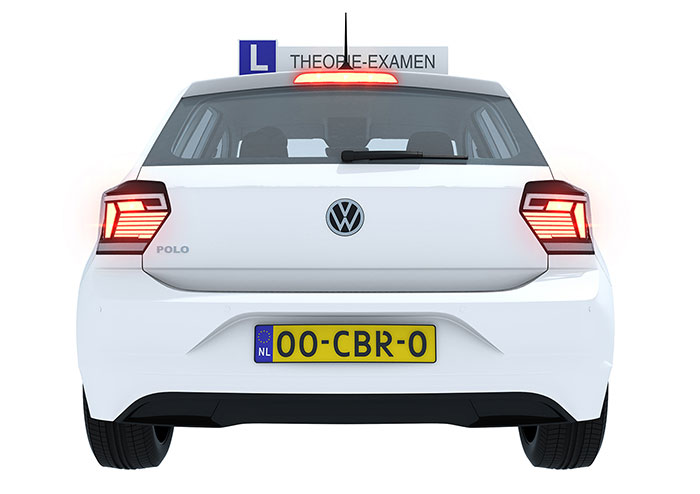
Brake lights are important for communication in traffic. Because they are so bright, they can cause irritation when used unnecessarily.
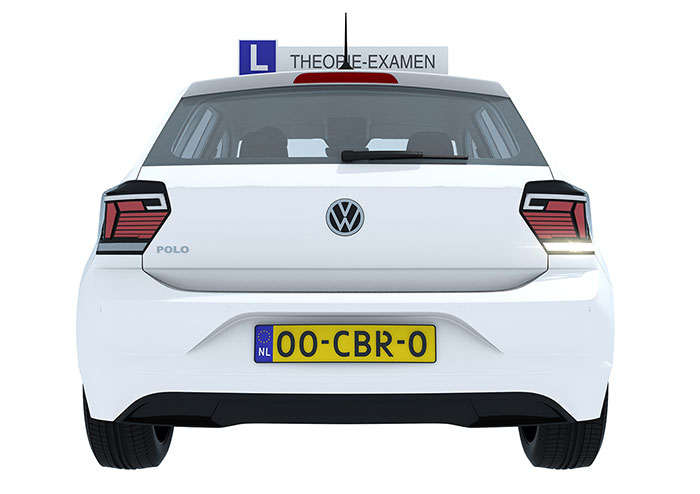
The reverse light warns road users behind the vehicle that it is going to reverse.
Reverse lights
These are the white or yellow lights on the back of a passenger car that come on as soon as you put the passenger car in reverse gear. These are intended to warn traffic behind you that you will be driving backwards. A passenger car can be equipped with one or two reversing lights.
Special lighting
In addition to all this lighting, other light may also be used during the use of dipped headlights or fog light at the front. For example, modern passenger cars are increasingly equipped with cornering lights. This lighting turns in the corner, or switches on as soon as you start steering. It makes the edges of the bend more visible in the dark.
Other lighting
Adding extra lighting to a vehicle is not always allowed. Replacing the normal lighting with xenon lamps or LED lighting is not something you can easily do yourself. If you still want to add more lighting to your vehicle or change lighting, get advice from someone with professional knowledge. Certainly, not all lighting that is sold is allowed on passenger cars.
Trailer lighting
Just like the towing vehicle, a trailer must provide lighting during the day in poor visibility and at night. This lighting consists of red rear lights, lighting of the number plate and white sidelights at the front. These sidelights only need to be present on trailers wider than 1.60 metres.