

Special vehicles – part 2
- Military convoy
A number of military motor vehicles behind each other, or motor vehicles of the disaster relief organisation.
Military convoys
To make sure that a military convoy stays together as much as possible, they have some special rights:
- Road users should not cut through a military convoy.
This means, that as soon as the first vehicle has started crossing or turning, the rest of the convoy may follow and the other road users are not allowed to cut through, or interrupt, this convoy. They have to wait, even if they have priority according to the traffic rules. Note: the first vehicle of the convoy must follow the traffic rules regarding priority. - They do not have to give way to pedestrians at a pedestrian crossing.
All vehicles of the convoy, including the first vehicle, are allowed to pass at a pedestrian crossing, even if pedestrians are waiting to cross. - They do not have to give way to buses that want to leave a bus stop.
All vehicles of the convoy are allowed to pass if a bus within the built-up area signals its intention to drive away from a bus stop. - If the first vehicle of the convoy starts crossing the intersection at a green traffic, all following vehicles are allowed to drive on.
Even if this involves driving through a yellow or red traffic light. If other road users have a green traffic light, those road users must wait until the convoy has finished crossing the intersection. Please note: the first vehicle of the convoy must obey the traffic lights!
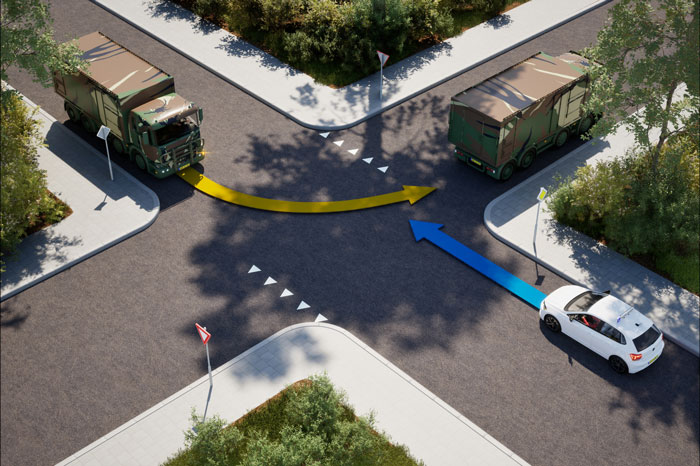
In this case, the vehicles of the military convoy are allowed to go first. They have already started turning.
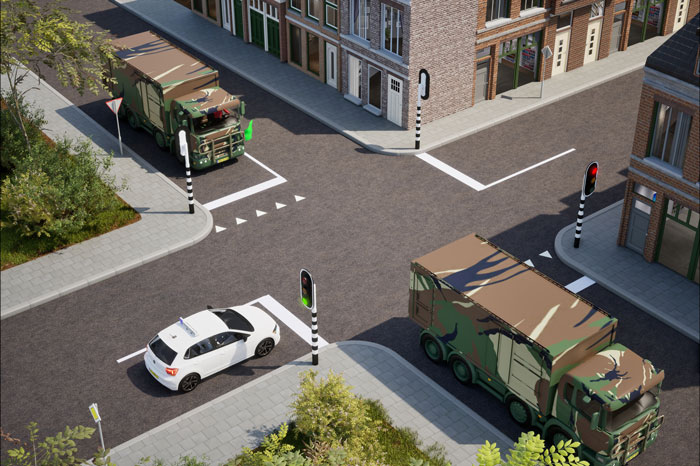
Despite the fact that the driver of the lesson car now has the green light, he is not allowed to cut through the military convoy if the first vehicle has entered the intersection when he had the green light.
The rules regarding cutting through the convoy or driving on at a red traffic light do not apply to the driver of the first vehicle of the military convoy. These special rights only apply to the support vehicles to ensure that the group stays together as much as possible.
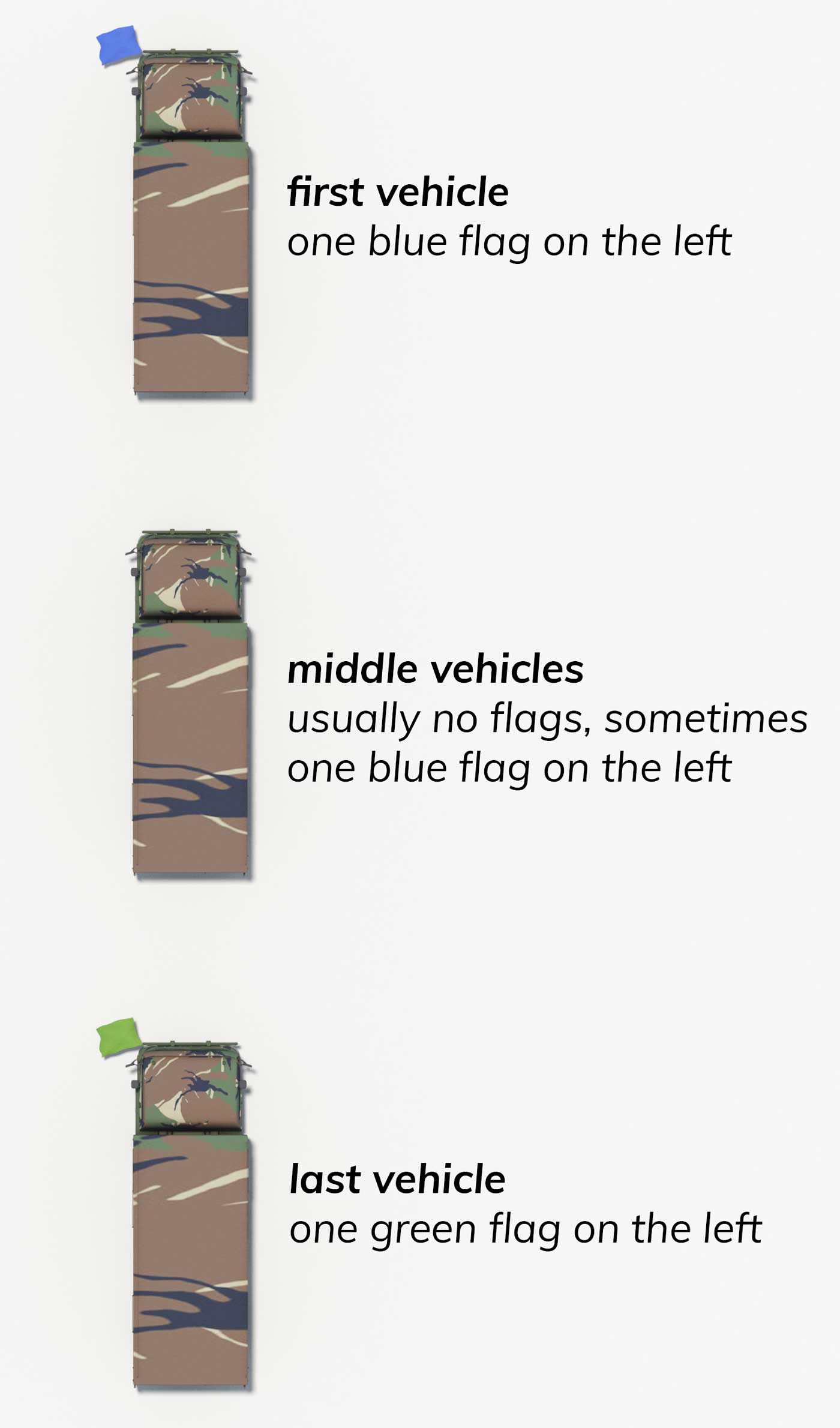
Vehicles in military convoys carry identification marks that indicate whether they are the first, middle, or last vehicle in the convoy:
- First vehicle
one blue flag on the left side of the vehicle. - Middle vehicles
usually no flags at all, sometimes one blue flag on the left side of the vehicle. - Last vehicle
one green flag on the left side of the vehicle.
- Funeral procession of motor vehicles
-
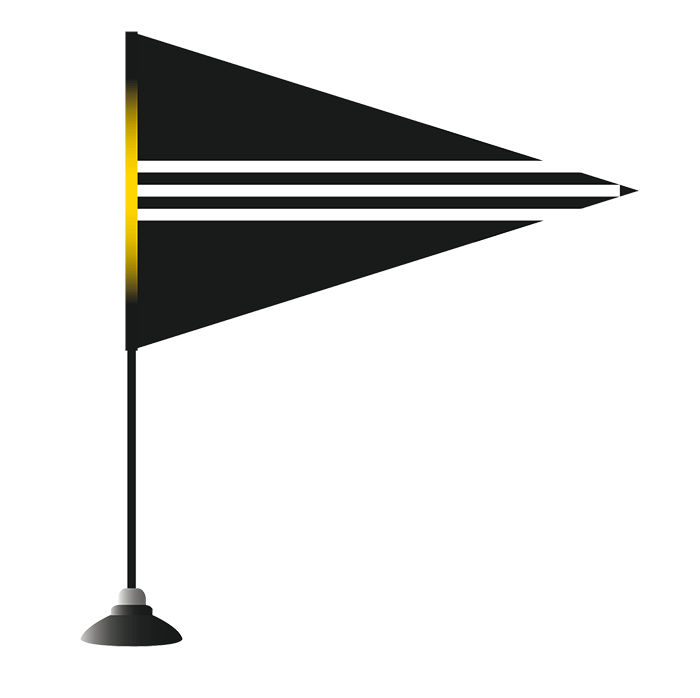
A procession, consisting of motor vehicles, that accompany a deceased person to a cemetery or crematorium. Motor vehicles that are part of a funeral procession can be recognised by a black flag with three white horizontal lines.
Funeral procession of motor vehicles
Funeral processions come with a bit of respect for the deceased person. Here, too, it is nice if the following vehicles can continue to follow the vehicle in front (the hearse) as much as possible. This is why they have almost the same rights as a military convoy:
- They must not be cut through.
The hearse, however, must always follow the traffic rules regarding priority. - They do not have to give way to pedestrians at a pedestrian crossing.
In that case, even the hearse may also drive on. - They do not have te give way to buses that want to leave a bus stop.
This also includes the hearse.
However, unlike military convoys, the following vehicles in a funeral procession must always stop at a yellow or red traffic light. Even if the hearse has entered the intersection at a green traffic light.
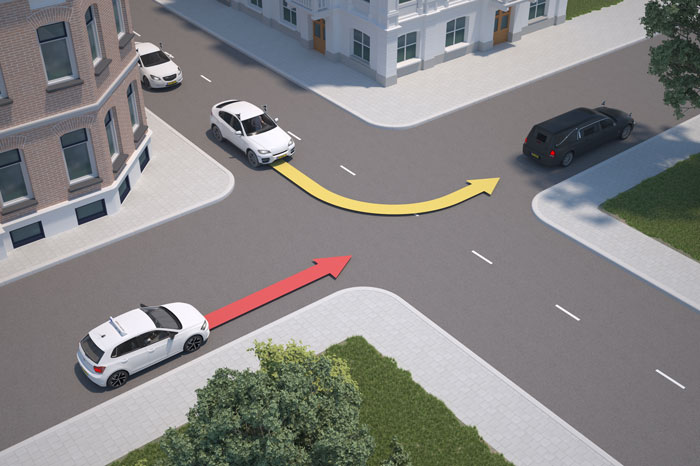
The driver of the lesson car must give right of way to the funeral procession because they have already started turning.
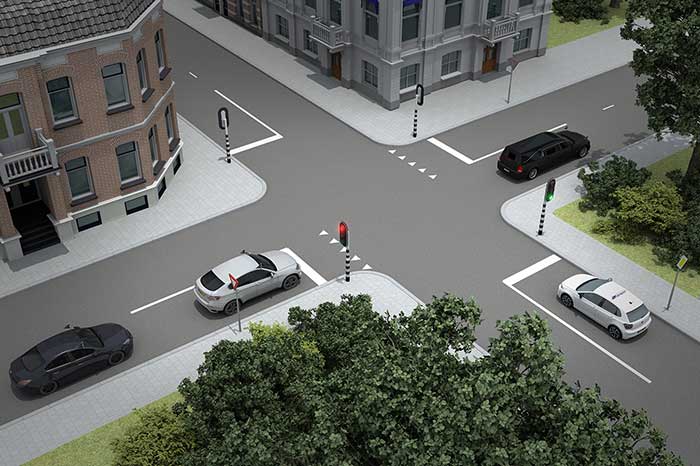
The driver of the lesson car is allowed to continue because the drivers of the other vehicles have to wait for a green light.
Merging and overtaking
If, when merging on an autoweg or motorway, you end up next to a military convoy or funeral procession and it is not possible to merge in front of or behind it, you may merge between the convoy or procession. Also, if you are unable to overtake the entire convoy or procession at once, you may drive in between the vehicles. Note: you do not become part of the convoy or procession in that case. You still have to follow all the normal traffic rules. As this may cause inconvenience to the military convoy or funeral procession you should try to avoid this as much as possible.
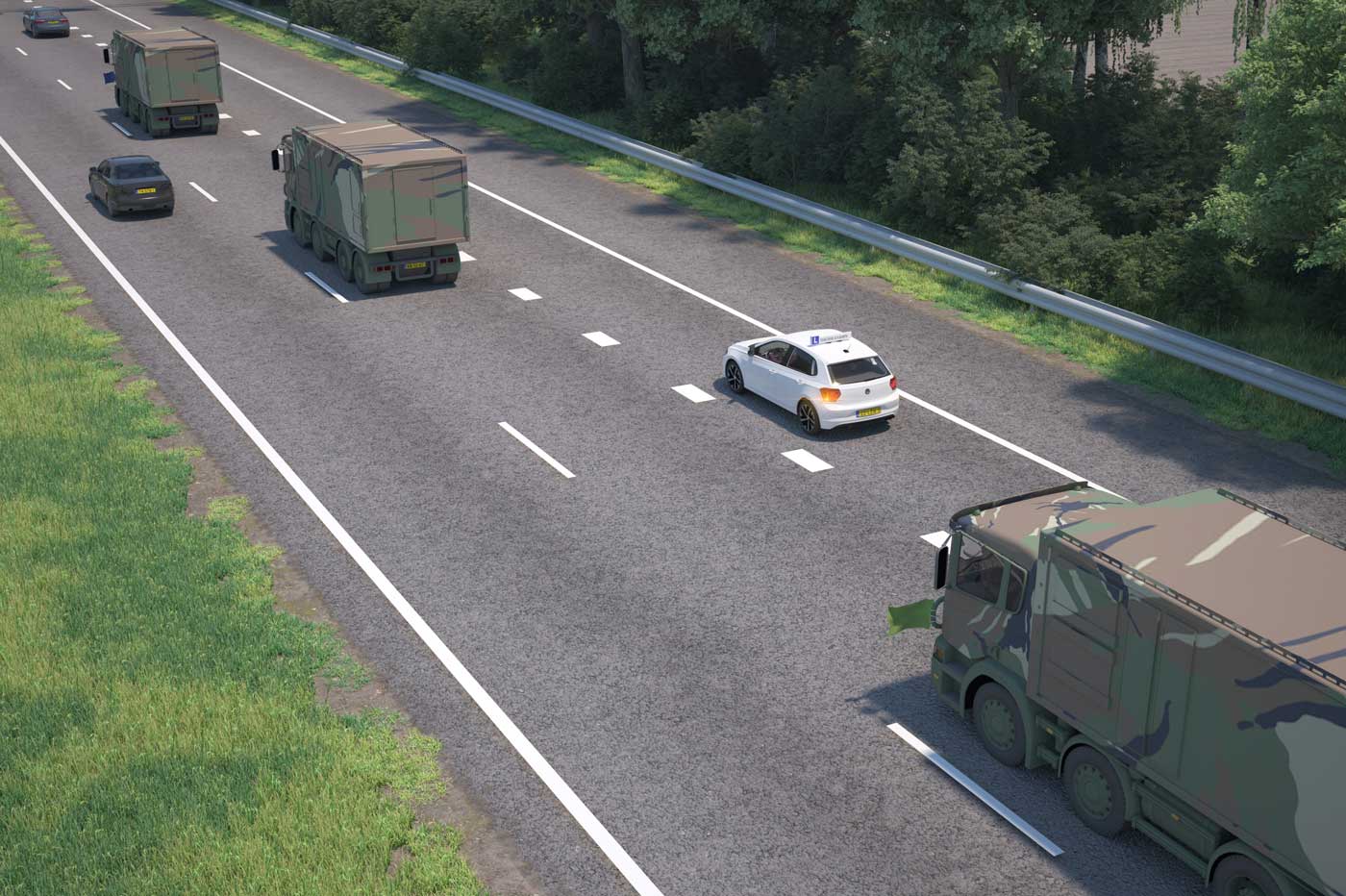
The lesson car is allowed to merge in between the military convoy. If it is possible, they have to leave that spot as soon as they can, for instance by overtaking the military convoy after merging.
With regards to cutting the convoy or procession, we only talk about the traffic rules regarding priority and giving way. So this involves the rules ‘drivers from right have priority’, ‘through traffic on the same road goes before traffic turning off’ and ‘the short turn goes before the long turn’. Once there are priority signs and signals regulating priority, these take precedence over the rules. Since the prohibition of cutting is also a rule, priority signs and markings like priority triangles on the road surface also take precedence over that rule. This means that vehicles of a military convoy or funeral procession have to obey priority signs when approaching them. However, no questions are asked by the CBR about this specific situation.