

Special roads
While driving on public roads you will come across different types of roads. Some are wider and others narrower. In addition, you can and may drive much faster on one road than on the other. Adapted rules apply on a number of roads.
The main special roads with adapted rules are:
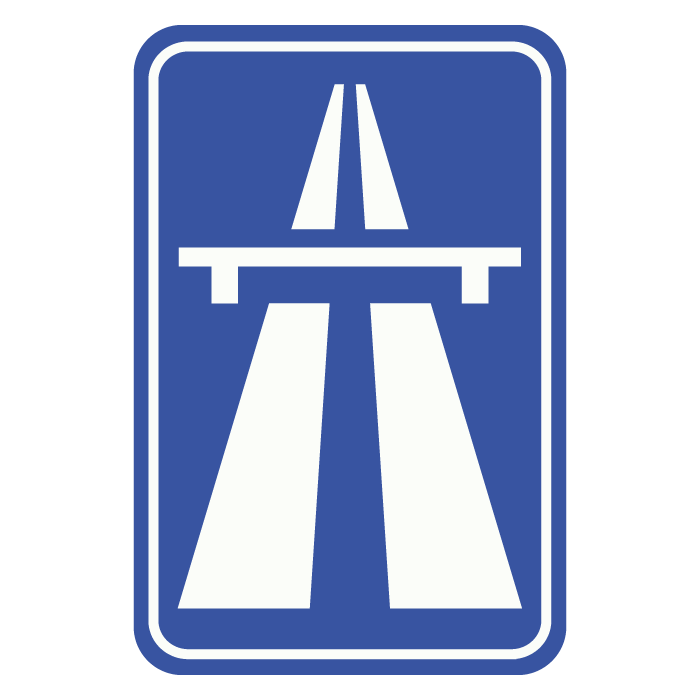
Motorway
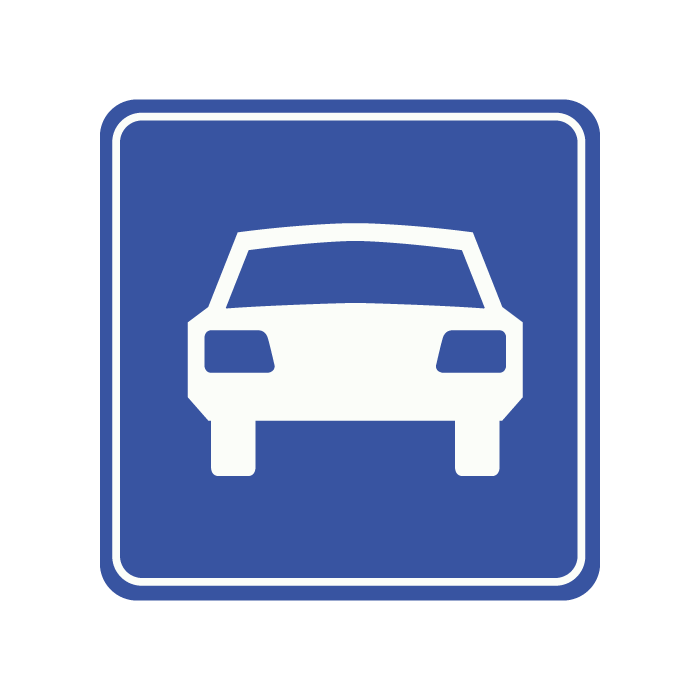
Autoweg
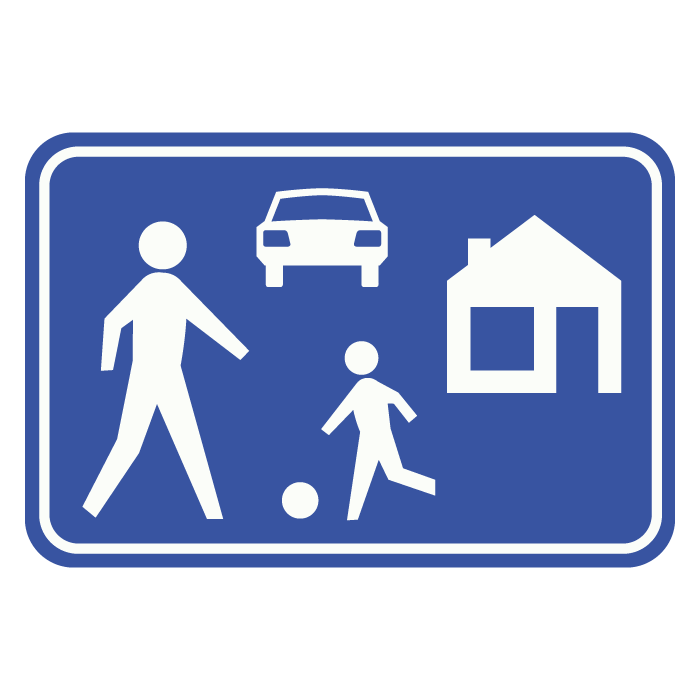
Erf
Motorways and autowegen
The maximum allowed speed on a motorway is 130 km/h. On an autoweg this is 100 km/h. These speeds are only valid if no other speed is specified. On these roads it is dangerous to drive much slower than other traffic. Therefore, not all vehicles are allowed to drive on these roads:
- Only motor vehicles that can and may drive at least 50 km/h are allowed to use the autoweg.
- Only motor vehicles that can and may drive at least 60 km/h are allowed to use the motorway.
You may therefore not ride a moped on an autoweg or motorway, even if it has been upgraded and can therefore reach 50 or 60 km/h, as mopeds have a speed limit of 45 km/h.
If a passenger car cannot reach these speeds due to technical problems, it also may not enter an autoweg or motorway, even if the vehicle is allowed to drive faster than 60 km/h.
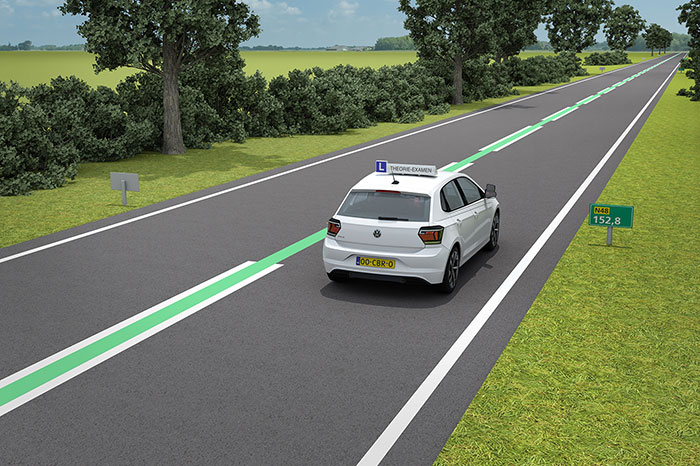
Many autowegen can be recognized by the green axis line, the line in the middle of the road.
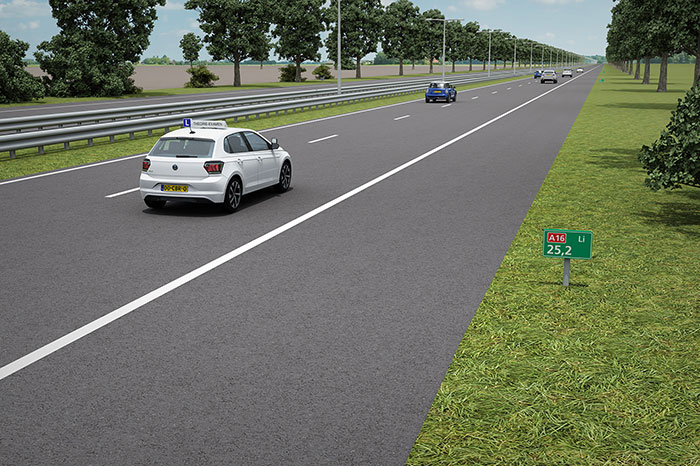
Motorways consist of several lanes and (almost) always have a hard shoulder.
There is no minimum required speed on an autoweg or motorway itself. The speed you should drive on a motorway or autoweg mainly depends on the crowds and the speed of the rest of the traffic.
On a quiet motorway, most drivers maintain a speed of between 80 and 130 km/h. If you drive your passenger car at a speed of 60 km/h, you are a danger on the road. This is not permitted by Article 5 of the Road Traffic Act.
A number of other rules have also been made to keep it safe on the motorway and autoweg. For example, you may not:
- make a U-turn or reverse;
- stop on the carriageway (involuntarily stopping due to traffic is allowed);
- drive or wait on the hard shoulder, emergency refuge areas, or in the verge, except in emergencies.
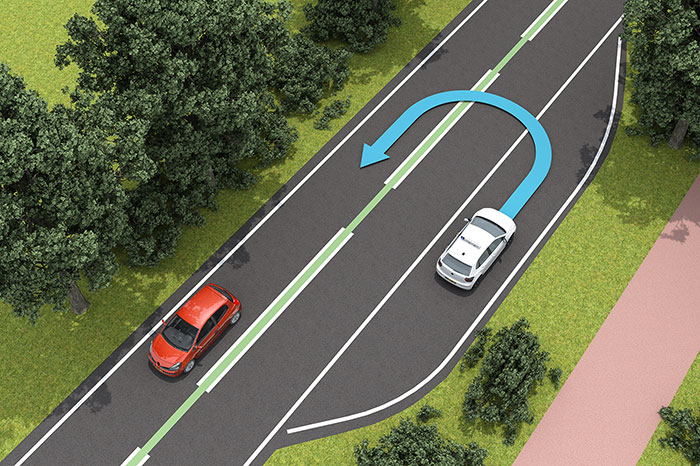
Making a U-turn on an autoweg is prohibited and also very dangerous.
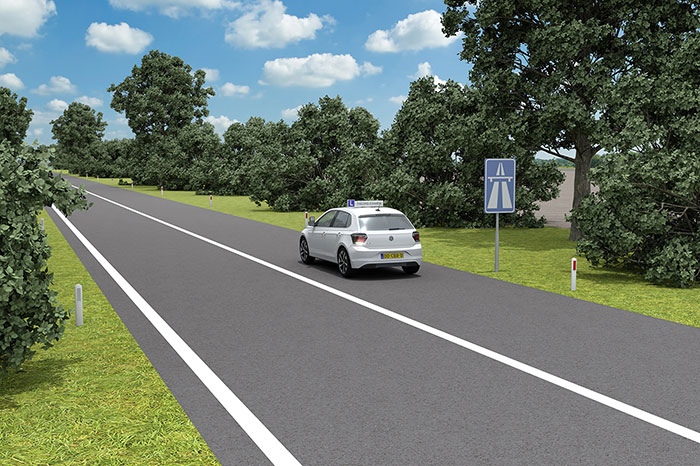
Reversing on an autoweg or motorway is not allowed. Not even if you do this on the hard shoulder. You are not allowed to drive here except in an emergency.
Another rule on the motorway is that you are not allowed to drive everywhere with a vehicle combination (for example a passenger car with trailer) of more than seven meters in length. You may only drive on the two rightmost lanes. Unless you have to use a different lane to be able to pre-sort. This rule also applies to drivers of a lorry.
Rush-hour lane
On the motorway, you will regularly encounter rush-hour lanes. This can be an extra lane on the left side of the carriageway, but it can also be that the hard shoulder is in use as an extra lane. Signs next to the road and matrix signs above the lanes indicate whether or not this rush-hour lane is open. Do you see a red cross above a lane? Then you are not allowed to drive on this lane. Also pay attention to the maximum speed limit. This can change as soon as the rush-hour lane is open.
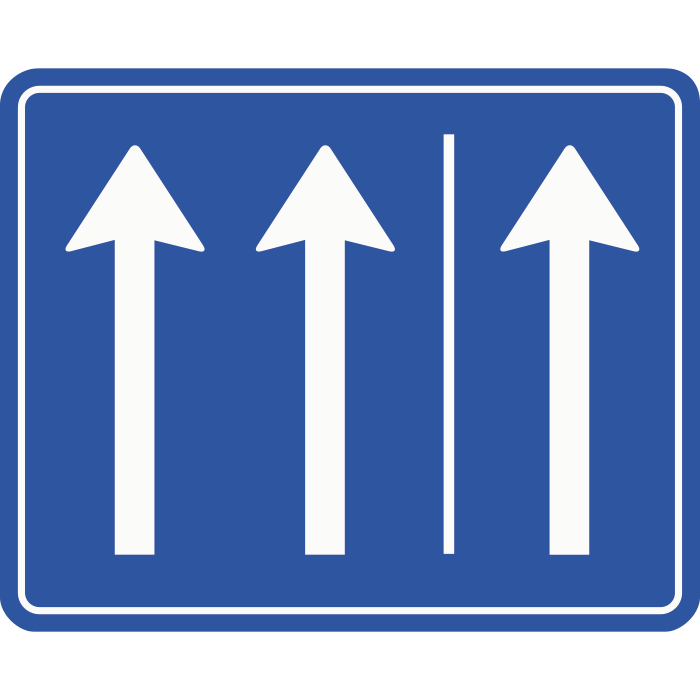
Rush-hour lane open
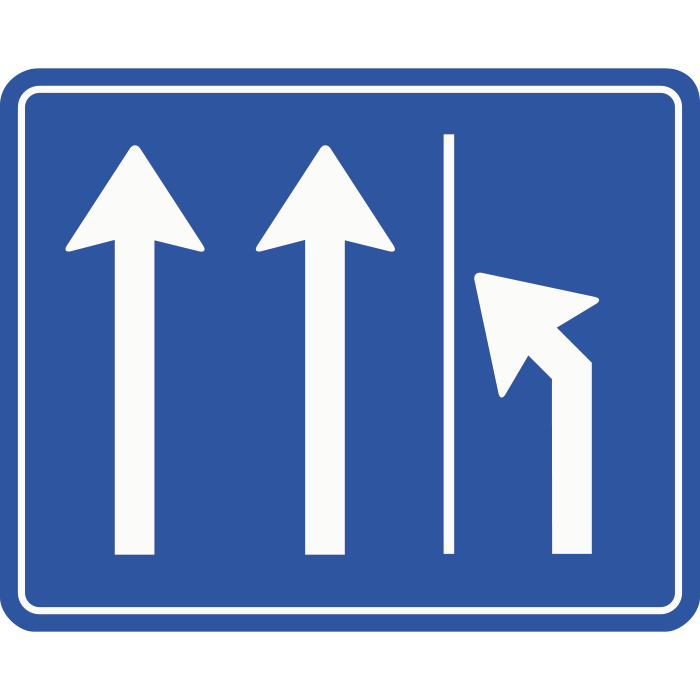
Clear rush-hour lane
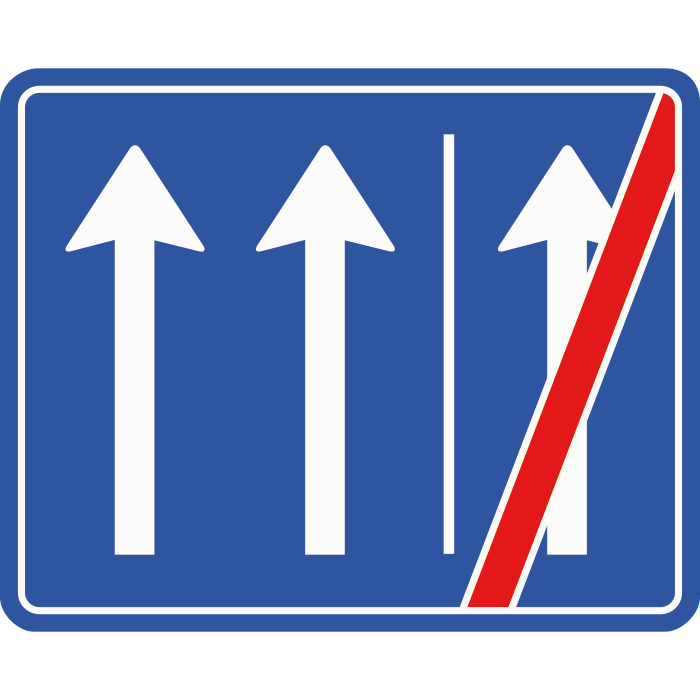
End of rush-hour lane
(c) Wim Zagt Reallifefilm by order of Rijkswaterstaat
Note: The video is in Dutch, but you can turn on the English subtitles by clicking the CC button.
Erf
It is often thought that pedestrians have right of way on an erf. This is not the case. Within the erf, the same priority rules apply as on normal roads. The entrances and exits of an erf are usually designed as an entrance or exit construction. When entering a entrance construction and driving out of an exit construction, drivers must give way to all other traffic. This also includes pedestrians.
G-5
Erf
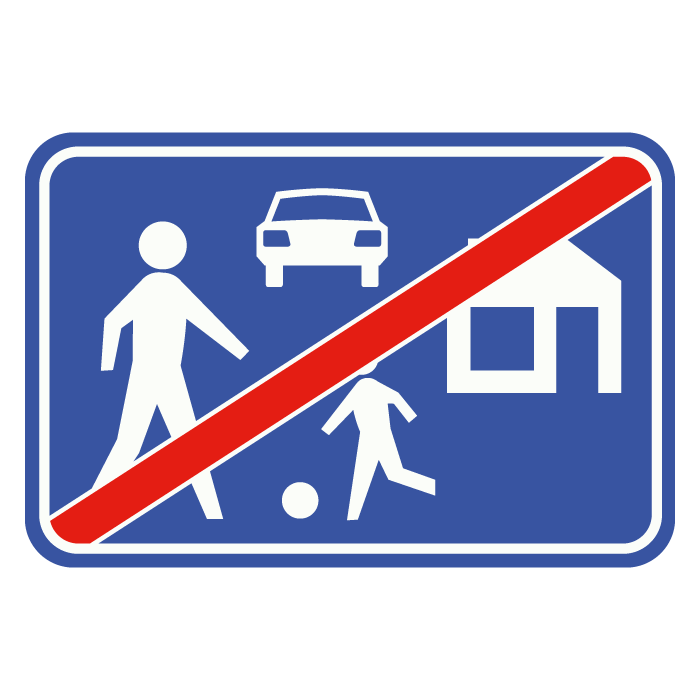
G-6
End of the erf
There are a few other rules within an erf:
- Pedestrians are allowed to use the road across the entire width. So they do not have to walk on the side of the road. This is because there are no pavements within an erf.
- The speed limit for drivers is 15 km/h.
- Drivers of a motor vehicle may only park in places that are designated as parking places. This is usually due to a sign with a P, or a P on the road surface. It is not allowed to park outside the parking places.
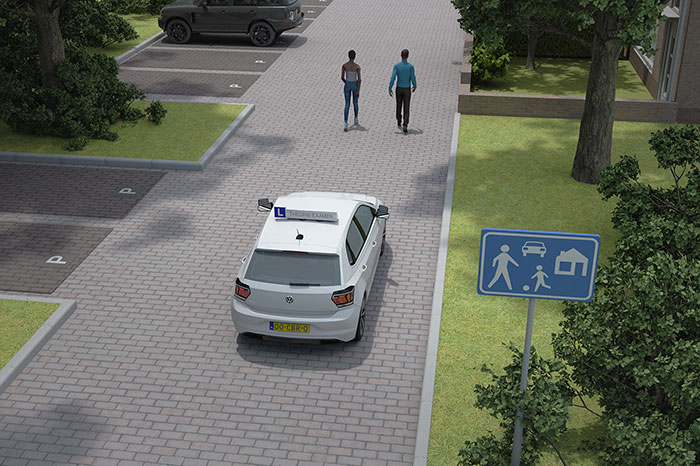
In an erf, pedestrians are allowed to use the entire width of the road.
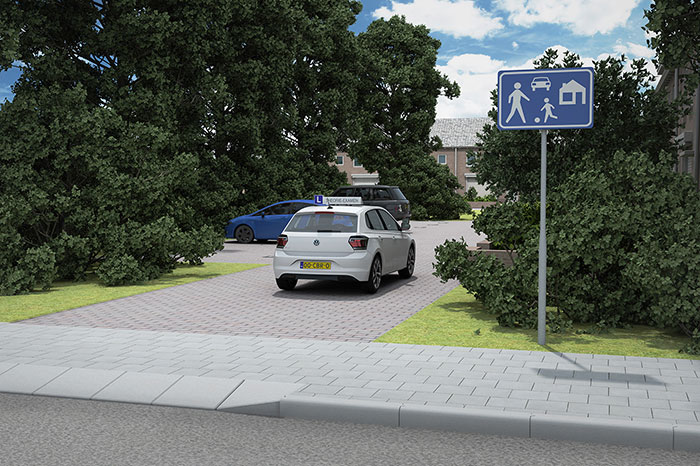
In most cases you drive in and out of an erf via an entrance or exit construction.