

Stopping and parking – part 2
Parking
If you are waiting not due to a traffic situation, and you are also not loading or unloading goods or picking up or dropping off passengers, this falls under parking. For example, if you are waiting for a passenger, you are parking until this passenger is actually getting into the vehicle. If you stop at the side of the road to make a phone call, check a map, ask for directions, or read a message, this all falls under parking.
- Parking lane
Paved strip located along the carriageway intended for stationary or parked vehicles.
- Parking
Stopping a vehicle for a reason other than the immediate dropping off or picking up passengers or the immediate loading and unloading of goods, and for longer than either of the aforementioned would require.
Parking is prohibited in areas where waiting is prohibited. Parking is also prohibited in the following areas:
- within five metres of an intersection;
- for an entrance or exit construction, even if this is your own exit;
- outside the built-up area on the carriageway of a priority road; parking in the verge is allowed;
- next to a broken yellow line, usually found on kerbs;
- next to another parked vehicle which means you are double parked;
- in a parking lot indicated by signs with a P, you may not park outside the parking spaces, if these spaces are there;
- outside the parking spaces within an erf.
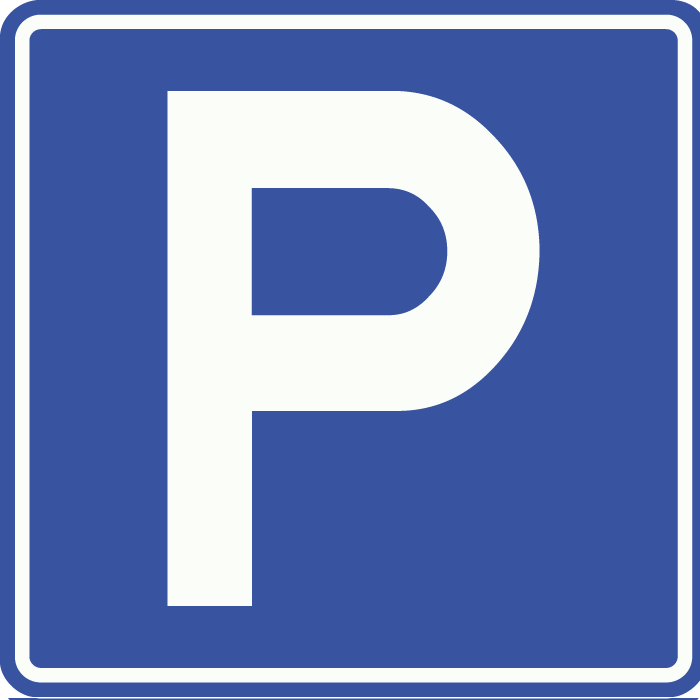
Parking lots with indicated parking spaces are usually indicated with the E-4 sign. In that case, parking outside of the parking spaces is prohibited.
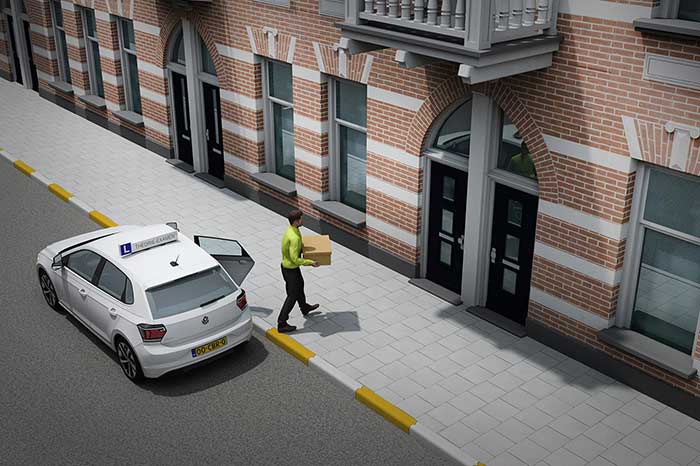
You are not allowed to park next to a broken yellow line. Stopping to load or unload goods or to pick up or drop off passengers is allowed.
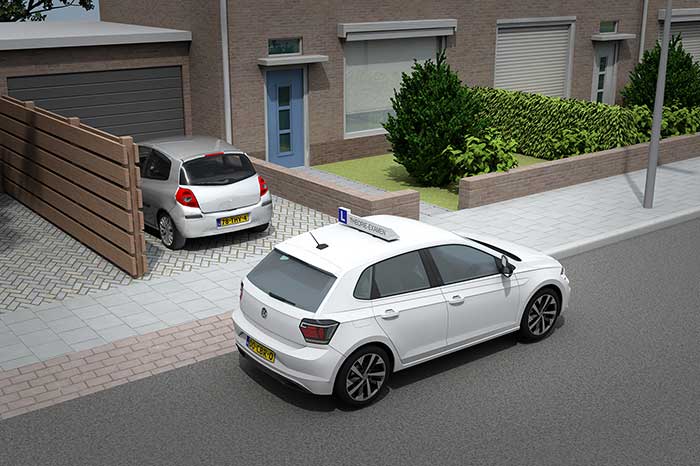
Parking in front of an exit is not permitted. Stopping for loading or unloading, or for dropping off or picking up passengers is allowed.
In some areas, parking may be subject to certain conditions. For example, only certain vehicles may be allowed to park, or parking may only be allowed during certain timeframes. A parking permit may be required to park in some areas. At sign E-7 (loading and unloading), parking is not allowed at all. Even though there is a P on the sign.
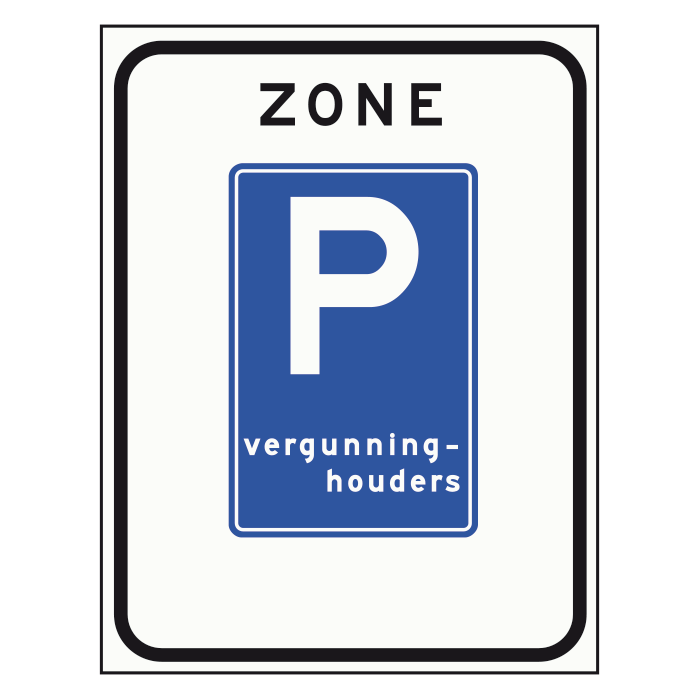
E-9
Only drivers with a parking permit are allowed to park in this zone.
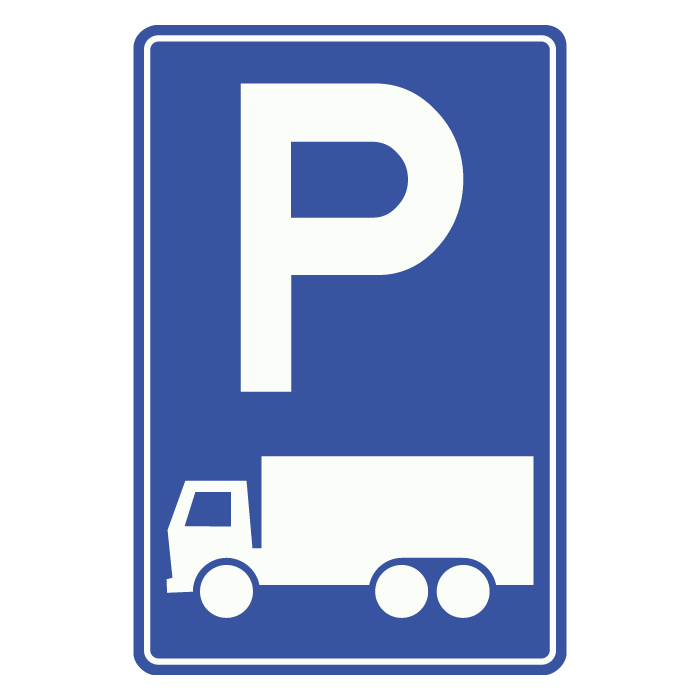
E-8
Only lorry drivers are allowed to park here
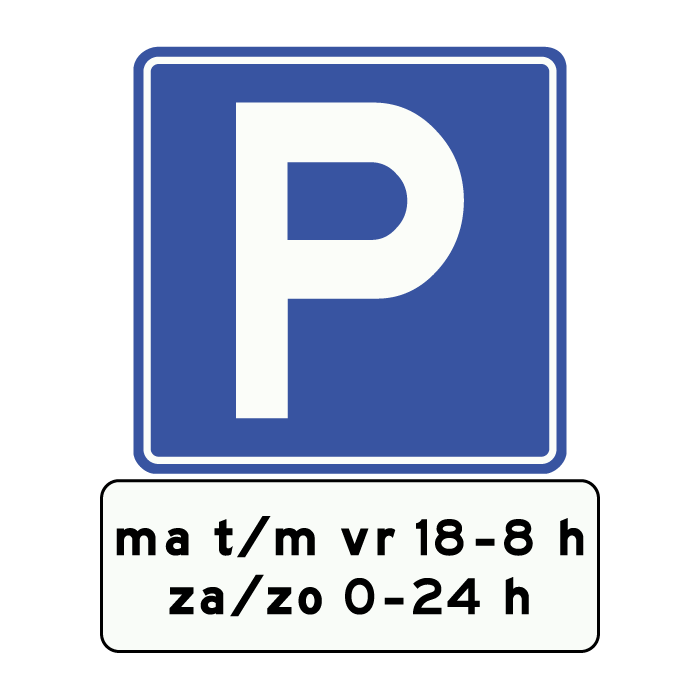
E-4
Parking is only allowed within the given timeframes.
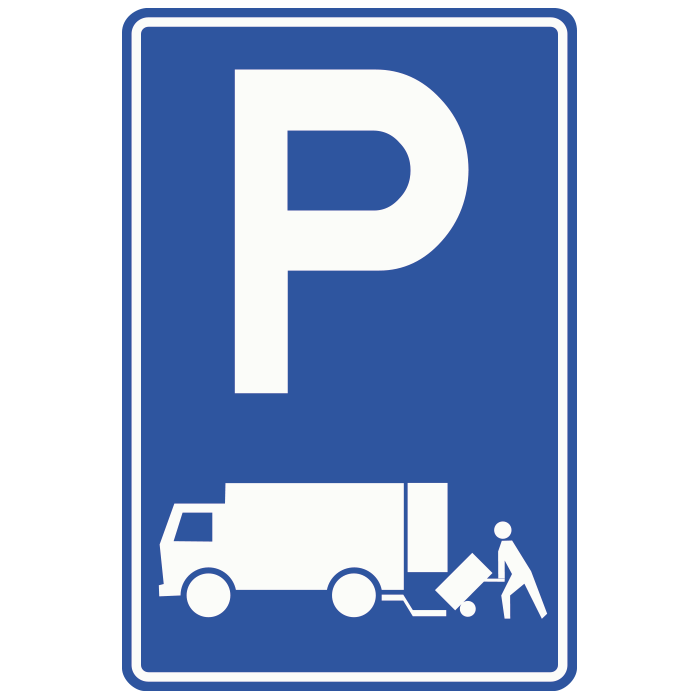
E-7
Parking is not allowed. You are allowed to load or unload goods, or drop off or pick up passengers here.
The E-1 sign prohibits parking on the side of the carriageway where the sign is placed. If designed as a zone sign, parking is prohibited on both sides of the carriageway throughout the entire zone. In this case, parking is still allowed in areas intended for this purpose, such as parking spaces, car parks, and the verge.

E-1
No parking on the side of the carriageway where the sign
is placed.

E-1 zone sign
No parking on both sides of the carriageway within the
entire zone.
Warning!
Waiting or parking where it causes hinder or danger to other road users is
prohibited.
- Three-wheeled motor vehicle
Vehicle that according to the vehicle registration register is a three-wheeled motor carriage. For example a trike. This is not a motor vehicle with limited speed or a disability vehicle. Contrary to what the name suggests, a vehicle registered in this way may even have four wheels instead of three. A quad-bike is an example of a three-wheeled motor vehicle.
- Motorcycle
Two-wheeled motor vehicle with or without sidecar or trailer.
Parking disc zone
Road signs are often used to indicate parking disc zones, where parking is only allowed in designated parking spaces marked with a P road sign. Parking is also allowed in blue-line areas.
Drivers who park a motor vehicle with more than two wheels alongside a blue line must leave a clearly visible parking disc behind their windscreen. It is not allowed to put it behind the rear window or side windows.
The parking disc must indicate at what time you started parking. This time may be rounded up to the nearest hour or half hour. Amending the time on the parking disc later is prohibited. Remaining parked after the maximum allowed parking time has expired is also prohibited.
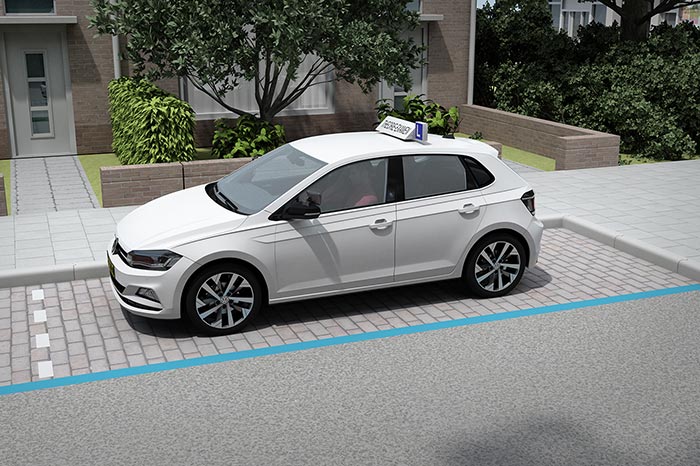
You may only park next to this blue line if you use a set parking disc.
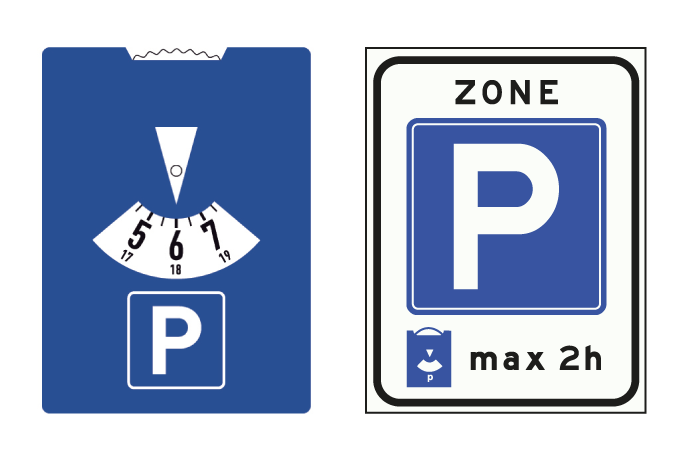
On the left: a parking disc.
On the right: the E-10 zone sign with a parking time limit of two hours.
Disability parking space
Disability parking spaces are intended to ensure that persons with limited mobility can park as close as possible to certain locations. Parking in these spaces is only allowed if related to the transport of a person with a disability.
You can park in a disability parking space with the following vehicles:
- a disability vehicle;
- a motor vehicle on more than two wheels in which a valid disability parking card is clearly visible;
- a vehicle for which this disability parking space is reserved; this is usually done by means of a supplementary plate with the registration number of the vehicle on it.
Maximum allowed parking times are indicated on road signs. When parking in areas marked by these signs, a clearly visible parking disc in the windscreen is required. A blue line alongside the parking area is not required.
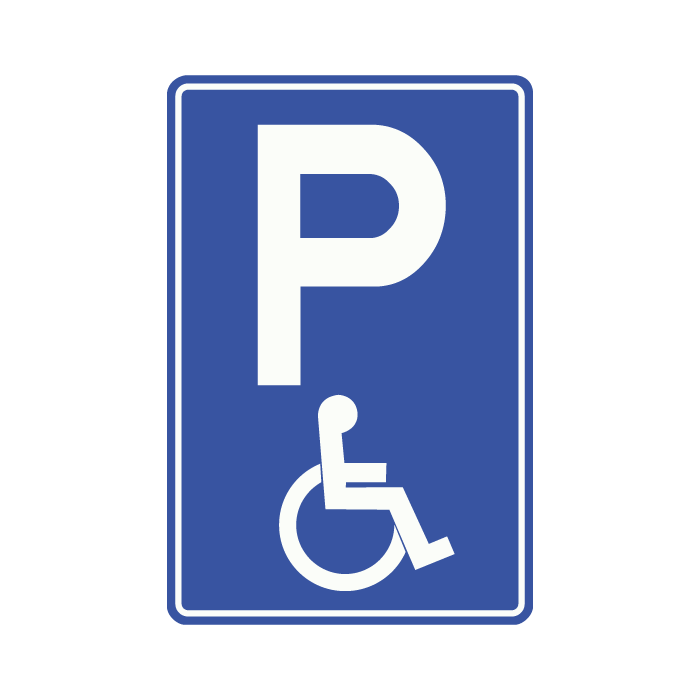
E-6
Disability parking space
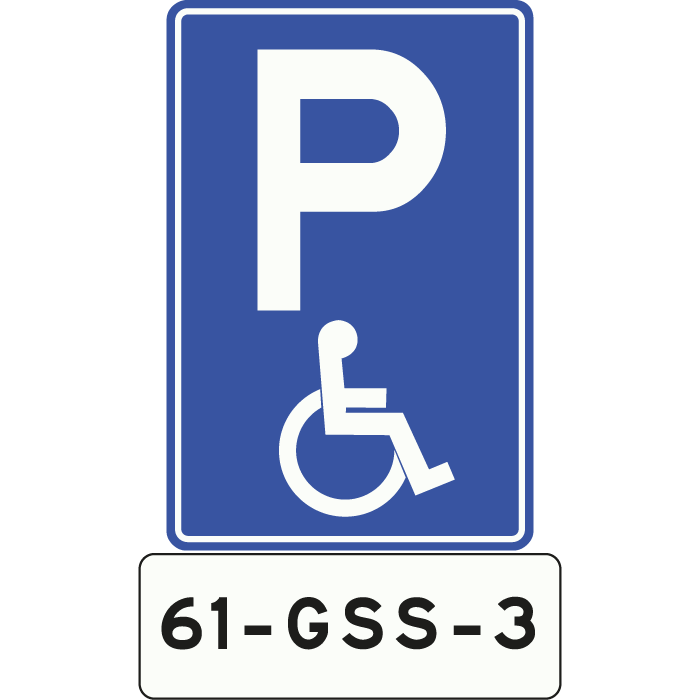
E-6 with registration number on supplementary plate
Disability parking space reserved for the mentioned
vehicle.
Drivers of disability vehicles, or with a valid disability parking card, are allowed to park in more places than other drivers.
- Within a parking disc zone they are allowed to park anywhere and do not have to use a parking disc.
- They can park for a maximum of 3 hours next to a broken yellow line, within an erf outside the parking spaces and at sign E-1. In this case, a parking disc must be set.
Placing bicycles, mopeds, speed pedelecs, and snorfietsen
This does not relate to parking. If you put these vehicles somewhere, we are talking about ‘placing’. The rules and signs about parking say nothing about placing.
You can use the pavement, footpath or verge to place these vehicles. In addition, you may also use places that are clearly intended for placing bicycles, speed pedelecs, snorfietsen, and mopeds.
Because brommobielen must follow the traffic rules of motor vehicles, the rules for parking do apply to brommobielen. They must follow the same rules as drivers of passenger cars and may not, for example, park on the pavement.
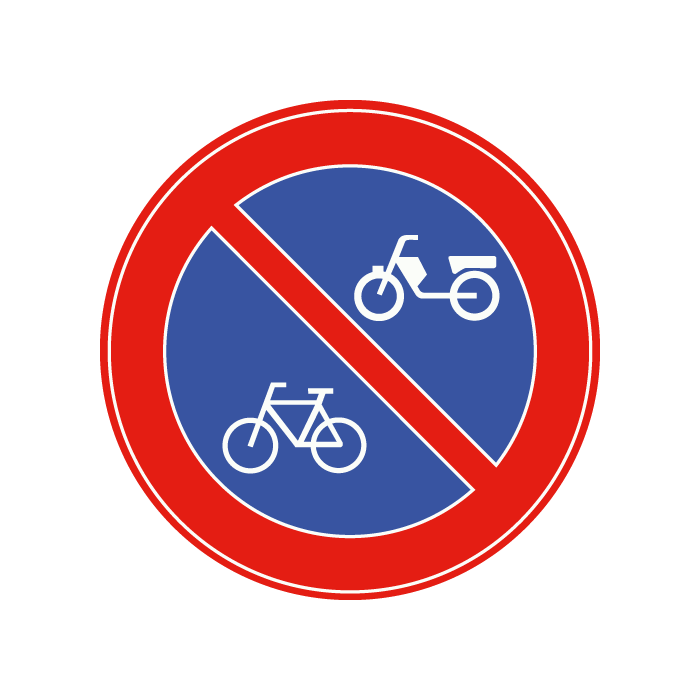
E-3
Forbidden to place bicycles, speed pedelecs and mopeds
on this side of the road.
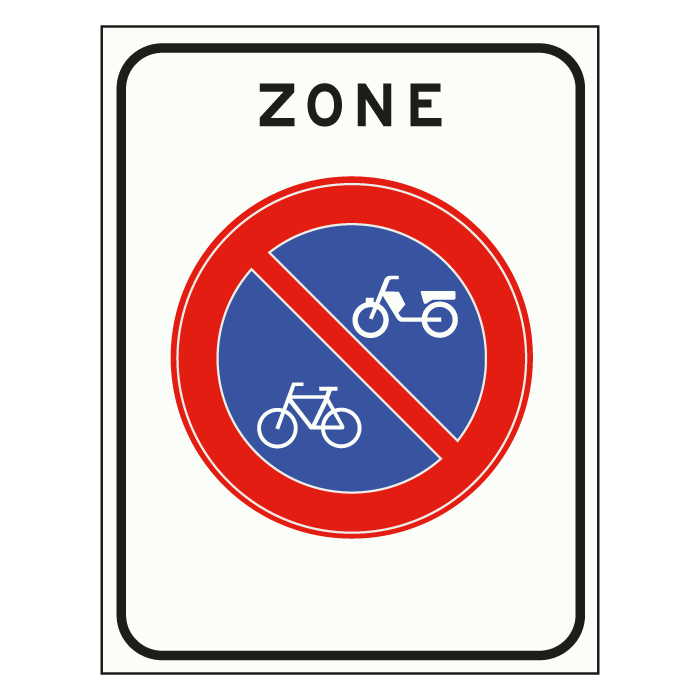
E-3 zone sign
Forbidden to place bicycles, speed pedelecs and mopeds
within this zone.