

Overtaking
- Acceleration lane
Lane intended for drivers entering the main carriageway. This lane does not belong to the main carriageway. Block marking is located between the main carriageway and the acceleration lane.
- Deceleration lane
Lane intended for drivers leaving the main carriageway. This lane does not belong to the main carriageway. Block marking is located between the main carriageway and the deceleration lane.
- Weaving lane
A combined acceleration and deceleration lane. This lane is used by drivers who wish to enter the main carriageway and drivers who wish to leave it. This alternating entering and leaving the main carriageway is called weaving.
- Hard shoulder
Additional road section to the right of the main carriageway of a motorway, separated by a solid line. Use is allowed only in case of emergency, or when open as a rush-hour lane.
- Rush-hour lane
A lane that can be used as an extra lane during rush hour. This can be a narrower lane on the left side of the carriageway, but also the hard shoulder. Outside of rush hour, this lane is closed, or used as a hard shoulder. An opened rush-hour lane is indicated by green arrows, a closed one with red crosses. This is often also indicated by signs.
The speed limit can be reduced when the rush-hour lane is open, for example from 100 km/h to 80 km/h. If the hard shoulder is in use as a rush-hour lane, the solid line to the left of this lane may be crossed.
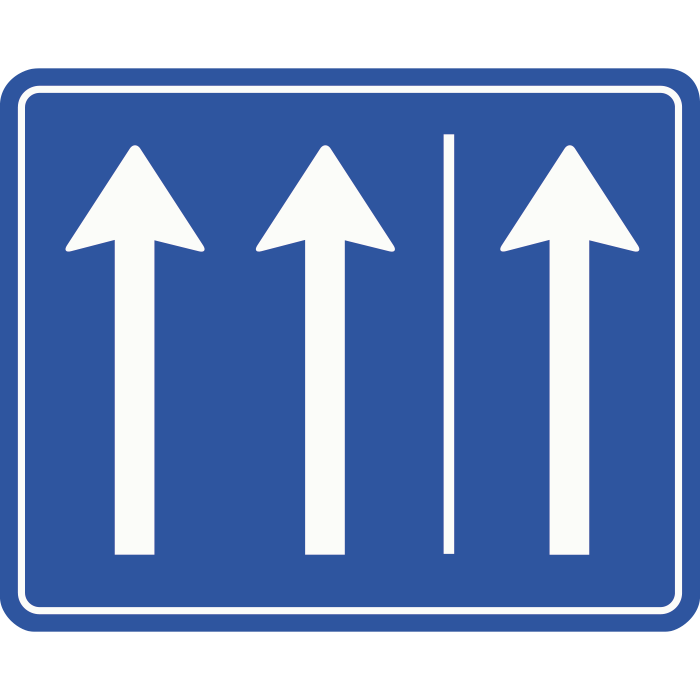
Rush-hour lane open
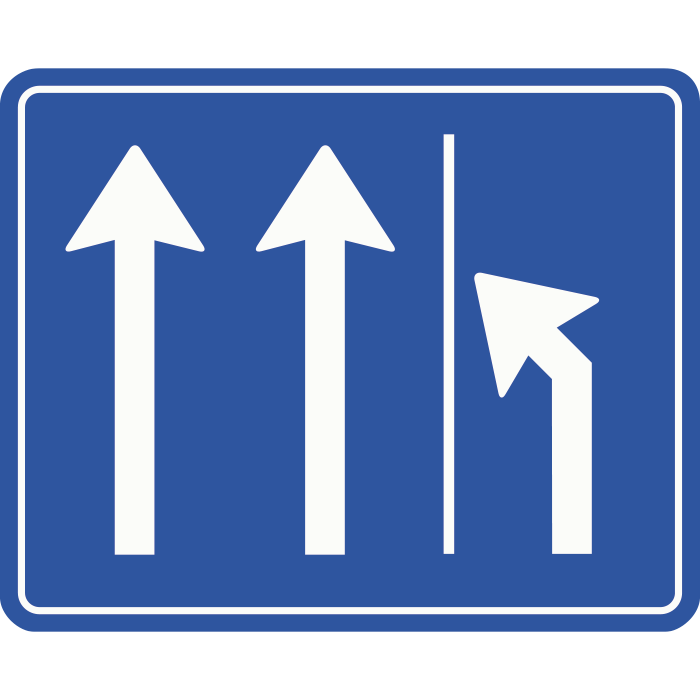
Clear rush-hour lane
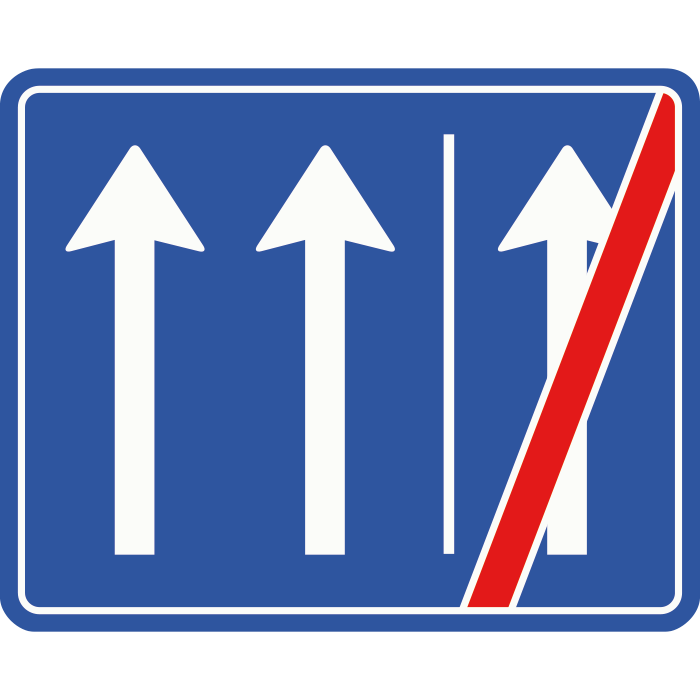
End of rush-hour lane
Extra information overtaking left or right
Passing another moving vehicle on the road is called overtaking. Drivers can overtake via another lane going in the same direction, or via the section of road intended for oncoming traffic. Particularly in the latter case, overtaking can be risky. The fundamental rule of overtaking is: always overtake on the left.
- Main rule for overtaking
Overtake on the left only.
Overtaking on the right mandatory
There are a number of exceptions to the ‘overtake on the left only’ rule. In one of these exceptions, overtaking on the left is in fact prohibited. If the driver you want to overtake is indicating an intention to turn left, and is pre-sorted for this, you must overtake on the right – if this can be done safely. Drivers are permitted to use a cycle lane with a broken line when overtaking on the right.

The lesson car may not pass the red car that wants to turn left on the left side. Overtaking on the right is allowed and can ensure a good flow.
Overtaking on the right allowed
The other exceptions to the basic rule that you must overtake on the left are:
- Cyclists must overtake each other on the left, but may overtake other drivers on the right.
- Drivers are allowed to overtake a tram on both the right and the left, depending on the space.
- Drivers to the right of the block marking may overtake drivers – who drive to the left of this marking – on the right.
- In case of traffic congestion over several lanes in the same direction, you may overtake on both the right and the left.
- Just before and on a roundabout, you may overtake on both the right and the left.
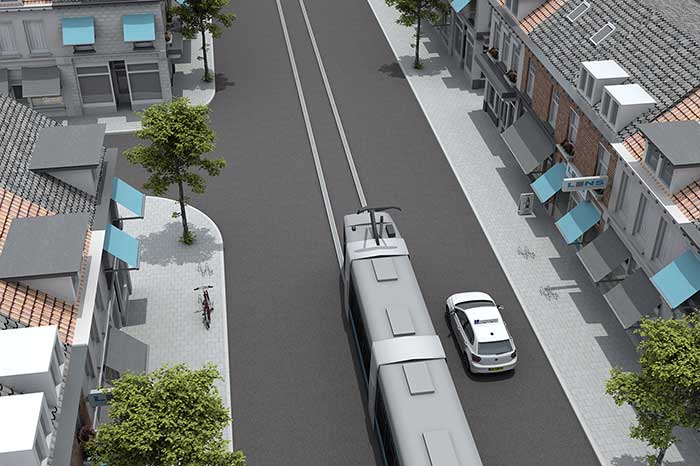
The tram may be overtaken on the right here.
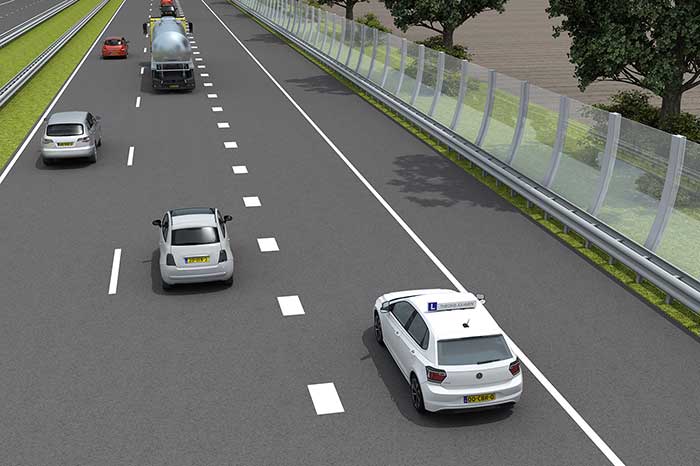
Overtaking is permitted to the right of the block marking.
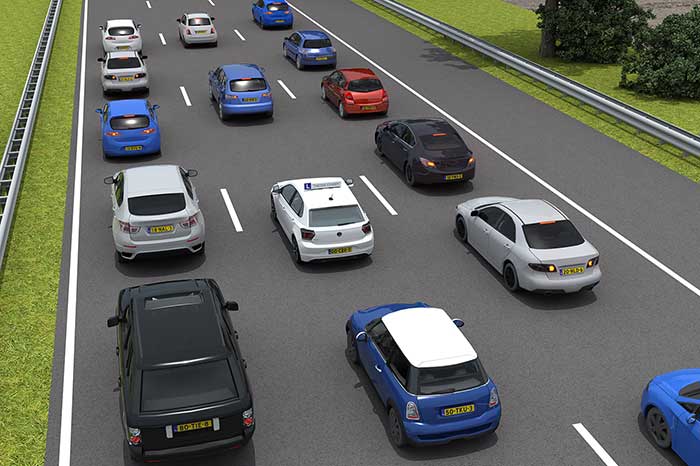
In traffic jams, overtaking is also allowed on the right.
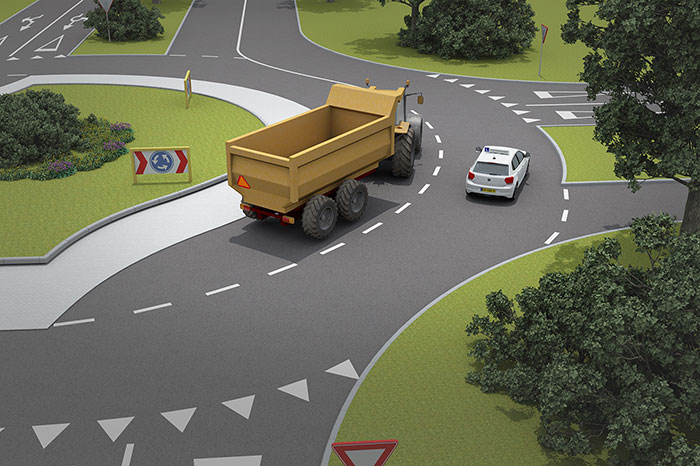
Just before and on the roundabout you can also overtake on the right.
Overtaking prohibited
There are also situations where overtaking is absolutely not allowed on any side. Overtaking is prohibited in the following cases:
- just before or on a pedestrian crossing (also known as a zebra crossing);
- if you must cross a solid line between the lanes, unless there is a broken line on your side of the solid line;
- when indicated by signs;
- if you are already being overtaken;
- if this can cause danger or hinder in any way, such as places with obstructed view or poor visibility due to fog or precipitation.
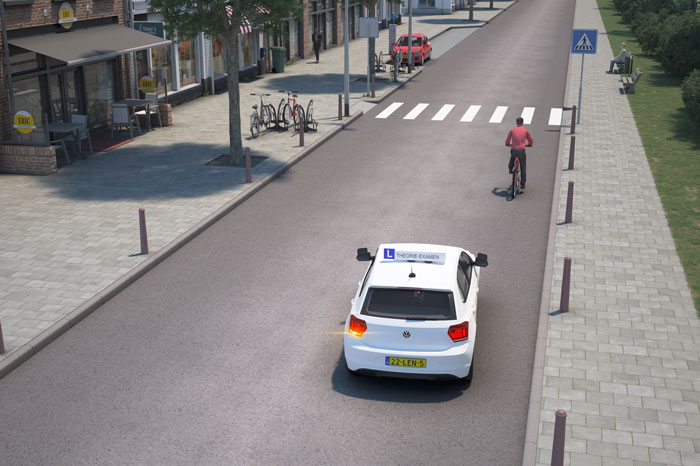
You are not allowed to overtake just before or on a pedestrian crossing.
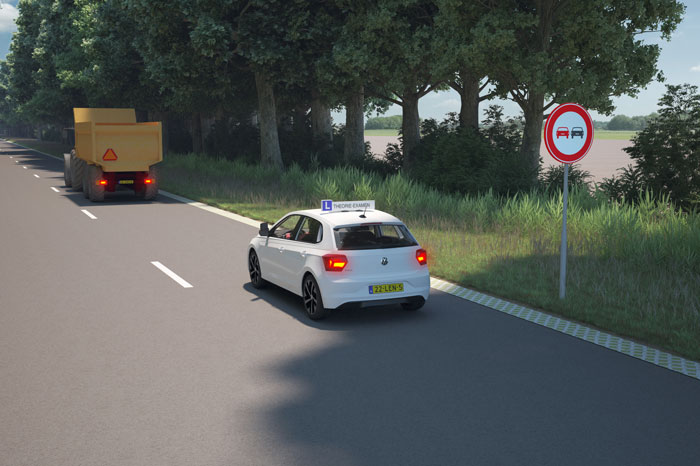
If this sign (F-1) is on the side of the road, motor vehicles are not allowed to overtake each other.
Overtaking is a dangerous manoeuvre, especially if it involves crossing oncoming traffic. Poorly executed overtaking manoeuvres often lead to head-on collisions resulting in serious injury or worse.
If in doubt about overtaking – do not do it!
Only overtake when absolutely necessary and safe.
- Motorcyclists’ code of conduct in traffic jams
In traffic jams, motorcyclists may drive in between lanes in the two leftmost lanes only, and no more than 10 km/h faster than other traffic. When traffic starts moving, motorcyclists must re-enter a lane. Be aware of passing motorcyclists during traffic jams!