

Trailer use requirements
In addition to the technical requirements, trailers are also subject to a number of use requirements, such as maximum weights and dimensions of load.
Pulling a trailer
Only one trailer may be pulled by a passenger car at any time, with a maximum of two pivot points allowed. A trailer with one axle has only one pivot point at the hitch. Two-axle trailers may also have a pivot point on the front axle.
If a trailer is perpendicular (at 90 degrees) to the rear of the pulling vehicle, it must not come into contact with this vehicle other than at the hitch and must therefore be able to turn freely.

A trailer with one pivot point. Each trailer must be able to turn freely behind the passenger car. It must not touch the passenger car with any other parts except the hitch.
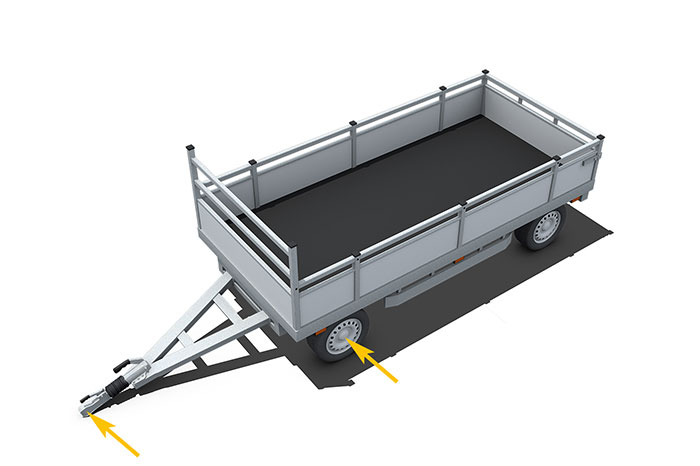
A trailer with two axles not directly next to each other usually has two pivot points (indicated by the yellow arrows)
Only the wheels of the trailer may come into contact with the ground during transit – even if the trailer comes loose and is connected to the car by the auxiliary coupling. Always hoist the nose wheel properly, and ensure no loose cables drag on the ground.
Load
Load in or on a trailer must be secured (or covered) well enough. It must also be distributed in such a way that it does not pose any risk while driving, steering, and braking.
There are several important factors in the proper transport of load:
- Place heavy loads above the axle as much as possible and as low as possible in the trailer.
- Load the trailer symmetrically, so as much weight on the left as on the right and on the front and rear.
- Secure the load. Loose load can cause major problems, such as swinging or even tilting the trailer, or the load can fall off.
- After driving for a while, check again whether the load is properly secured.

Put heavy loads above the axle of the trailer as much as possible.
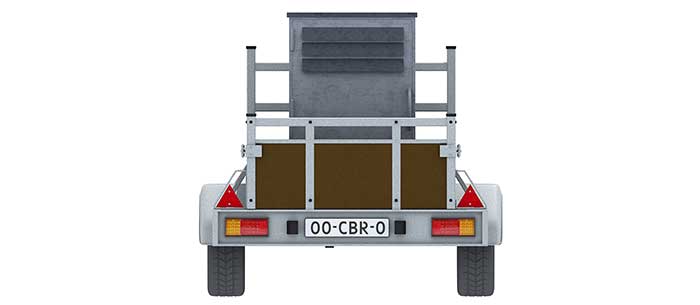
Make sure the load is well distributed between left and right.
Sharp protruding objects in load are prohibited. Blunt protruding objects must be covered if they pose a risk to other road users.
Load carriers
Load carriers such as bicycle racks can be attached to the drawbar or towing triangle on trailers. Load carriers on trailers are subject to the same rules that apply to load carriers on passenger cars.
Number plate
Trailers must be equipped with number plates. The trailer’s maximum authorised mass determines whether the trailer must have a yellow number plate with its own registration number, or a white number plate with the pulling vehicle’s registration number.

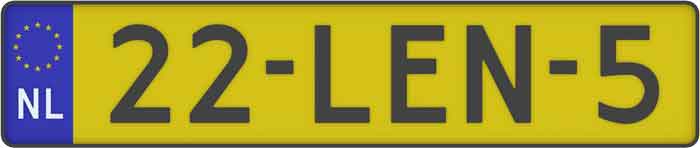


Is the maximum authorised mass of the trailer 750 kg or less? Than the trailer must have a white number plate with the registration number of the pulling vehicle.

Is the maximum authorised mass of the trailer above 750 kg? Than the trailer must have a yellow number plate with its own registration number.
Trailers must always be equipped with an original number plate. Handwritten number plates are prohibited. If you need to use a trailer, secure a compliant number plate in advance.
Overhanging load
As with passenger cars, load on trailers must not protrude past a certain point and may never exceed the trailer’s maximum dimensions, except for the width. For example, trailers may not be loaded higher than four metres from the ground.
Divisible load on a trailer is subject to the same rules that apply to passenger cars. The rules for indivisible load are slightly different:
- Sides
Only indivisible load may protrude beyond the maximum dimensions of a trailer. If necessary, this is permitted up to a width of three metres. Load that protrudes more than ten centimetres from the side must be marked with a sign.
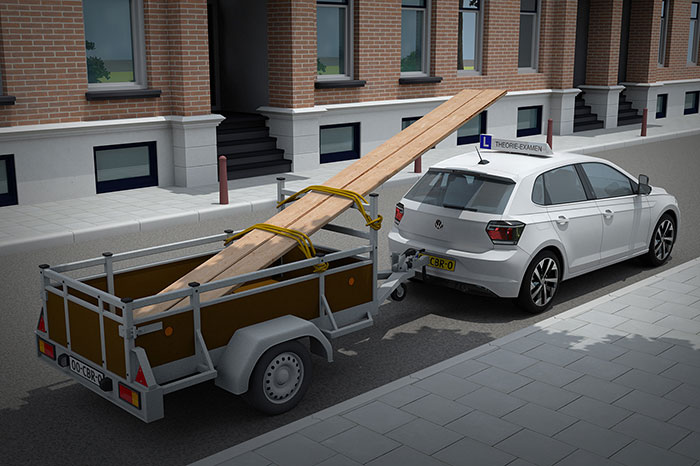
The load may never protrude in front of the hitch on a trailer. You are not allowed to drive like this.

If a load protrudes more than 10 cm from the sides of a trailer, then a marking sign is mandatory.
- Front
Load must never protrude from the front of a trailer, whether divisible or not. The front in this case refers to the centre of the hitch – the bowl where the tow bar is located. Load must not be able to get in the way when the car or trailer is turning. If the load protrudes above the drawbar or towing triangle, this can quickly become a nuisance. - Rear
Load may protrude up to one metre from the rear. Lengthwise indivisible load may protrude further if necessary, up to a maximum of half the trailer’s length with a maximum of five metres. This is measured from the rear axle of the trailer. For example, if the trailer is five metres long, indivisible load may protrude a maximum of two and a half metres from the rear axle. This overhanging load must be marked with a red and white marking sign, if it protrudes more than 1 metre from the rear of the trailer.

Maximum allowed weights
For trailers without their own registration, a maximum authorised mass of 750 kg or less applies. The trailer usually has a type approval plate with the maximum authorised mass. This is the weight of the trailer plus load.
If trailers have their own registration number, the registration certificate, the type approval plate, and the national vehicle register will state the maximum authorised weight of this trailer.
These weights help determine which driving licence is required for this vehicle combination. Drivers must also ensure their car is permitted to pull the trailer and double-check the maximum weight it can transport.
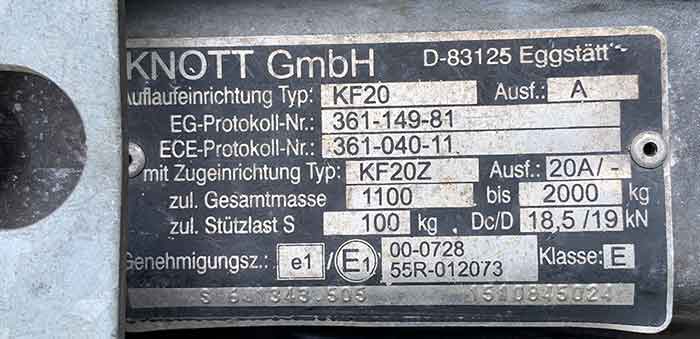
Type-approval plate on the trailer stating the maximum mass and maximum coupling pressure/tow ball weight.
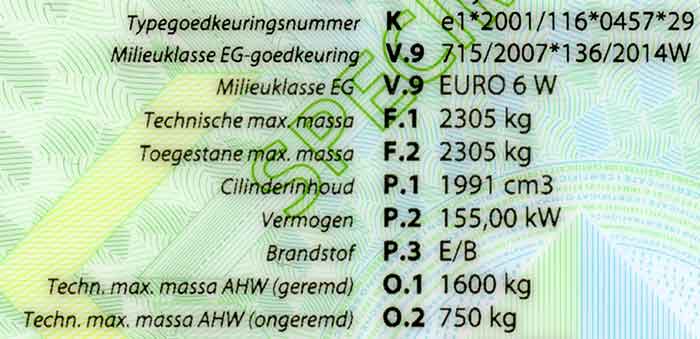
The registration card of the passenger car states the maximum weight of the trailer that can be towed by this car.
Drawbar load or tow ball weight (ball pressure)
When pulling a trailer, take into account the maximum weight under the hitch, also known as drawbar load or tow ball weight. This is the weight the tow bar will bear when the trailer is coupled. Both excessive and negative draw bar loads are dangerous.
If the drawbar load is negative and the trailer pulls the tow bar up, this means the rear of the trailer is overloaded. The trailer will be less stable on the road and therefore has an increased risk of swinging. Pulling a trailer with negative drawbar load is prohibited.
If the drawbar load is too high, this means the front of the trailer is overloaded. The car is being pushed down at the rear, reducing pressure on the front wheels and making steering more difficult. This can result in a loss of grip when taking bends.
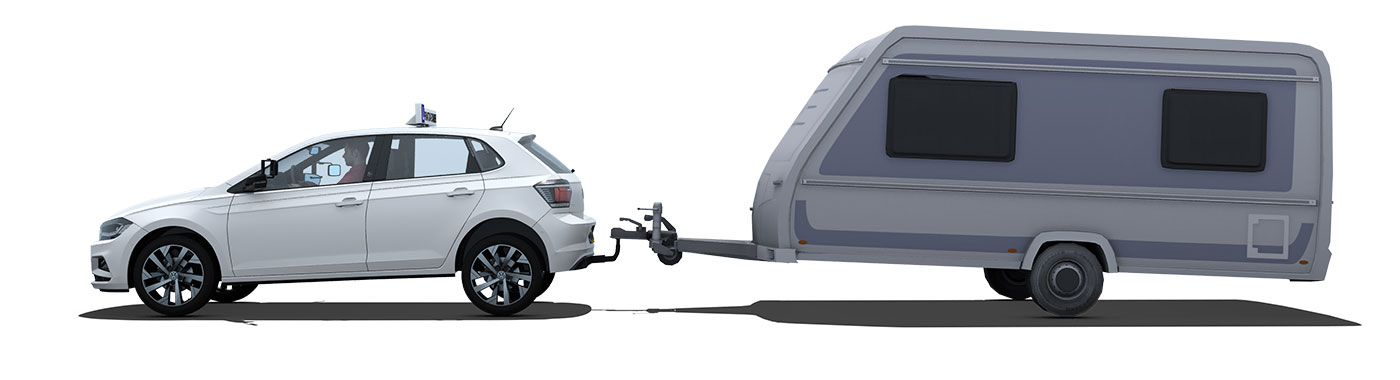
A negative drawbar load makes a trailer swing faster.
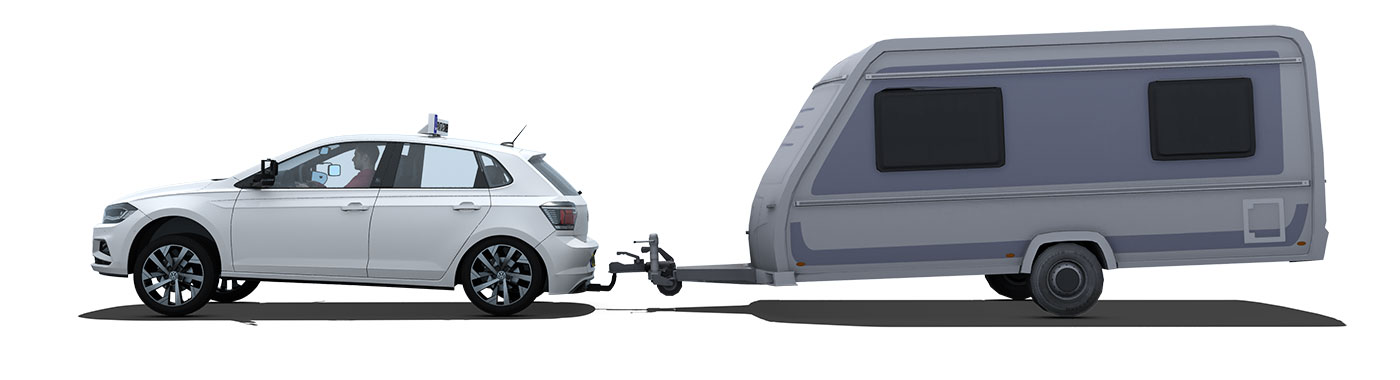
A drawbar load that is too high makes the passenger car less easy to steer.
The trailer’s maximum drawbar load is stated on the type approval plate. The maximum drawbar load for the towbar and the passenger car can be found in the owner’s manual. If different values are indicated, assume the lowest value as the maximum drawbar load.
A maximum drawbar load of 50 kg applies to trailers up to and including 750 kg. Drawbar load for trailers over 750 kg is usually between 50 and 75 kg.
Unbraked trailers
Unbraked trailers do not brake, and therefore must have a lower maximum weight so passenger cars can properly stop them.
Unbraked trailers may not:
- exceed 750 kg in maximum weight;
- be heavier than half the weight in running order of the passenger car.
Braked trailers
Braked trailers brake as soon as the passenger car brakes, by means of an ‘overrun brake’. The car slows down, pressing a spring at the front of the drawbar and ensuring the application of the brakes.
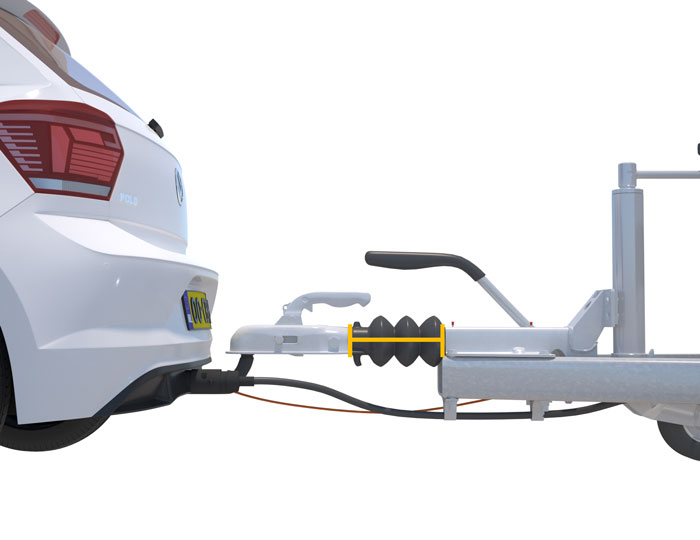
If the overrun brake is not pressed, the trailer will not brake.
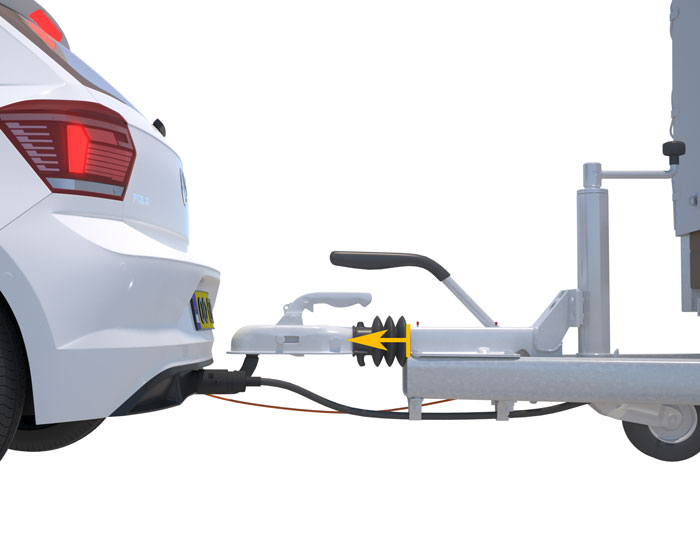
If the passenger car brakes and the overrun brake is pressed, the trailer brakes automatically.
These trailers are also equipped with a handbrake at the front, which can be used when the trailer is uncoupled so that it remains stationary. If a trailer is coupled to a passenger car, the parking brake must always be down.
The emergency braking device is attached to the handbrake and applies this when the trailer comes loose from the passenger car.
7-pin or 13-pin plug
When coupling a trailer, always remember to plug the trailer plug into the rear socket of the passenger car. Trailer lighting only works when properly mounted, and this lighting should always be checked before driving. Make sure indicators are lit up on the correct side, so on the same side as the car.
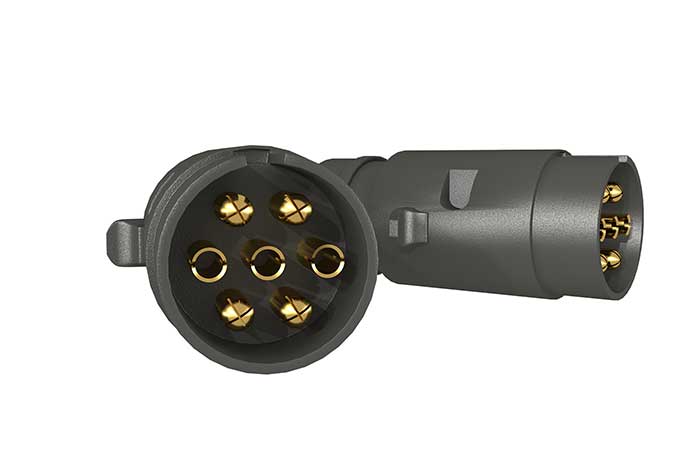
7-pin plug
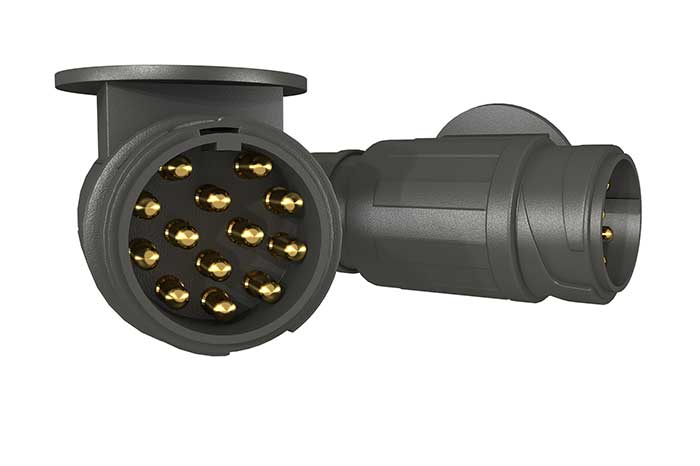
13-pin plug
There are two plugs, a 7-pin and a 13-pin, which means an adapter plug may be required to properly couple the trailer. Which plug should be used depends on how much lighting the trailer is equipped with and the possible presence of other electrical devices in a trailer or caravan, such as a refrigerator.
The plugs are also mounted in different ways. The 7-pin plug must be pushed into the car socket, while the 13-pin plug is screwed in.