

General requirements – part 3
Visibility through windows
To participate safely in traffic, adequate visibility through the windows is important. Requirements for this apply to the windscreen and the front side windows:
- These windows must not be damaged or discoloured.
- They must be free of unnecessary objects that may obscure visibility, such as items hanging from the rearview mirror or dashboard ornaments and incorrectly mounted navigation systems.
- They must not be less than 55% transparent (e.g. tinted windows).
- The windscreen must also have a properly functioning system that defrosts the windscreen and defogs the glass. This is usually a blower (air via the ventilation grilles) with or without air conditioning, but electric windscreen heating is also available.
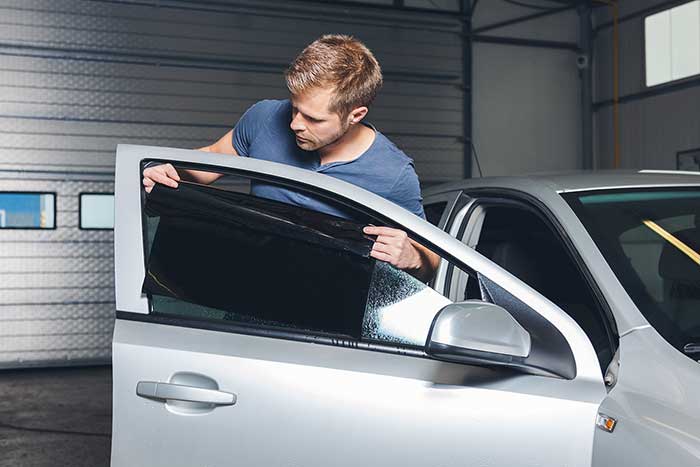
Tinted foil on the front windows will often prevent sufficient light from coming in.
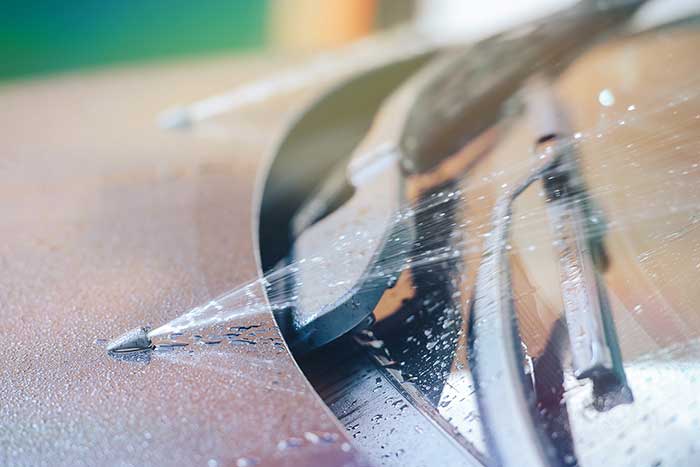
Each passenger car must have a fully functioning windscreen washer and wiper system.
Windscreen wipers
To maintain adequate visibility through the windscreen, passenger cars must be equipped with properly functioning windscreen wipers, as well as a windscreen washer system with spray function. If the screen wash has run out, the system will no longer work and the car may not be driven.

This warning light warns of an (almost) empty screen wash reservoir. Because driving without screen wash is prohibited, you should refill the reservoir as soon as possible as the light comes on. Not all passenger cars are equipped with a screen wash level warning light.
Mirrors
Passenger cars must be equipped with one wing mirror on each side (right and left) and an interior, rearview mirror. Some vans and lorries have a separate, closed cargo section behind the cab, which means there is no visibility via the rearview mirror. This mirror is therefore not required in these vehicles.
All equipped mirrors must be intact and not overly weathered (brown or black edges, stains on the glass).
Seats
All seats in a passenger car must face either the front or the back. Seats must be fixed in place securely and, if adjustable, there must be no risk of sliding while driving.
- (Safety) seat belt
Seat belts protect drivers and passengers from the impact and force involved in collisions and sudden braking and prevent ejection from the vehicle. Most passenger cars are equipped with three-point seat belts, whereby one part of the belt crosses the waist and another part diagonally crosses the chest.
- Child restraint system
Child safety seats can be fixed in place in passenger cars by means of a click system (Isofix) or a seat belt. The child is secured in the seat with a belt attached to the safety seat itself, or the car’s three-point belt. This system protects the child against the impact and force involved in collisions and sudden braking and prevents ejection from the vehicle.
- Airbag
A feature in passenger cars that inflates upon impact in the event of a collision. The airbag protects occupants against contact with hard surfaces inside the vehicle and prevents excessive forward or sideways movement during a collision.
Seat belts
Seat belts prevent major injury to drivers and passengers in the event of a collision. A seat belt can save your life when travelling at just 30 km/h and is mandatory for all seats inside a car. Due to their importance, seat belts are required to comply with their own set of requirements:
- They must be damage-free.
- They must be equipped with properly functioning locking and blocking.
- The belt must fit properly when in use.
- Seat belt and airbag warning lights may not indicate any malfunctions.
All warning lights below are red. This means that you must address the problem immediately and you should not drive on before the problem is solved. The first two lights warn of problems with the different airbags. The last one states that someone (you or a passenger) is not wearing a seat belt.

Warning airbag malfuncion
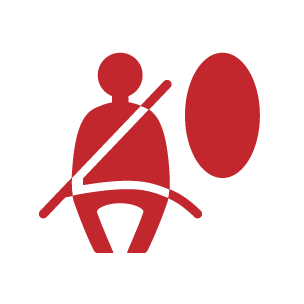
Warning side-airbag malfunction
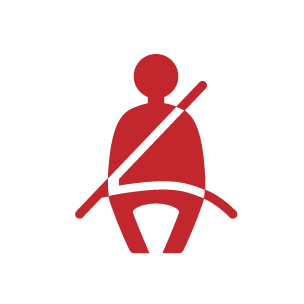
Seat belt warning light
Protruding and sharp objects
Injuries sustained by pedestrians in collisions are often fatal, and pedestrian protection measures are an increasingly important element in vehicle design. To minimise the risk, sharp objects such as hood ornaments and self-made bull bars on the bumper are prohibited.
Any other protruding parts must be shielded and may not present a risk of injury in the event of a collision. Tyres may not protrude more than three centimetres from the wheel arches.
Vehicles must also be free of any loose parts due to poor mounting, wear and tear, or deterioration.
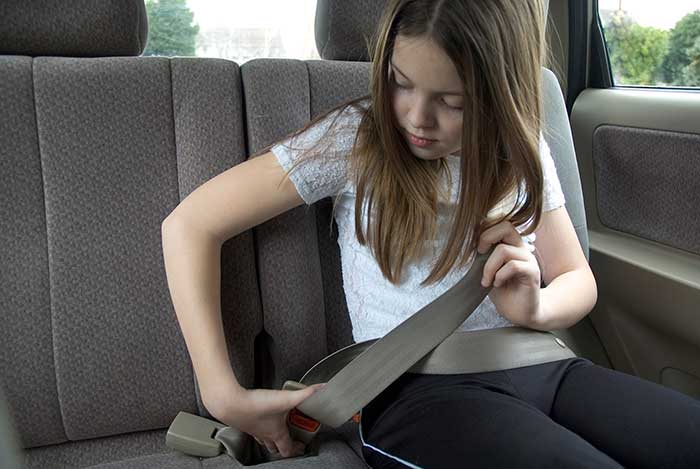
Seat belts are mandatory for every seat.
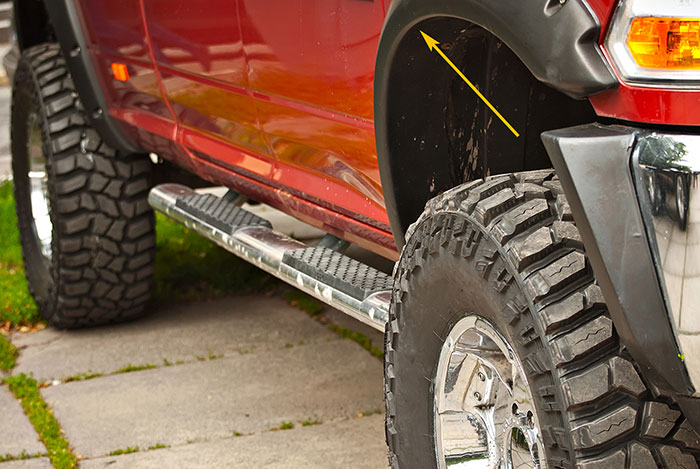
Tyres may not protrude more than three centimetres from the wheel arches (wheel arch is indicated by the arrow).