

Motor carriage mandatory insurance
Once a motor carriage has been registered in your name in the national vehicle register (registered ownership), you are required to take out an insurance policy for the vehicle. Whether you drive the vehicle or not is irrelevant.
Types of insurance
There are several options when it comes to insuring a motor vehicle. The three most common are:
- WA (‘Wettelijke Aansprakelijkheid’, third-party liability)
The most limited form of insurance; only covers damage caused to a third party’s vehicle. Damage to your own vehicle is not covered, nor, for example, theft or storm damage. This insurance is mandatory for motor carriages, although more comprehensive coverage is also available. - WA limited cover (also called WA plus)
The intermediate type of insurance, which covers damage to third-party vehicles as well as damage to your own vehicle caused by force majeure such as storm damage, theft, or fire. - WA All-risk insurance (also called ‘casco’)
The most comprehensive car insurance available. Covers not only third-party damage and damage caused by force majeure, but also damage to your own vehicle caused by your own actions.
Most drivers will select a type of insurance policy that is based on factors such as the price of the policy and the age of their car. The newer and more expensive the car, the wiser it is to take out all-risk insurance.
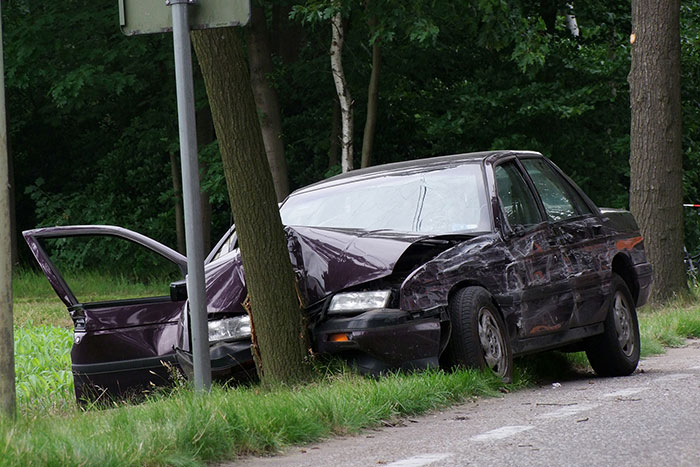
Not all insurance options cover damage to your own vehicle.
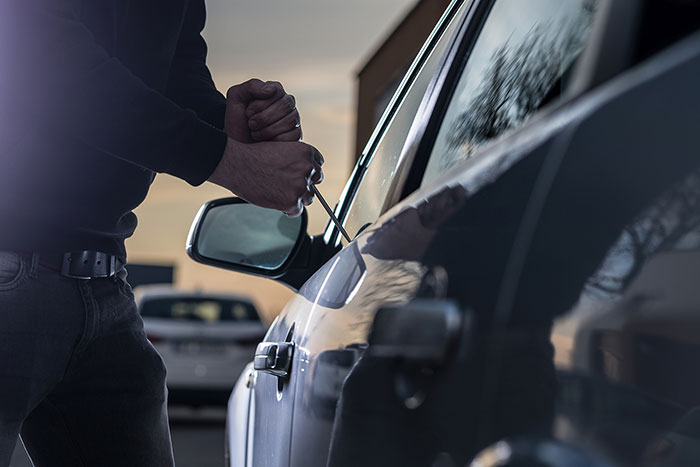
Also, damage due to theft is often not covered.
Claim-free years
Vehicle insurers work with a ‘claim-free years’ scheme. It is a kind of bonus system where drivers are rewarded if they do not file an insurance claim for damages for a longer period of time (a claim is damages that the insurer pays for).
For every year you are claim-free, you will receive a percentage discount on your premium. The premium is the amount you pay your insurer to keep your coverage active. The more claim-free years you have, the higher the discount you receive. This is called ‘bonus’.
If you cause and file a claim for damages, your accrued discount will decrease. This is called ‘malus’, hence the system is sometimes called a ‘bonus-malus system’.
Filing claims for damages can cost you money, as your monthly premium goes up again. In addition, repairs for minor damages are sometimes more expensive when arranged through your insurer. In some cases, it may be cheaper to pay for damages yourself instead of claiming it via your insurance.
As car insurance usually works according to the bonus-malus system, it might be cheaper to pay for minor damages yourself, rather than claiming from your insurance.
Insurance card (former green card)
An insurance card is proof that your vehicle is insured. This paper contains details regarding your vehicle and insurance policy. You will be issued a new insurance card every year. Some companies provide you with a digital card instead of a paper one.
It is not mandatory to keep this document in your vehicle in the Netherlands. However, it may be required in other countries. It can also be useful to have your insurance card on hand when dealing with damages, as it contains information you and other involved parties may need.
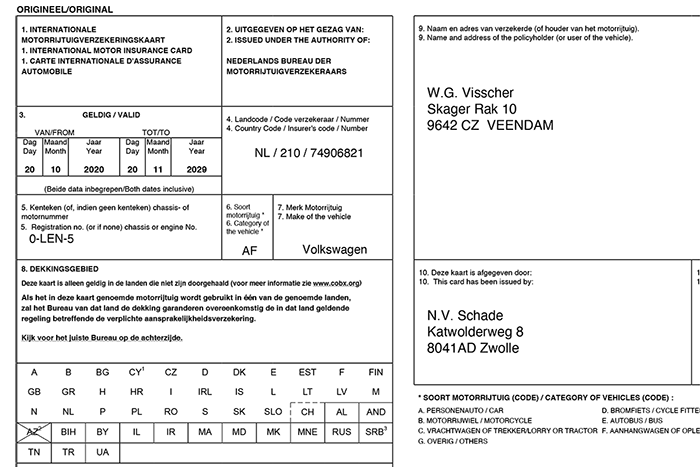
It is not mandatory to carry your insurance card with you, but it is advisable to keep this together with your vehicle registration papers.
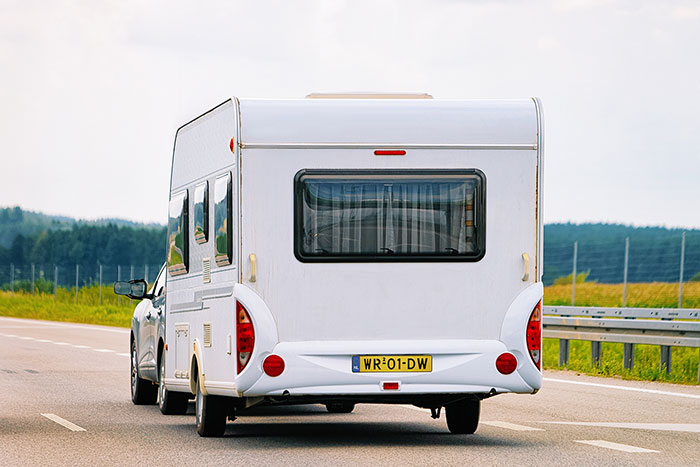
Damages caused by a coupled caravan are also covered by the car insurance.
Trailer or caravan
Coupled trailers or caravans are also covered by car insurance policies. This means any damages caused by a trailer (or cargo therein) or caravan to another party will be covered by the towing vehicle’s car insurance. Any damage to the trailer or caravan itself, however, is not covered by the car insurance policy. Separate trailer or caravan insurance policies are available for this, but not mandatory.
European damage claim form (accident statement)
If your vehicle is damaged, you and any other involved party must complete a damage claim form. It is not mandatory to have this with you, but it can be useful. A damage claim form has 2 sheets, one which must be filled in and one transfer sheet. After completing and signing the form, both parties receive a copy. Later, you can fill in the back of the form and send it to your insurer.
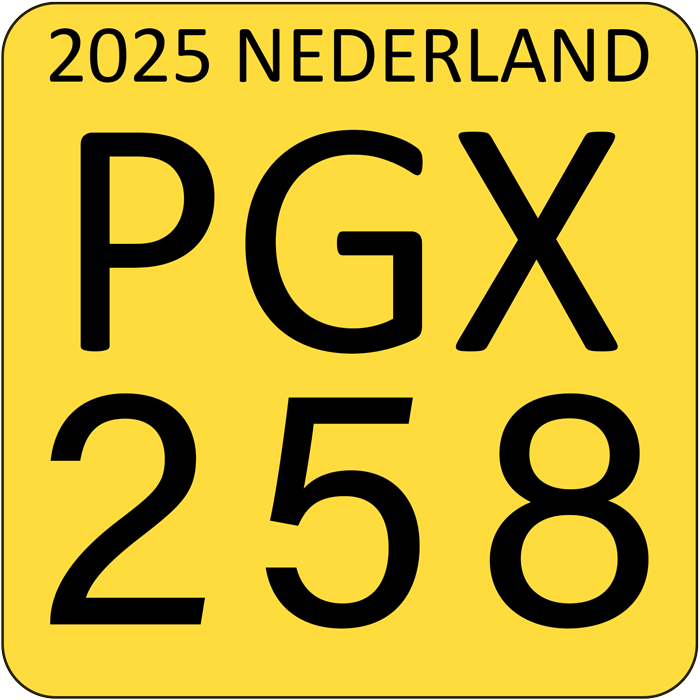
Insurance sticker
No registration requirement
Not all motor vehicles are required to be registered. Some vehicles, such as motorised disability vehicles, must be insured and have a visible insurance sticker. This sticker is provided by the insurer once the vehicle has been insured. You will receive a new one every year.
Lending your vehicle
Other people driving your vehicle are covered by your car insurance policy. Your insurer will pay out for any damages incurred while someone other than the owner was driving. This may lead to a higher premium due to a break in claim-free years. Drivers are therefore advised to exercise caution in lending their vehicle to others.
Driving without insurance
Failing to insure your vehicle is a criminal offence. Any damages caused by your vehicle while uninsured will be recovered from you personally. This can be expensive. Furthermore, your insurer is not required to pay out for damages caused by negligence or irresponsible behaviour, such as driving under the influence of alcohol or drugs, driving without a licence, and using the vehicle for a purpose for which it is not insured (e.g. driving lessons or taxi rides). In these cases, the insurer will often pay out to the other party and then recover that amount from you.
Motor Traffic Guarantee Fund
If you incur damages caused by someone you do not know personally or someone who does not have insurance, you may in some cases be entitled to compensation from the National Guarantee Fund (Waarborgfonds motorverkeer). This is a national fund set up by the government to cover drivers severely impacted by damages which they cannot cover themselves or recover from the responsible party.
Laid-up vehicles
If you do not expect to drive a passenger car for an extended period of time, you can opt to suspend any mandatory requirements regarding the vehicle. This can be useful if, for example, you want to work on restoring a vehicle. This also means you can no longer drive or park it on public roads. The vehicle must be completely removed from any traffic and parked on your own property, for example, in a garage.
The biggest advantage of having a vehicle laid-up is that you are not required to pay road tax and the vehicle does not have to be insured for the duration of nonuse. Periodic inspections are also not required for laid-up vehicles. Once the laid-up period expires, all of these things become mandatory again. A laid-up period can be requested for one, two, or three years. Applications must be submitted to the RDW.