

Periodic general inspection (MOT, APK in Dutch)
Every motor carriage must be type-approved first before it can be operated on public roads. This approval is arranged by the vehicle manufacturer. However, there is also a periodic inspection ‒ the APK. This is mandatory for some motor carriages.
Vehicles required to undergo periodic inspection are:
- passenger cars;
- commercial vehicles (up to 3,500 kg);
- three-wheeled motor vehicles (between 400 and 3500 kg);
- heavy vehicles (over 3,500 kg);
- special vehicles (such as ambulances, taxis, and buses).
Depending on their category, vehicles must undergo inspections with a fixed regularity.
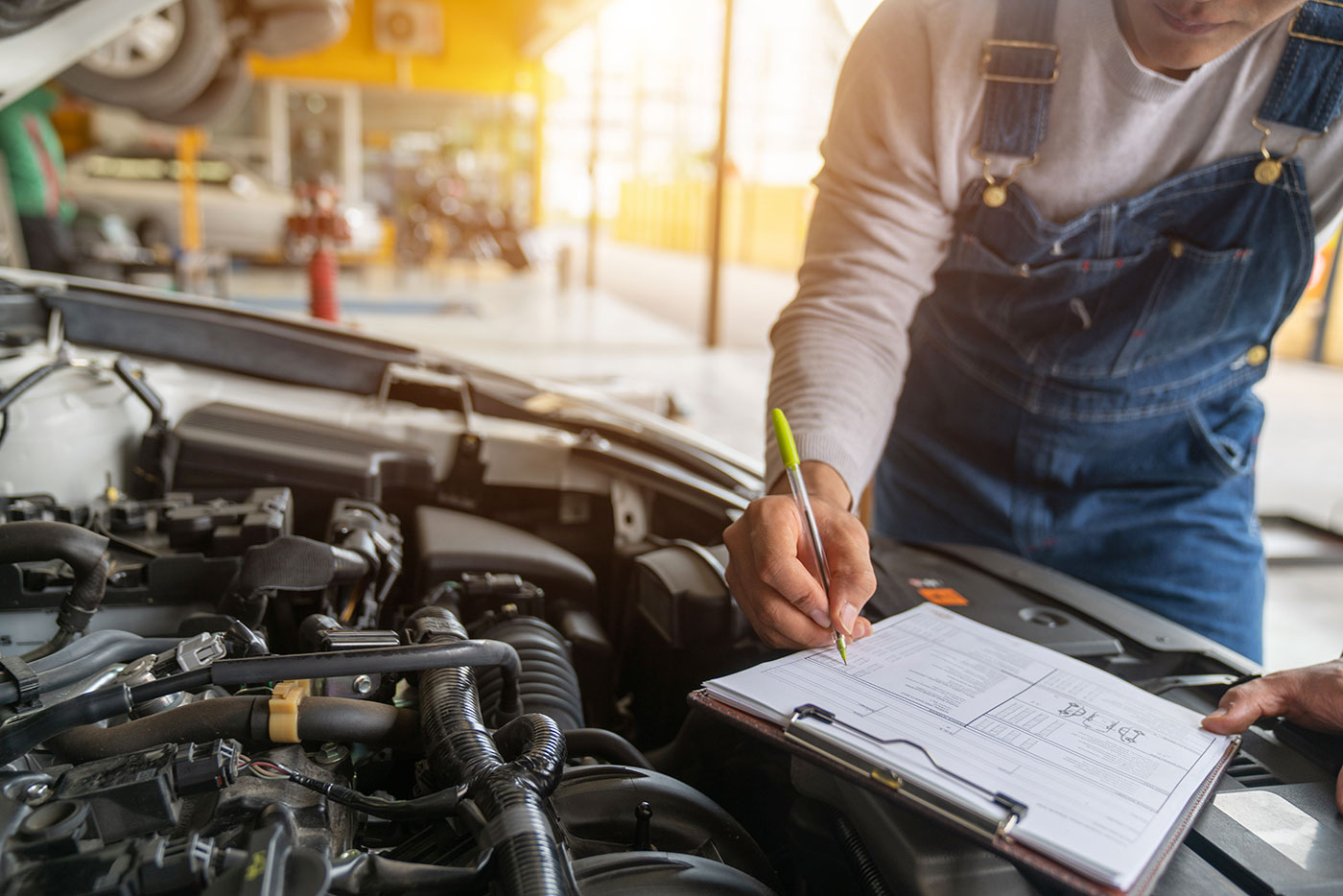
Every passenger car is subject to periodic inspections.
Inspection frequency cars
For passenger cars, this depends on what the vehicle runs on (combustion engine or electric motor) and the type of fuel it uses.
For example, passenger cars running on petrol, alcohol (ethanol), or an electric motor must undergo their first inspection within four years after the first admission. Then twice after every two years, and then on a yearly basis.
Passenger cars using diesel, gas, or other fuel, possibly in combination with an electric motor, must undergo their first inspection within three years after the first admission. Then on a yearly basis.
| 1st APK | 2nd APK | 3rd APK | next APK's | |
|---|---|---|---|---|
| Petrol, alcohol (ethanol), or electric motor | 4 years after 1st admission | 2 years after 1st APK | 2 years after 2nd APK | yearly |
| Diesel, gas, or other fuel, possibly combined with electric motor | 3 years after 1st admission | yearly after 1st APK | ||
The APK must always be carried out before the previous inspection certificate has expired.
Inspection certificate
You will receive an APK inspection certificate after the inspection. In the Netherlands, you are not required to have this certificate with you when driving. In some other countries, however, this is mandatory. It is therefore wise to keep the inspection certificate inside your vehicle at all times. You must ensure the certificate remains undamaged and legible.
Both the driver and the owner of a vehicle are responsible for ensuring that mandatory inspections are carried out in a timely manner and for maintaining the inspection certificate’s good condition.
Nowadays, enforcement is facilitated by a national registration system. This means you will automatically be fined if you are late having your vehicle inspected.
An APK approval does not automatically mean a vehicle has been sufficiently maintained. While the APK checks a number of important technical elements, not everything is covered. There is also no guarantee of the vehicle’s condition after a month. In addition to the APK, drivers are advised to have passenger cars serviced at a garage at least annually ‒ especially if the vehicle is older. Always seek advice from a professional if you experience issues or error messages or if you suspect something might be wrong with the vehicle.