

Speed limits
Speed limits are usually indicated by means of signs. But it is certainly not the case that you can also go the speed limit everywhere. There are plenty of reasons to diverge from this speed.
For example, you are expected to consider the following factors:
- the nature and condition of the road: think of speed bumps or holes;
- the weather conditions: think of slipperiness, rain or fog;
- the condition of the vehicle: think about whether to have winter tyres in winter;
- road congestion.
You are expected to have the insight to determine the correct speed per situation.
You must be able to stop your motorcycle withing the distance over which the road can be overseen and over which it is free. It is expected of you that you adapt your speed and distance to the vehicle in front of you.
- Trailer
Vehicle pulled by another vehicle or intended for that purpose. A towed motor vehicle also falls under trailers.
- Passenger car
Vehicle on four or more wheels, designed for the transport of people. A passenger car does not have more than eight seats for passengers, excluding the driver seat. A passenger car is not a motor carriage with a limited speed or a disability vehicle.
- Motorcycle
A motor vehicle on two wheels, with or without sidecar or trailer.
- Three-wheeled motor vehicle
Motor vehicle on three or four wheels, usually with an open bodywork. The maximum construction speed is more than 45 km/h. These are usually trikes or quads. Even though they are called three-wheeled motor vehicles, they can also have four wheels.
- Lorry
Motor vehicle, not designed for the transport of people, of which the maximum allowed mass is more than 3500 kg.
- Bus
Motor vehicle designed for the transport of more than eight people, the driver not included.
- T100-bus
Motor vehicle with an annotation on the vehicle registration certificate or in the vehicle registration register showing that it is eligible for a raised speed limit of 100 km/h. This is often not visible on the outside of the bus. Most buses are provided with a round sticker with a red border with the number 100 in it. Think of touring cars with this.
- Public bus
Motor vehicle that is used for public transport.
- Erf
-
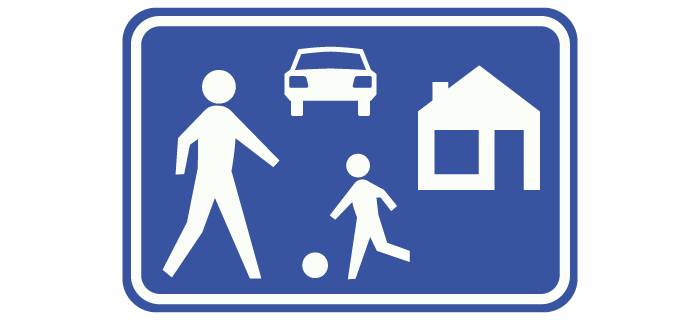
An area indicated by sign G-5. A lot of people live, and children play, in this area. The speed limit is 15 km/h. Pedestrians are allowed to use the entire width of the road inside an erf.
- Within the built-up area
-
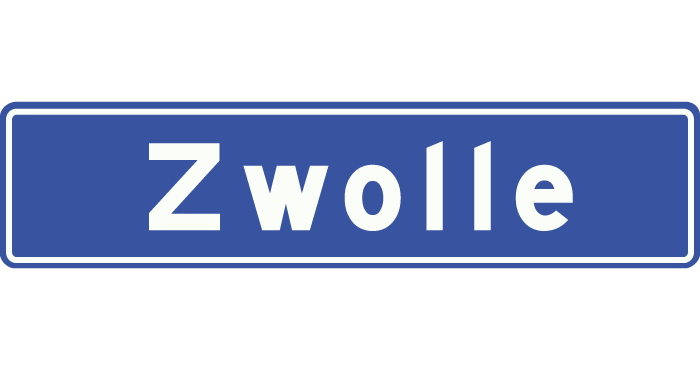
Area within the borders of a village or city. Indicated by sign H-1 with the name of the village or city you are entering on it. The speed limit is 50 km/h.
- Outside the built-up area
-
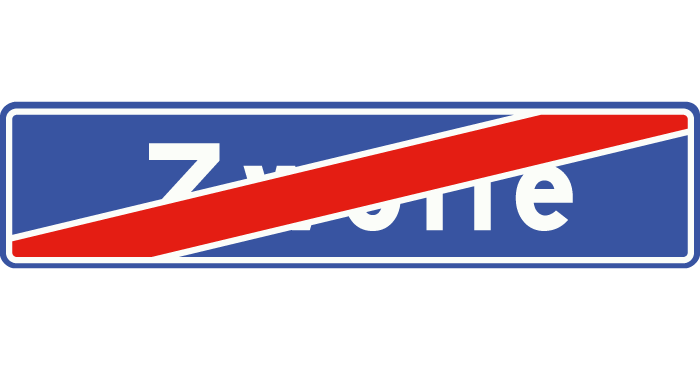
Area outside the borders of a village or city. Indicated by sign H-2 with the name of the village or city you are leaving on it. The speed limit is 80 km/h.
- Autoweg
-
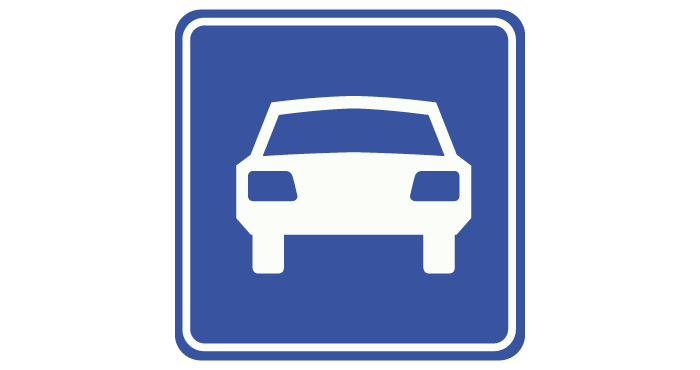
Road indicated by sign G-3 where a speed limit of 100 km/h applies. The parking lots, petrol stations and bus stops along the autoweg are not part of the autoweg.
An autoweg with just one carriageway can be recognised by a green axis line. - Motorway
-
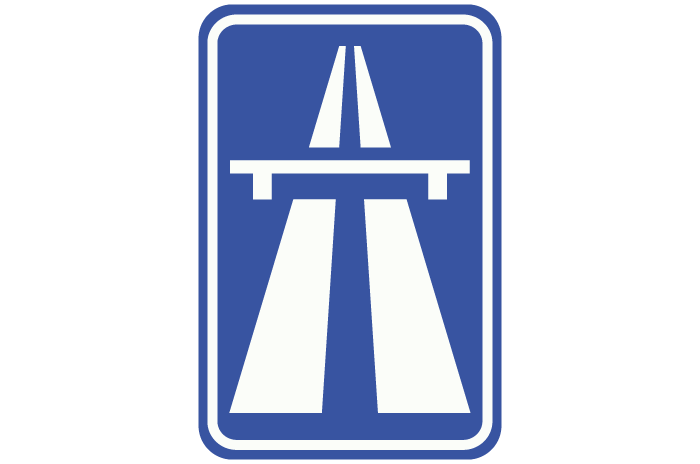
Road indicated by sign G-1 where a speed limit of 130 km/h applies. The parking lots, petrol stations and bus stops along the motorway are not part of the motorway.
Motorways are provided with a hard shoulder.
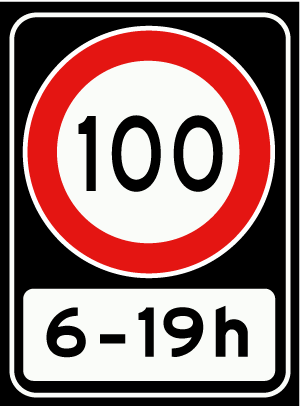
Signs can be placed alongside an autoweg or motorway, that indicate that the speed limit is lowered. This can be between certain times, for example between 06:00 and 19:00. But it could also be a permanently lowered speed limit.
Extra information speed limits
Speed limits inside the built-up areas
Inside the built-up area the following speed limits apply:
- for motor vehicles: 50 km/h, even on autowegen inside the built-up area!;
- for motor vehicles with a limited speed, such as agricultural tractors: 40 km/h1;
- for mopeds, speed pedelecs and disability vehicles fitted with an engine:
- on the carriageway: 45 km/h;
- on the cycle/moped path: 30 km/h, this also applies to disability vehicles on the cycle lane;
- for snorfietsen: 25 km/h;
- for brommobielen: 45 km/h;
- for disability vehicles on the pavement or footpath: 6 km/h.
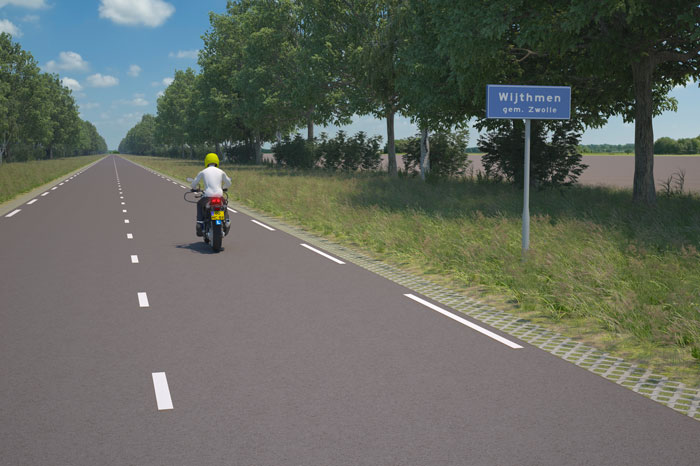
Within the built-up area, the speed limit is 50 km/h.
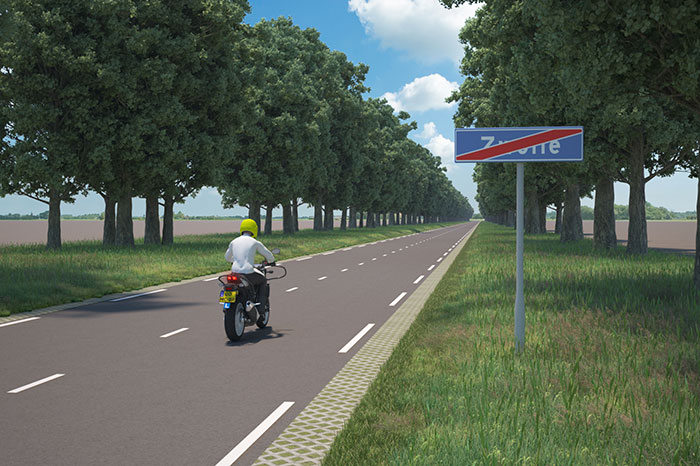
Outside the built-up area, the speed limit is 80 km/h.
Speed limits outside the built-up areas
Outside the built-up area the following speed limits apply:
- for motor vehicles on the motorway: 130 km/h;
- for motor vehicles on the autoweg: 100 km/h;
- for motor vehicles on other roads: 80 km/h;
- for lorries and buses, not T100-buses: 80 km/h, with or without trailer;
- for T100-buses: 100 km/h (only on autowegen and motorways);
- for motor vehicles (maximum mass of 3500 kg) with trailer (maximum mass of 3500 kg): 90 km/h (only on autowegen or motorways);
- for moped riders, speed pedelecs and disability vehicles fitted with an engine:
- on the carriageway: 45 km/h;
- on the cycle/moped path: 40 km/h, this also applies for disability vehicles on the cycle lane;
- for snorfietsen: 25 km/h;
- for brommobielen: 45 km/h;
- for motor vehicles with a limited speed, such as agricultural tractors: 40 km/h1;
- for disability vehicles on the pavement or footpath: 6 km/h.
1 The speed limit of agricultural vehicles depends on the layout of the road and can be lower in certain situations. But legally speaking it is 40 km/h. The exact legislation is not asked.
Speed limit with sidecar
Do note, the speed limit for a motorcycle with sidecar is same as the normal speed limit for motorcycles. A sidecar is not considered as a trailer.