

Traffic insight and riding behaviour
To be able to participate in busy traffic, traffic insight and proper handling of your vehicle (vehicle control) is crucial. The way you interact with other traffic is also an important element for traffic safety.
Traffic insight goes further than knowing and applying the traffic rules. Some situations cannot be solved with rules and in these situations, you will have to determine what is best. If you only think of yourself, you may endanger other road users. A good driver also thinks of the best interests of others and pushes their own interests aside if needed.
Antisocial and aggressive riding behaviour
Antisocial road users put their own interests first, even if this endangers the traffic safety. They force priority even if they do not have priority, they drive too fast, ignore red traffic lights or cut off other road users. Some of them also react aggressively when they are made aware of their antisocial behaviour.
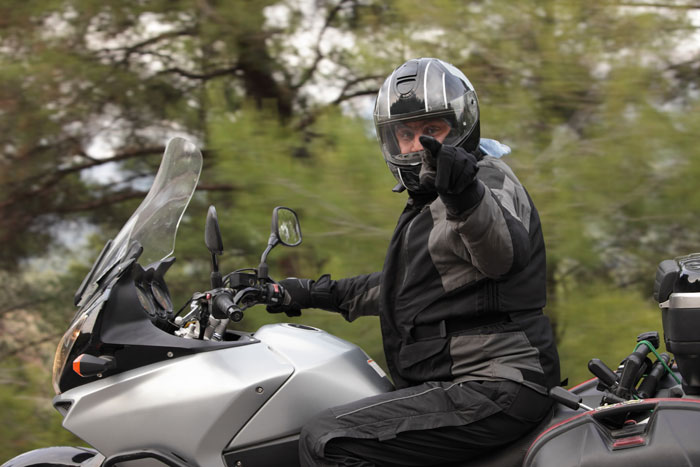
Do not be provoked to bad behaviour by the mistakes of other road users, but always ride defensive and socially.
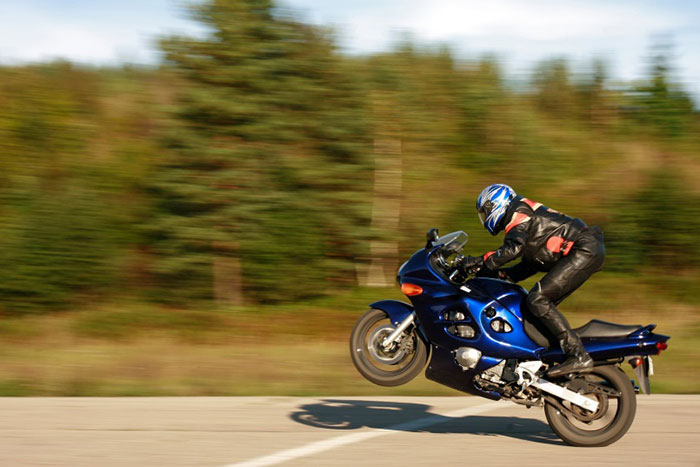
Doing a wheely is not allowed on public roads. This falls under article 5 of the Road Traffic Act.
For example, doing a wheely, where your front wheel comes off the road, is also not allowed on public roads. A wheely arises when the clutch lever is released to quickly and too much throttle is applied. In these cases, the police have the possibility to fall back on the ‘kapstokartikel’, article 5 of the Road Traffic Act. This article prohibits causing danger or hindrance on the public road. This way, an antisocial driver can lose their driving licence, face high fines or be registered for an Educational Measure Behaviour and Traffic (EMG). In some cases, the driver even has to answer in court.
- Article 5 of the Road Traffic Act, ‘Kapstokartikel’
It is prohibited for everyone to behave in such a way that it causes, or may cause, danger or hindrance on the public road.
Social and defensive riding behaviour
Social road users put aside their own interests at the right moments. This goes further than applying the rules and making as little mistakes as possible. They try to predict and recognise any mistakes made by others and then help catch them.
Letting someone go ahead who would otherwise never get in, also falls under social riding behaviour.
To show social riding behaviour, you will have to ride defensively. This means looking far ahead, adjusting your speed in time and account for unexpected situations. This is even more important for motorcyclists, because you are extra vulnerable as a motorcyclist.
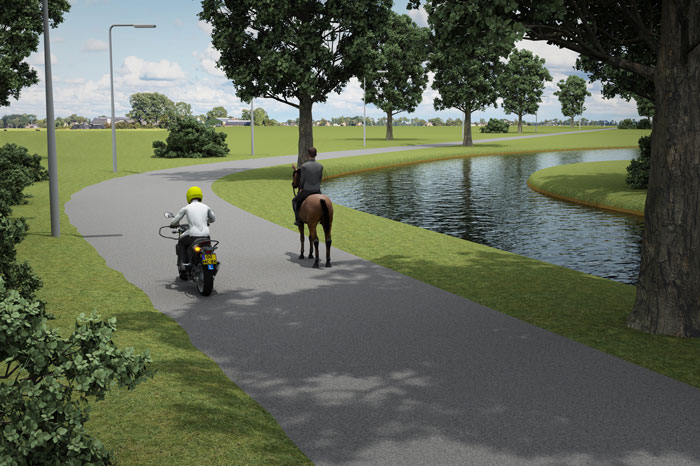
Riding calmly and widely around a horse rider falls under social and safe riding behaviour.
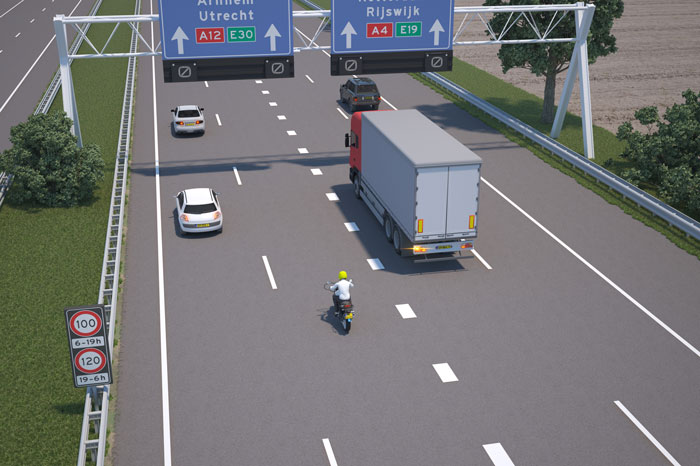
Making space for a lorry that changes lanes a little late falls under social and safe riding behaviour.
- Anticipating
Looking and thinking far ahead. Recognising possible dangerous situations in time and setting yourself up for the actions you need to perform. Actually performing these actions falls under defensive riding.
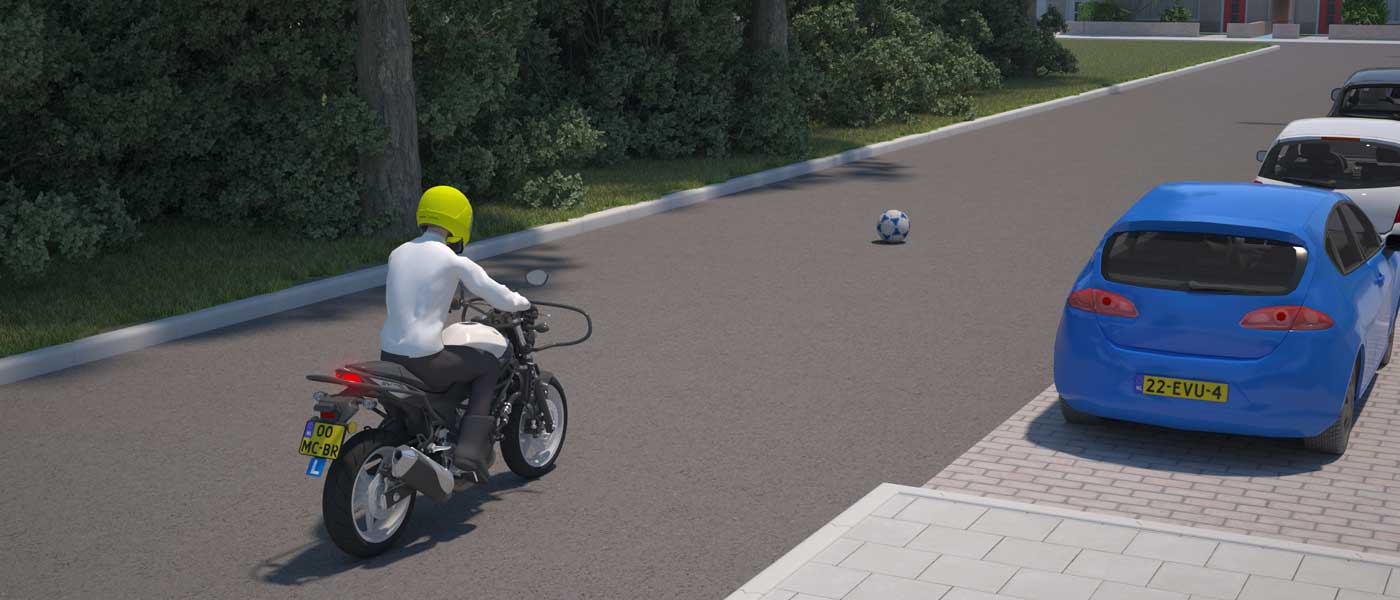
Considering playing children and react immediately as soon as a ball rolls onto the road, falls under anticipating.
Both anticipating as well as defensive riding does not mean that you ride extra slowly. It also does not mean that you give way everywhere while you yourself have priority. It means that you try to empathise with what other road users plan to do and what they expect of you and then adapt your behaviour to this.
Decisive riding behaviour
Decisive riding means daring to make the right decisions in time and implementing them promptly. In doing so, also clearly show what you intend to do. This requires good knowledge of traffic rules and traffic insight.
The more experience you have, the easier it becomes to ride decisively. The terms defensive riding behaviour, decisive riding behaviour and anticipating are inseparably linked. The most important part in this remains: look far ahead and start thinking and acting in time if necessary.