

Motor carriage mandatory insurance
As soon as a motor carriage is registered to your name in the vehicle registration register, you are required to take out insurance for this vehicle. It does not matter whether you drive this vehicle.
Different insurances
If you insure a motor carriage, you have different options. The three best-known are:
- Third-party liability insurance (WA)
This is the most limited insurance as it only covers damage you inflict to the counterparty. Your own damages are not insured and, for example, theft or storm damages are also not included. This insurance is required for motor carriages, but a more extended insurance is also allowed. - WA limited casco insurance (also called WA plus)
This is the intermediate form, where damage to the counterparty is covered, but also damage to your own vehicle caused by force majeure, such as storm damage, theft or fire. - WA full casco insurance (also known as just ‘casco’ or ‘allrisk’)
This is the most complete insurance. It not only covers the damage to the counterparty and damage to your own vehicle caused by force majeure, but also damage to your own vehicle you caused yourself.
Most people will let the choice of insurance type depend on the price and age of their vehicle. The newer and more expensive the vehicle is, the wiser it is to take out a full casco insurance.
If you do not insure your vehicle at all, you are punishable. But more important: if you cause an accident, you must pay all damages to the counterparty yourself. These quickly become high sums, especially if someone was injured. You must then also cover these medical expenses.
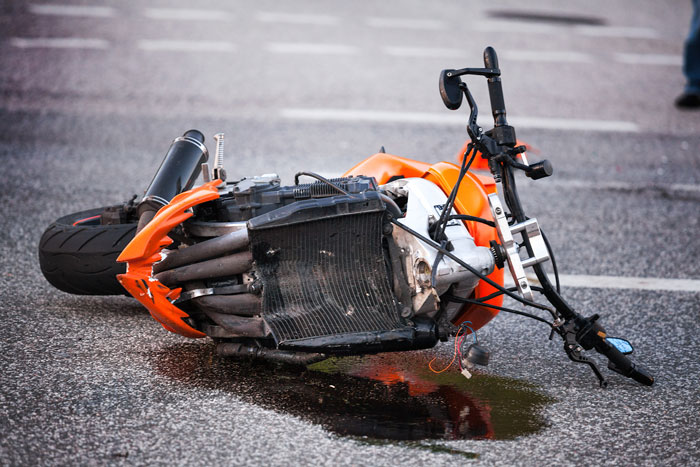
Not all types of insurances cover the damage to your own vehicle.
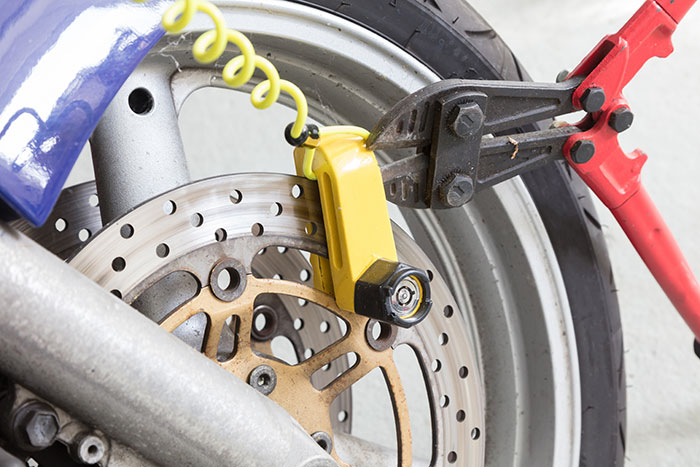
Damage due to theft is also not covered by all insurances.
White insurance card (former green card)
The insurance card is proof that your vehicle is insured. It is a white sheet of paper on which the details of your vehicle and insurance are listed. With some insurers this card is still green. Every year, you will receive a new insurance card. Nowadays, this insurance card is often delivered digitally by the insurance company.
In the Netherlands, it is not required to carry this card with you, but you may be asked for it abroad. In addition, it does come in handy to carry the insurance card when you are dealing with damage. It contains the information you (and the counterparty) need.
Trailer
A coupled trailer is also insured by the insurance of your vehicle. This means that damage caused to the counterparty by this trailer (or by its load) is covered by the insurance of the towing vehicle. Damage to the trailer itself is not covered. For this, separate trailer insurances exist. Taking one out is not required and for most trailers unnecessary.
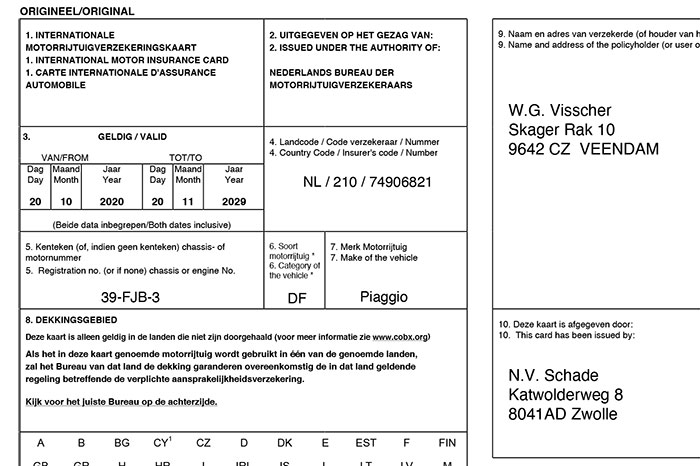
You are not required to carry the insurance card, but it is wise to store it with the vehicle registration certificate.
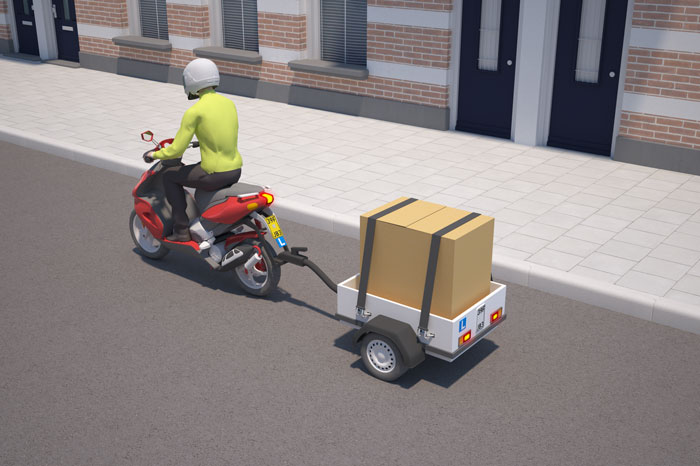
Damage caused by a coupled trailer is covered by the moped insurance.
European damage claim form
If you have caused damage, you must fill in a damage claim form together with the counterparty. It is not required to carry them, but it is wise. A damage claim form consists of a fill-in sheet and a blister sheet. After filling in and signing the form, both parties take one of the copies. You fill in the back side of the form at home and send it to the insurance company.
No vehicle registration requirement
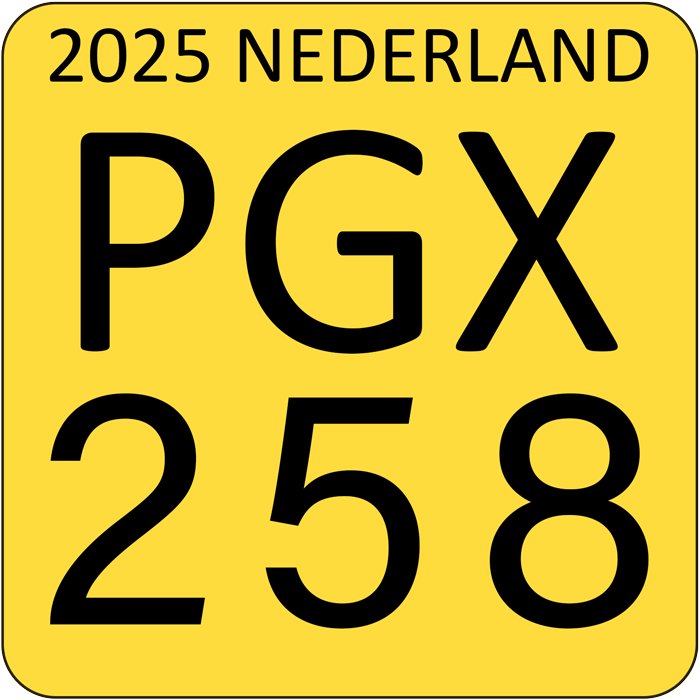
Insurance sticker
Not all motor carriages have a vehicle registration requirement. A few of these vehicles, such as the motorised disability vehicles, do have to be insured and have an insurance sticker. This sticker is issued by the insurer as soon as the vehicle is insured.
Lending a vehicle
If someone else is driving your vehicle because you have lent it out, it is insured under your insurance policy. So, damages caused by that person will be paid from your insurance. It may happen that by their doing, you suddenly have to pay more premium because you fall back in claim-free years. Therefore, know who you lend your vehicle to and make proper arrangements on how such a case should be handled in advance.
Not insured
If your vehicle is not insured, you are punishable. In that case, all damages will be recovered from you personally and this can get quite expensive. Likewise, if you cause damage due to negligence or irresponsible behaviour, the insurer is not required to reimburse the damages. Think of driving under the influence of alcohol or drugs, driving without a licence, or using the vehicle in a way for which it is not insured, such as driving lessons or driving on a circuit. In those cases, the insurer does cover the damages to the counter party, but will then recover those damages from you again.