

Inexperienced/vulnerable road users, large vehicles
As a driver of a passenger car, you regularly have to deal with inexperienced drivers and vulnerable road users in traffic. In many of these cases, you have a responsibility to keep it safe. Even if this inexperienced or vulnerable road user does not follow the rules, you should solve this as best as possible to prevent accidents. In addition, you have to take into account large vehicles and their limitations.
Children
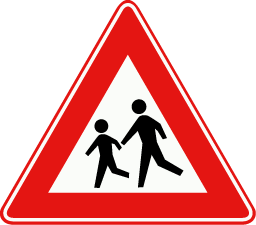
J-21
Children
Participating in traffic is usually less safe for children than for adults. Especially when they are still small they have much less overview than adults. In addition, they also do not yet have the experience and the brain is not yet sufficiently developed to be able to understand all risks. They sometimes play on the pavement or on the carriageway, hide between parked cars and cross the road without looking chasing their football.
So always be careful when driving through residential neighbourhoods. Take unexpected situations into account and look carefully between and under parked cars to see (the feet of) children playing. If there are children on the pavement, always keep in mind that they can suddenly cross the street. Reduce your speed.
Pedestrians
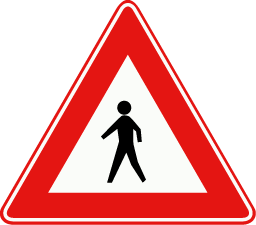
J-23
Pedestrians
Pedestrians are very difficult to see in the dark. Keep this in mind when you are driving on roads where there is no footpath or pavement. If possible, do not drive completely to the right. In addition, pedestrians are not always consciously involved in traffic. Therefore, always be aware of the presence of pedestrians, even if they walk on a footpath or pavement. Recognise pedestrian crossings in time.
Cyclists, moped riders and snorfietsers
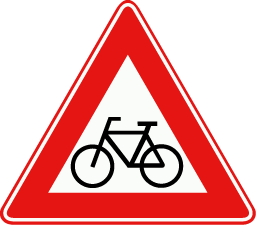
J-24
Cyclists and
moped riders
When turning right, look for cyclists and snorfietsers. These may pass you on the right and can be in your blind spot. In addition, they are balancing vehicles which can swing unconsciously. Keep enough lateral distance (about 1,5 metres) between your passenger car and the bicycle or snorfiets. Also pay attention to crossings of cycle paths and cycle/moped paths. In the dark always take into account cyclists that are difficult to see.
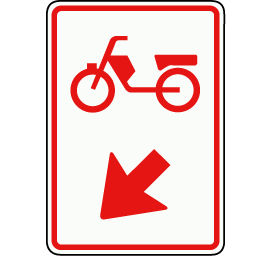
Moped riders should pass the sign on the side indicated
Moped riders often ride on the carriageway in built-up areas. Keep enough distance and only overtake if you can pass safely. Also pay attention to signs indicating that moped riders should use the carriageway.
Horse riders and horse transport
Because horses are flight animals, they naturally startle. This can be very dangerous for the rider or handler of the horse, or with a horse trailer on the road. If you approach a horse rider or a handler of a horse, reduce your speed and keep your distance. Only pass if you can do this quietly and spaciously. Never use the horn when driving near a horse. Also keep a safe distance from a horse trailer on the road.
Brommobiel drivers
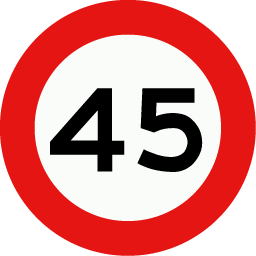
Brommobielen can be recognised by this sign
Brommobielen are similar to small cars and drivers must also follow the rules of the motor vehicles. Because you can drive a brommobiel from the age of 16, many brommobiel drivers are not yet experienced drivers. The difference in speed limit can also pose an unexpected danger. Brommobiel drivers are only allowed to drive at 45 km/h, even on roads where other drivers are allowed to drive much faster. This speed difference can be dangerous if you do not take this into account. Brommobielen can be recognised by a round sticker or a round sign on the back of the vehicle, with a red border and the black number 45 on it.
Drivers of vehicles with limited speed
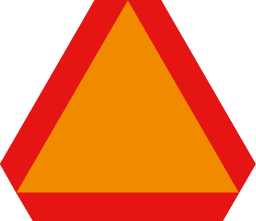
Vehicles with a limited speed up to 25 km/h can be recognised by this truncated triangle
The best known limited speed vehicles are agricultural vehicles. But road sweepers and lawn mowers from the municipality can also be vehicles with limited speed. Vehicles with a limited speed up to 25 km/h can be recognised by a truncated triangle on the back of the vehicle.
As the name says, these vehicles are not allowed to drive fast. The speed difference between these vehicles and other motor vehicles can be quite high.
Agricultural vehicles are often very large. This makes overtaking these vehicles more difficult. Take into account the sometimes limited visibility of the driver. This can be limited by coupled machines or large trailers. Agricultural vehicles that turn left or right in particular can be very dangerous if they are being overtaken on the left or right.
Lorry drivers
Due to their size, lorries have multiple and considerable blind spots. These are located just in front of, next to and behind the lorry. A good rule of thumb is: if you do not see the driver (directly or through the mirror), the driver will not see you either. You are standing or driving in the blind spot and this increases the chance of a collision. Therefore, stay out of the blind spots as much as possible. In addition, large vehicles also need more space when cornering. Give them this space by keeping sufficient distance.
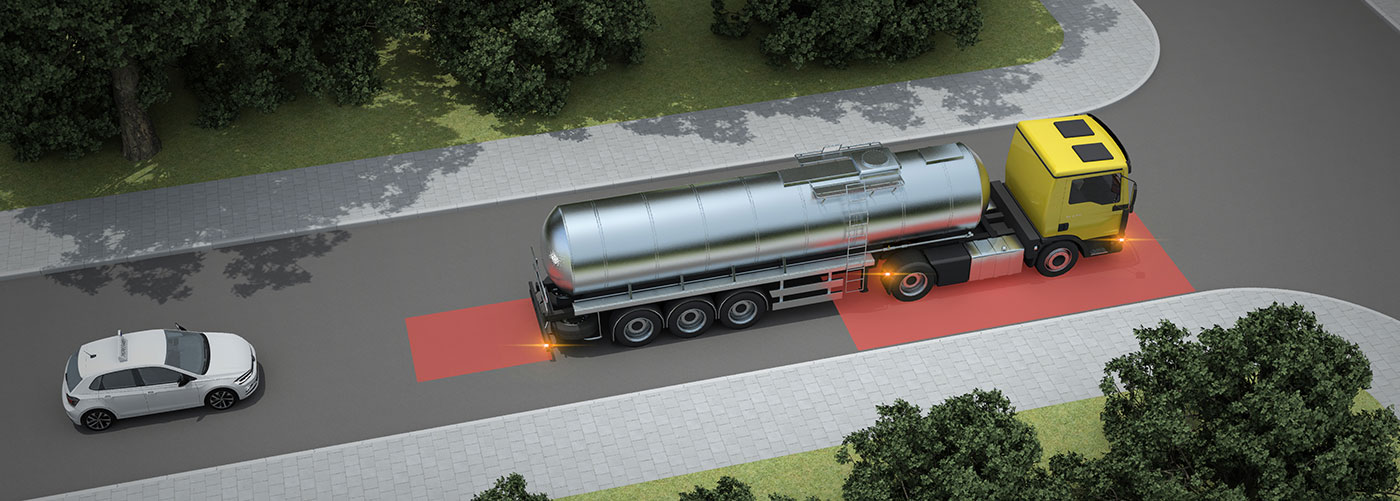
The red areas are the places that the driver has poor or even no oversight (blind spots). Avoid staying in these areas as much as possible.

Long heavy transport can be recognised by this warning sign, which means: ‘Caution! Extra long!’
LZV vehicles (long heavy transports) are very long. These lorries may be 25.25 metres long instead of the normal 18 metres. They are therefore not allowed to go everywhere and are mainly intended for longer journeys on motorways.
The elderly and the disabled
Older people are often more likely to suffer from certain conditions such as reduced vision, poorer mobility and slower response. Hearing can also decrease. This makes traffic participation more dangerous. Therefore, take elderly people into account and give them more time when crossing. Older drivers can drive doubtfully. Do not respond to this in frustration, but give them space.
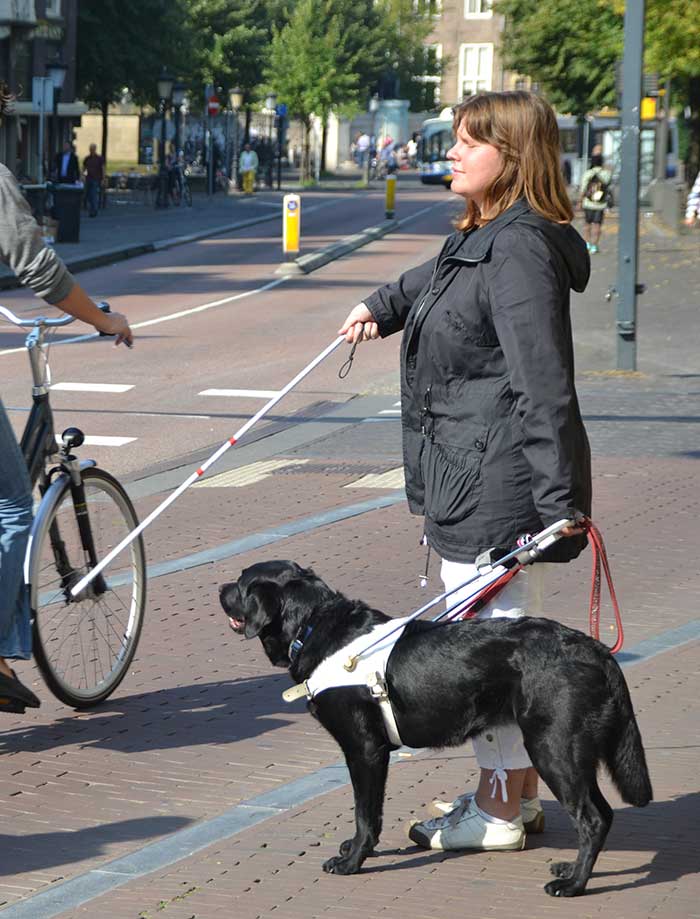
Persons with disabilities can sometimes be less mobile, visually impaired or blind, or hard of hearing or deaf. All these factors complicate traffic participation. Blind persons can be recognised by a white blind stick with red rings and/or a guide dog for the blind. These persons, but also persons on crutches or with a walker or walking frame, are always allowed first if they want to cross.
Blind persons indicate that they want to cross by sticking the blind stick forward.
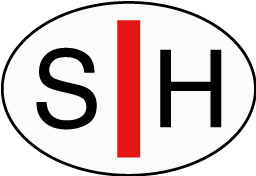
These letters stand for ‘SlechtHorend’ (hearing impaired)
Deaf and hard of hearing people can sometimes be recognised when they drive on a vehicle with a plate on the back with the letters SH on it. This stands for hearing impaired.
Hearing impaired and deaf persons do not hear you coming and can therefore be startled or have not noticed you at all.