

Weather conditions
Weather can have a major impact on traffic, and drivers are advised to adjust their following distance in line with weather conditions. Rainfall leads to a longer braking distance, poor visibility, and possible aquaplaning. Some weather conditions are more obvious, while others may be sudden onset. Inexperienced drivers are particularly at risk.
- Ruts
Longitudinal grooves that form in the road surface due to heavy loads such as freight traffic. Rutting on motorways occurs primarily in the right-hand lane.
- Aquaplaning
A layer of water between the tyre and the road surface, which decreases the grip of the tyres. The grooves of the tyres are incapable of handling large amounts of water. While this mainly occurs in the grooves caused by rutting, it can also occur on roads with no rutting.
Rain
Rain always leads to a slippier road surface. However, this can become very slippery very quickly during heavy rainfall after a long drought. Rubber residues, oil, and dirt mix with the water to form a slippery layer on the road surface. In autumn, fallen leaves can also become dangerously slipperly during rainfall.
Aquaplaning is a very real risk during heavy rainfall, especially on roads with extensive rutting. Good tyre maintenance and driving at lower speeds can help avoid aquaplaning.
Adequate tyre pressure, good tread depth, and low speeds can all help prevent aquaplaning. Light passenger cars with wide tyres are at greater risk for aquaplaning than heavier cars with narrow tyres.
If aquaplaning occurs, slowly release the accelerator and use the clutch. Wait until the vehicle regains traction before braking or steering! Keep your eyes on the direction you want to drive in.
In case of aquaplaning, pressing the clutch allows the wheels to return to the correct speed as soon as they regain grip.
Slipperiness due to frost
Wet road surfaces may freeze over, especially during winter, and become very slippery. Shaded road surfaces in particular become slippery more quickly and remain that way for a longer period due to a lack of sunlight. But drivers must also be aware that frost can also cause overpasses and bridges to suddenly become slippery, because they freeze from the bottom up.
Even if temperatures are above freezing, the ground may be colder and slippery conditions can occur. This is called ground frost.
Smooth road surfaces are dangerous in that they are difficult to observe in advance. Drivers are therefore advised to anticipate slippery conditions in temperatures below 4°C by adjusting their speed at bends and intersections and maintaining an adequate following distance.
You should not only adapt your driving style during slipperiness due to frost. But also when it is slippery due to mud on the road, or when you must swerve into a poorer (soft) verge. You must then keep a few things in mind:
- Do not do anything abruptly!
So do not just break or steer. - Release the accelerator
Make sure that you lower your speed. - Do not press the clutch pedal unless it is necessary
A pressed-in clutch pedal causes the car to continue travelling at a higher speed and that you have less control. - Wait until you have a lower speed
If necessary, only steer back onto the carriageway at a lower speed. Check if you have grip and do not steer further if your car does not react to it!
Once you are in the correct position again and the slipperiness has passed, then you can increase your speed again. Keep an eye out for new slippery sections. All things mentioned above are quite difficult to do if you have never encountered it before. The first reflex to brake is hard to suppress. A skid course may help with this.
Frost damage
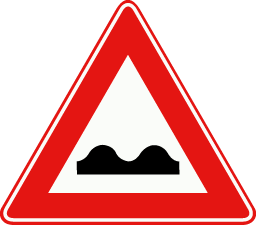
J-1
Poor road surface
Frost can also damage road surfaces. Water in the asphalt freezes and expands, loosening weak spots in the asphalt and creating holes in the top layer of the road surface. The braking distance is considerably longer on roads with frost damage.
Winter precipitation
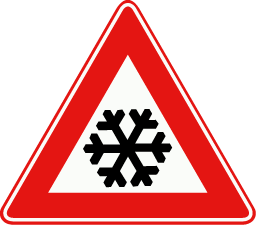
J-36
Sleet (freezing
rain) or snow
In addition to frost, snow, sleet (freezing rain), and hail cause slippery conditions and thus pose a risk to traffic. Winter precipitation leads to decreased visibility. Snowfall in particular can distract drivers and affect focus, leading to fatigue.
Winter conditions can make traffic signs and markings difficult to see clearly. A number of priority signs can be recognised by their shape. You can take advantage of that when driving in snowfall.
An increased following distance and defensive driving are also crucial to safe driving in winter. Keep an eye on the road ahead, release the accelerator on time, and avoid sudden braking. Use the front fog lights if visibility is less than 200 metres.
Mist
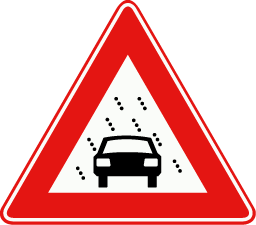
J-35
Reduced visibility due to snow, rain or fog
Mist, which consists of small raindrops that linger in the air, can lead to reduced visibility. Many drivers encounter this unexpectedly when entering a fog bank, causing them to brake on reflex. Sudden braking in foggy conditions can take drivers behind you by surprise. To avoid a collision in these situations, maintain an increased following distance and do not brake unnecessarily. Releasing the accelerator is usually a safer option.
Use the front fog lights if visibility is less than 200 metres. If less than 50 metres, use the rear fog lights too.
Mist: reduce your speed by half and double your following distance.
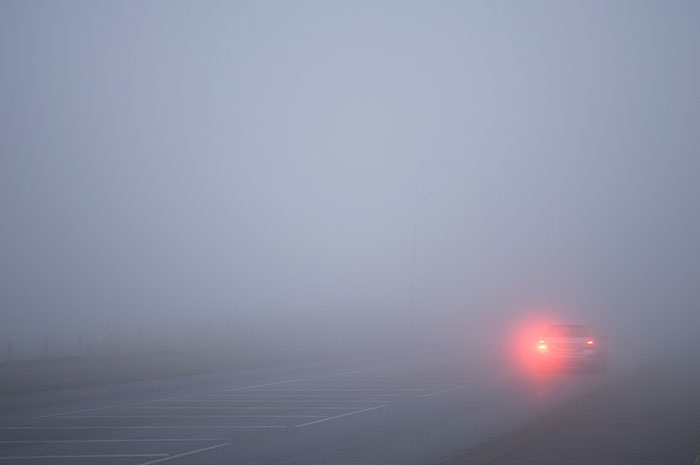
Reduce your speed by half and double your following distance when driving in thick fog.
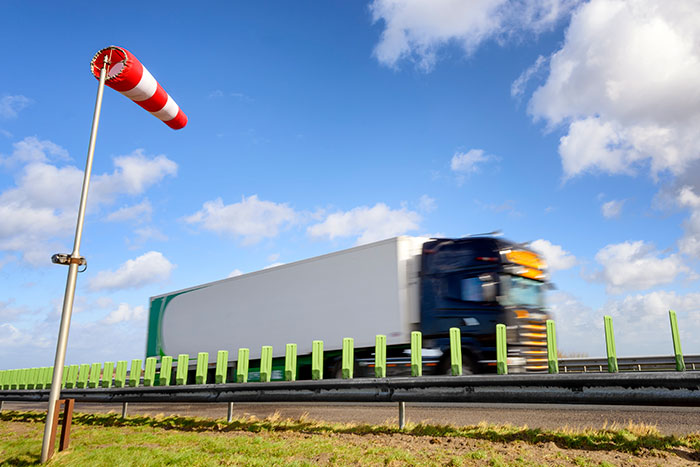
High vehicles are very susceptible to crosswinds.
Crosswind (side wind)
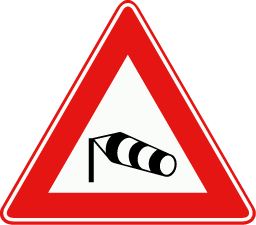
J-31
Crosswind
Windsocks often occur in areas with an increased risk of crosswinds. The more horizontal a windsock is, the stronger the wind is. Windsocks also indicate in which direction the wind is blowing.
Particularly when the wind is transverse to the road, drivers must anticipate gusts that may affect the vehicle’s stability.
The taller and lighter the vehicle, the higher a risk wind presents. Trailers may also sway in the wind. Always adjust your speed to the wind and maintain adequate space around your vehicle.