

Traffic behaviour and safety
Hundreds of road users die every year as a result of traffic accidents. Almost three-quarters of victims are male. More than half of these accidents take place on municipal roads, especially those with a speed limit of 50 km/h. These roads are where vulnerable road users and multiple flows of traffic come together. Roads with a speed limit of 80 km/h follow directly after.
| Cause of accident in % | |
|---|---|
| Human error | approximately 92% |
| Vehicle malfunctions | approximately 5% |
| Road and weather conditions, situational factors | approximately 3% |
Most accidents occur as a result of human error. Young people aged between 15 and 24 are relatively often the cause and/or victims of fatal traffic accidents. The use of alcohol, sleeping pills and tranquillisers, and drugs play an important role in the frequency of these accidents. But peer pressure, anger and frustration also encourage dangerous behaviour. Another significant risk factor is distraction, for example caused by mobile phone use.
In addition to the human risk factor, other causes play a much smaller role in traffic accidents. A handful are caused by technical issues such as poor vehicle maintenance, manufacturing defects, and malfunctions.
Environmental factors such as poor visibility due to fog, crossing wildlife, and other road and weather conditions are also a cause of traffic accidents.
Risk factors
Many human mistakes arise because drivers do not pay enough attention. This is usually not on purpose but happens because of personal circumstances. How well you pay attention is influenced by various factors.
State of mind
Your thoughts can wander because you are sad or angry, or because you are happy or enthusiastic about something you have just heard. Because our brains can do much less at once than we think, you are less focused on driving at such times. Your driving style is also influenced by your emotions. For instance, angry people usually drive more aggressively.
Fatigue
You are also less attentive when you are fatigued. You react more slowly, and you cannot think well. Despite the fact that in many accidents it cannot be determined whether they are due to fatigue or not, it is estimated that at least 10 to 15% of accidents are directly or indirectly caused by fatigue. Fatigue has the same effect on our driving style as the use of alcohol has. Therefore, do not go driving when you are too tired, but look for an alternative, or if possible, stay home.
When driving long distances, you prevent fatigue by having a 15-minute break at least every two hours.
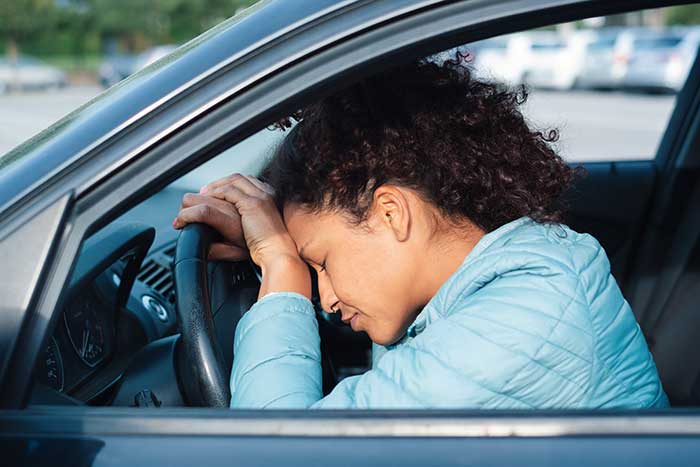
Fatigue has a lot of influence on your driving skills.
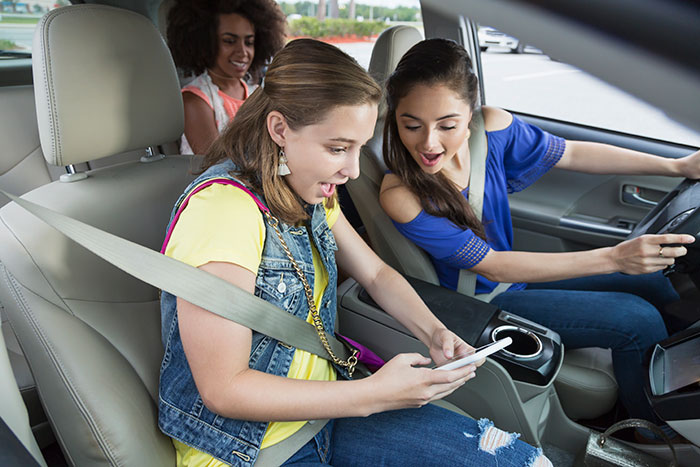
Even if you are not holding the phone yourself, it can be very distracting.
Distraction
The main form of distraction in traffic is the smartphone. Not only calling, but also reading and sending messages are still often done behind the wheel. Without realising it, this means you are not looking at the road for several seconds at a time. Your reaction time deteriorates considerably because you simply do not see that you need to react to something.
Holding a phone is therefore prohibited while operating a vehicle. Despite the fact that calling handsfree is allowed, it is almost as unsafe due to the distraction of it.
Even actions that are allowed can cause for a significant distraction. For example, it is not legally prohibited to set your navigation, or to change the radio station. But even then, you are not focussed on traffic. A conversation with a passenger or kids fighting in the backseat can also reduce your concentration.
Illness or physical impairments
Our physical impairments or illness can also make you less able to drive. For example, when you have a broken leg or arm, you can no longer drive the vehicle properly. If that is the case, you should not just start driving. Driving a car is also not wise if illness makes it harder for you to concentrate.
Distraction, stress, emotions, peer pressure, and fatigue are all major – and often underestimated – risk factors in traffic. The biggest problem with these factors is that they cannot be measured or quantified in the way alcohol, for example, can.
Alcohol
Alcohol is in every way bad for your driving style. It causes overestimation, while you actually start driving worse. Your perception deteriorates, you react less quickly, and you often unconsciously accept the risks because you think they are not so bad.
One standard glass of an alcoholic beverage only leaves your body after 1 to 1.5 hours. The accident risk is considerably higher in the meantime, depending on how much you drink. From four times higher after three to four glasses, to 20 times higher at five to six glasses.

- A standard glass of an alcoholic beverage
One standard glass of wine contains the same amount of alcohol as one standard glass of beer or one standard glass of spirits.
Drugs
All types of recreational drugs have a negative effect on your driving style. How exactly depends on the type. As an example: drugs like weed and hash make you concentrate less and react more slowly. On the contrary, stimulant drugs make you drive more aggressively and faster because you think you can handle anything and are super sharp. Overestimation is a big problem here.
With drugs it can take several days before you are below the limit at which you can drive again.
Driving under the influence of both alcohol and drugs is prohibited, even if the level detected is below 0.2 per mille. The limit value in this case is zero.
Medications
It is also a criminal offence to drive under the influence of certain medications that can impact driving skills. These include sleeping pills, antidepressants, heart and blood pressure medications, and even eye drops that temporarily reduce vision. This does not only apply to medications prescribed by a physician.
Medications to which this applies usually feature a yellow warning sticker. The accompanying leaflet will also contain a warning.
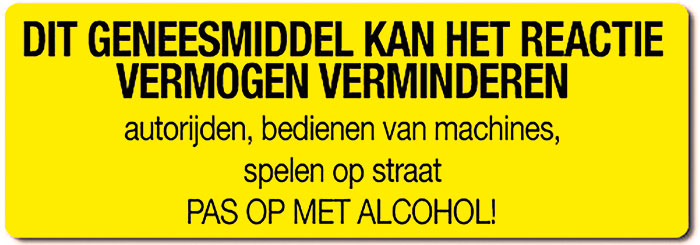
Drivers taking these medications must indicate such in their health declaration. The CBR may opt to investigate further before declaring you fit to drive. Always discuss this with your driving school or instructor at the earliest opportunity.
If you already have your driving licence, it is your responsibility to handle any medications properly. If you are involved in an accident caused by your use of medication, you may be held liable.
More information is available at www.rijveiligmetmedicijnen.nl.