

Maintenance and periodic checking
To ensure a vehicle can safely participate in traffic, it must meet a number of requirements. This compliance must be monitored via regular checking of the vehicle. How and when to do this is explained per car part.
Steering
Power steering malfunction
If you notice that the steering wheel begins to vibrate, or feels heavier or otherwise different, always look into this. While it could be due to a steering malfunction, this could also be caused by a problem with the tyres, wheels, or suspension. Driving the vehicle is prohibited until this problem is resolved.
Horn

Every passenger car must be equipped with a properly functioning horn. Driving a vehicle with a non-functioning horn is prohibited.
Suspension
A car’s suspension is the part that connects the vehicle with the wheels. Malfunctioning suspension is often noticeable due to the vehicle’s decreased stability while driving. This may include bumping, swerving, and pulling to the left or right. Steering may become more difficult, or the vehicle may make a thumping sound when driving over speed bumps and other raised surfaces. The vehicle may also tilt as it drops through one of the springs.
This loss of stability can lead to dangerous situations, as well as ensuring irregular wear and tear on tyres. Should this occur, the suspension must be repaired before the vehicle can be driven.
- ABS (anti-lock braking system)
-

ABS malfunction
Most passenger cars are equipped with ABS. This system ensures that the wheels do not lock during hard braking. This keeps the vehicle more controllable during an emergency stop. ABS does not always ensure a shorter braking distance, but you can continue to steer during braking, which makes it easier to avoid obstacles. When ABS is activated, the brake pedal will begin to vibrate. This is not a brake malfunction, but a sign that the ABS is working. Do not release the brake pedal.
Brakes

Worn brake lining
Poorly functioning brakes are a life-threatening risk. If you notice a decline in brake function, skidding while braking, or a warning light, have a garage inspect the vehicle as soon as possible. Driving with malfunctioning brakes is prohibited.
Tyres
Low tyre pressure
Tyres are relatively easy to check without professional assistance. Before driving, walk around the vehicle to ensure no tyres are flat or flattening. Also check for any visible damage and confirm the presence of all valve caps.
Measure the tyre pressure and tread depth on a monthly basis. In the main grooves of a tyre, small elevations (wear indicators) should be deeper than the top edge of the grooves. Should the indicators begin to wear with the tread, the tyre’s profile is insufficient, which means the tyre must be replaced. Driving with insufficient tyre profile is prohibited.
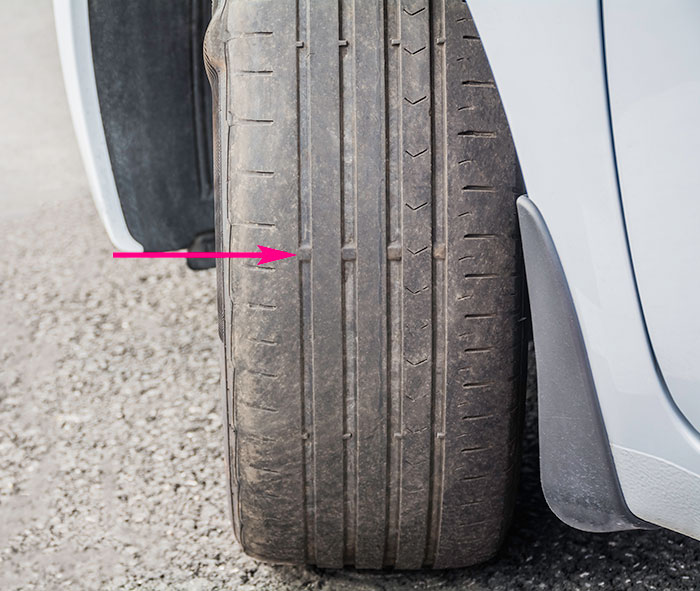
Tyre wear indicators are the cross marks in the main grooves.
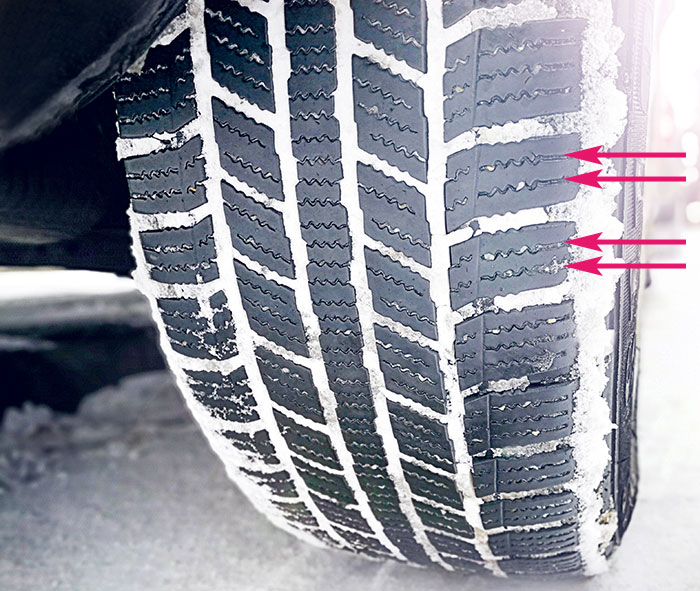
Winter tyres are usually recognisable by the extra grooves between the main grooves of the tyre.
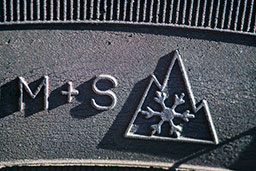
Symbol on a winter tyre
Winter tyres on passenger cars must have a tread depth in the main grooves of at least 1.6 mm (the legal minimum). To function properly, however, winter tyres need a minimum of 4 mm tread depth. The softer rubber on winter tyres makes them useful only in temperatures under 8 degrees Celsius.
Always check the tyre pressure before driving when the tyres are still cold, including the spare tyre. If the tyre pressure is too low, inflate the tyres. This can be done at most petrol stations. The ideal tyre pressure can be found in the instruction booklet. Most passenger cars also have a table indicating ideal tyre pressure on the inside of the door or in the fuel filler flap. Most air pumps also come with an extensive list of car manufacturers and models and their associated ideal tyre pressure. In most cases, tyre pressure should be between 2 and 2.5 bars. This applies to both winter and summer tyres. Ideal tyre pressure may vary per tyre width, however.
If a tyre is too damaged or has a bulge, driving is prohibited due to the increased risk of a blowout.
Missing valve caps present an increased risk of dirt entering the valve, which means it will no longer close fully, deflating the tyre. A slowly deflating tyre can also be caused by a nail or screw in the tyre. If you find a screw or nail in a tyre on your vehicle, do not remove it and take the vehicle to a garage. This will ensure some air remains in the tyre and it makes the hole easier to locate.
Low tyre pressure leads to higher energy consumption, poor road holding due to lack of grip, and increased wear and tear on tyres. At worst, low tyre pressure can even cause a blowout. If the tyre pressure is to high, you can also experience a lack of grip. The abrasion of the tyres will occur more in the centre.
Lighting and indicators
Adequate vehicle lighting is crucial to ensure your vehicle remains visible to other road users, signalling remains possible, and you maintain a proper view of your surroundings. Always walk around the vehicle to ensure lights are clean and undamaged before driving.
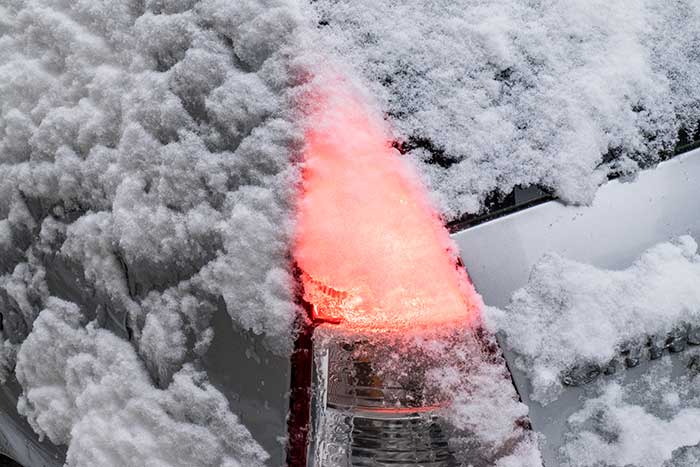
Always clear the light coverings of snow before driving.
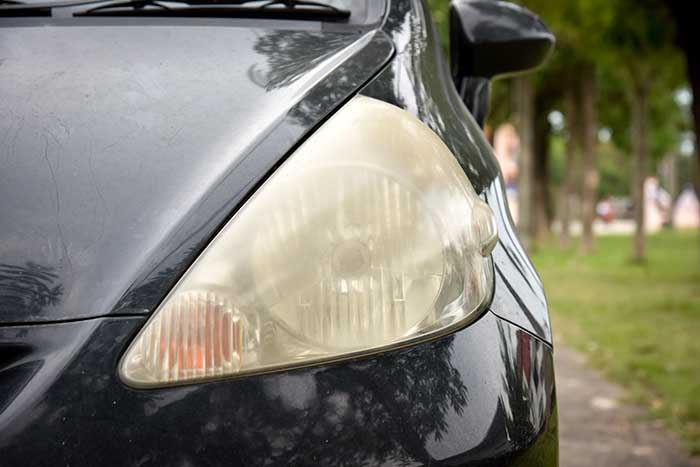
Over the years, lamp coverings can become duller. This allows less light to pass through. If this gets too bad they should be replaced.
Check all lighting on a regular basis. At the beginning of your journey, check to ensure you see both headlights reflecting. This reflection can be seen when driving past a glass pane or when stopped behind another vehicle at traffic lights. The rear lights and brake lights are best checked through the rearview mirror when facing away from a window or a smooth wall. Turn the lights on and off and apply the brakes. The reflection in the window or smooth wall will indicate whether any lights are nonfunctioning.
Many modern passenger cars have a warning light in the dashboard that illuminates when a vehicle light is broken. Broken indicators are usually obvious as the other indicators will flash more quickly.

Broken lamp
All mandatory lighting must be properly functioning at all times, even if you are not required to use it at the time. For example, full-beam lighting must be functioning even during the day. If a lamp is broken, you must be able to replace it immediately to continue driving.
In practice, however, this is often not possible. The lamps in most modern passenger cars are no longer replaceable without professional knowledge and the required tools. In some cases, entire bumpers or headlight units must be removed to access them. If one of your vehicle’s lamps is broken and you are unable to replace it, have it replaced in a garage as soon as possible.
Retro-reflectors
Most retro-reflectors in modern passenger cars are incorporated into the lamp units. The glass around these units must not be broken, damaged, or dulled, as this may affect the light quality. Individual retro-reflectors must not be damaged, dulled, or missing. Like lamps, they must not be covered with snow, ice, mud, or other dirt.
Passenger cars that are not equipped with mandatory retro-reflectors or equipped with broken retro-reflectors may not be driven on public roads. In some cases, even parking the vehicle on the road is prohibited, for example, when the red retro-reflectors on the back of the car are missing or broken.
Mirrors
Mirrors must be clean and undamaged at all times, as visibility through them must remain optimal. Always check the mirrors before driving and clean them if necessary. Driving with a broken mirror is prohibited. Even a simple crack in the glass affects visibility enough that safe participation in traffic is no longer possible.
Windscreen washers and wipers

Screen wash level low
If a vehicle’s windscreen wipers or windscreen washers malfunction, or if the screen wash runs out, visibility through the windscreen may be severely limited and driving the vehicle is therefore prohibited. Always have screen wash, which is sold in most petrol stations, in the vehicle.
Windscreen wiper blades (the part of the wiper that slides across the windscreen) should be replaced regularly due to wear and tear. This can be recognised via the stripes they leave over the windscreen when used.
Clean windscreen wipers regularly, especially when parking a vehicle under a tree. Small twigs and leaves may scratch the windscreen if left under a wiper for an extended period of time.
In addition, dirt under the windscreen wiper also streaks across the windscreen when you use the wipers. Wipe them once a week with a cloth, or more often if you see dirt on them.
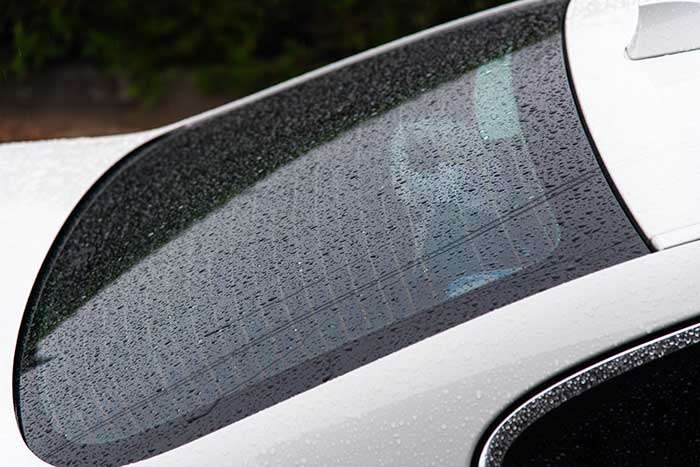
Unlike the windscreen wipers on the front window, the wipers on the rear window are not required. If they are present, they do not have to be functioning. However, functioning wipers are of course recommended.
Exhaust
A broken exhaust is often obvious due to increased noise. If a car is suddenly sounding heavier or louder than usual, or makes a crackling sound when accelerating, the exhaust may be broken.
Normal wear and tear is usually noticed in time during the annual APK or other checks. However, an exhaust with damage due to coming into contact with something will often make much more noise quite suddenly. In some cases, the exhaust may even come loose and drag on the ground while driving, resulting in a scraping sound.
Driving with a broken exhaust is prohibited. Not only does the noise present a nuisance, the emission of harmful substances also increases significantly.
Oil level and liquids
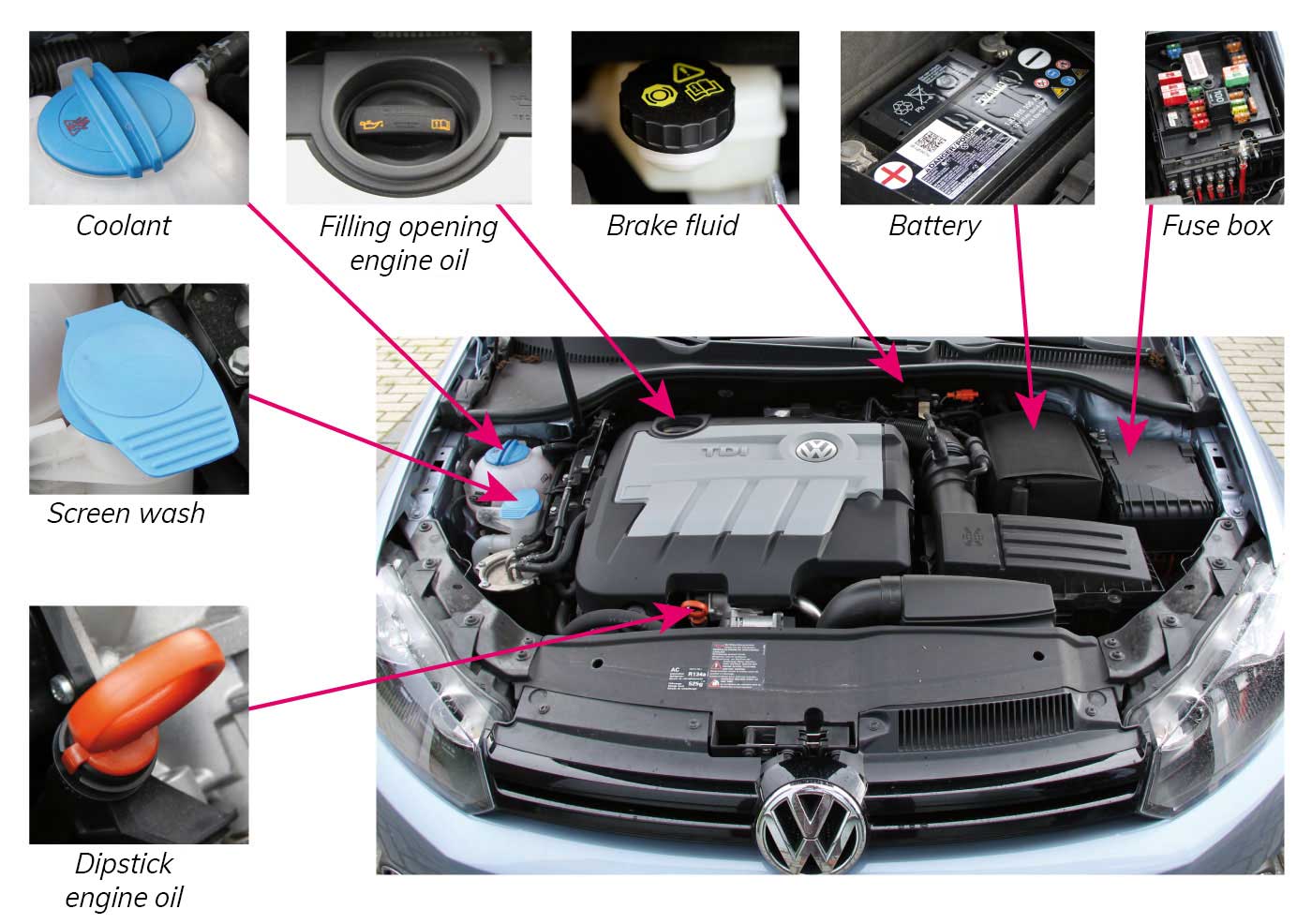
You can check a number of things under the bonnet yourself, such as oil level and other fluids.

Insufficient oil pressure
Engine oil
Engine oil provides good lubrication and partly cooling of the rotating parts of the engine. If the oil level drops too much, it can cause the engine to overheat, stop running and eventually break.
Check the oil level (with the engine cooled) every month. You do this with the dipstick, which you usually recognise by a yellow or orange ring or handle that sticks up between the engine parts.

Low oil level
Pull out the dipstick, wipe it and put it back in the same hole completely. Pull the dipstick out again and observe the oil level on the bottom of the dipstick.
If the level is too low, top it up via the filling opening on top of the engine block.
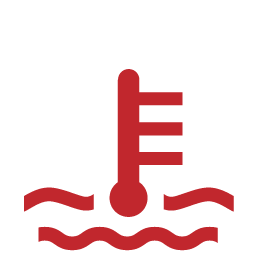
Engine overheated
Coolant
As its name suggests, the coolant cools the engine. If the coolant level is too low, the engine can overheat, break or even catch fire. Therefore, check the coolant level every month. Do this with a cold engine! Because the coolant can get very hot while driving, this can be dangerous when checking or topping up with a hot engine. The level can be checked on the coolant reservoir.

Coolant level low
If the level drops below the minimum value, do not drive any further, but top it up with coolant first. This is for sale at most petrol stations and hardware stores. In an emergency, the reservoir can also be refilled with water. This must then be replaced as soon as possible.
Normally, the coolant level should not drop just like that. This can mean that there is a leak somewhere. Have this checked by the garage.

Braking system malfunction
Brake fluid
The brake fluid is a fluid that you cannot just refill yourself. Air must not enter the brake lines and if the brake is topped up incorrectly, the brakes may (partially) lose their function. So always have this done at a garage. Normally this level remains good, if the level has dropped this can mean that the brakes are worn out or that there is a leak somewhere.
You can read the level by looking at the reservoir of the brake fluid. This must not fall below the minimum value. If this is the case, you may not drive any further.