

Directives
The directives given by authorised persons in traffic must be given as much as possible in the following manner. The traffic controller is in the middle of the intersection.
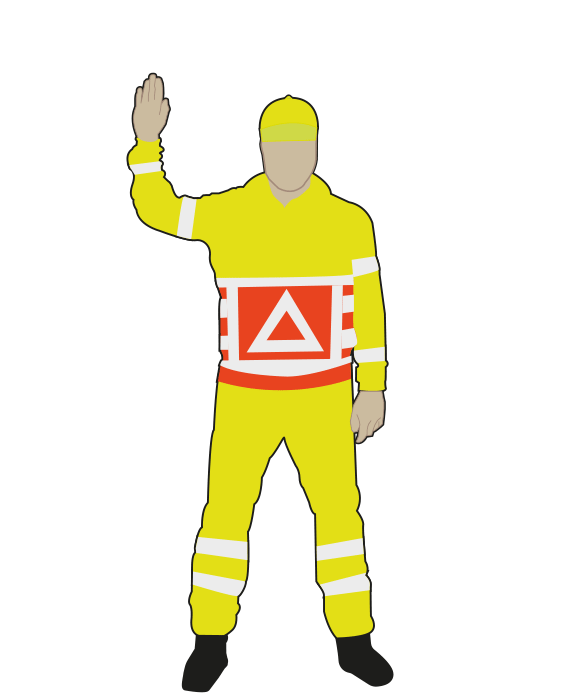
General stop sign
When this directive is given in your direction, you are obligated to stop. It is not used specifically on intersections, but can, for instance, be used to make you stop for a police check.
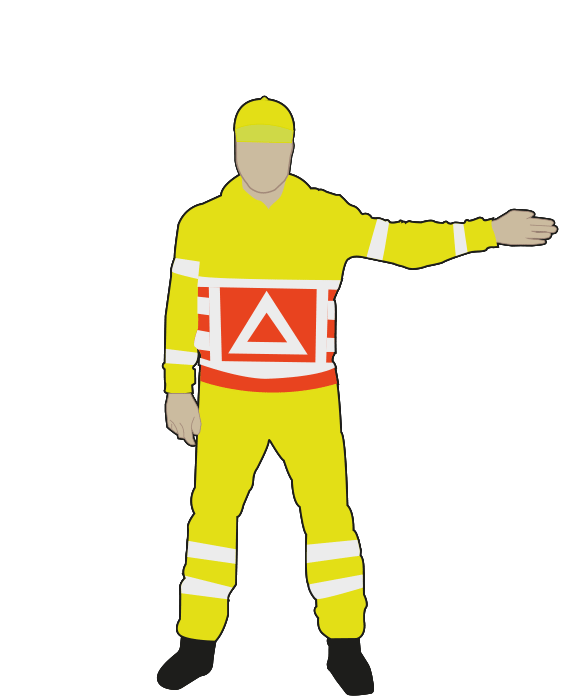
Stop sign for the traffic approaching the traffic controller
from the front
At this stop sign it is easiest to imagine extending the arm
and see it as a barrier. If you would hit ‘the barrier’ if you
drive straight ahead, you have to stop. This is the case when
you approach the traffic controller from the front.
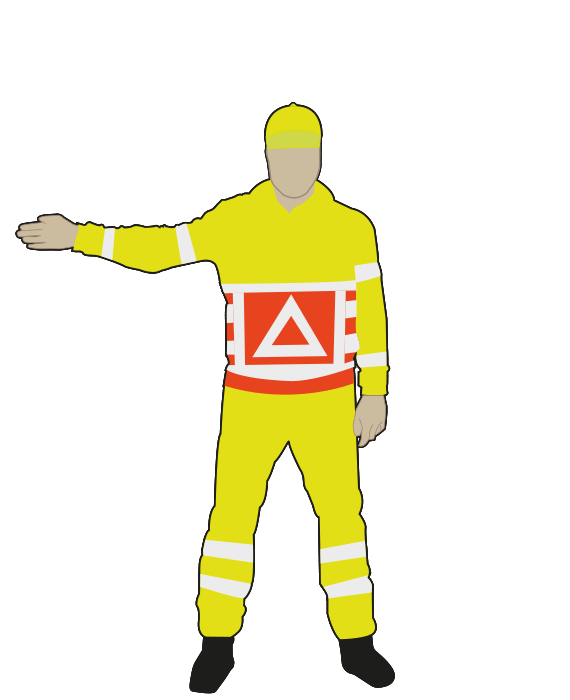
Stop sign for the traffic approaching the traffic controller
from the rear
At this stop sign it is also easiest to imagine extending the
arm and see it as a barrier. If you would hit ‘the barrier’ if you
drive straight ahead, you have to stop. This is the case when
you approach the traffic controller from behind.
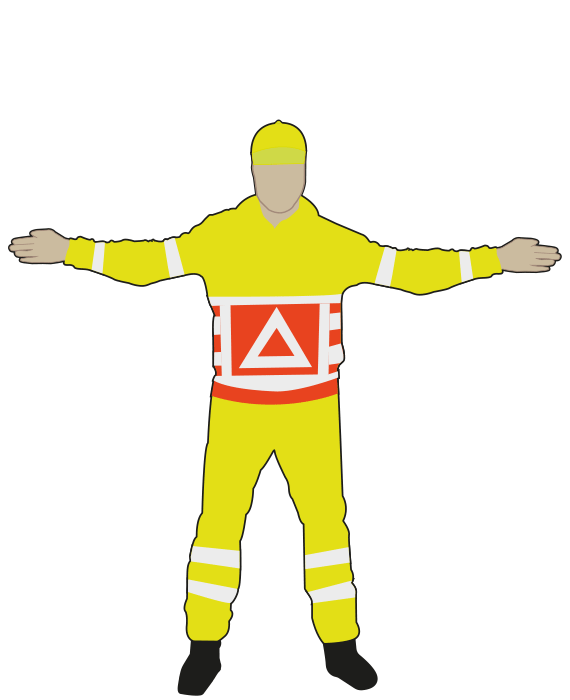
Stop sign for the traffic approaching the traffic controller
from the front and rear
This is a combination of the two stop signs for this. Only
traffic from the left and from the right is allowed to continue.
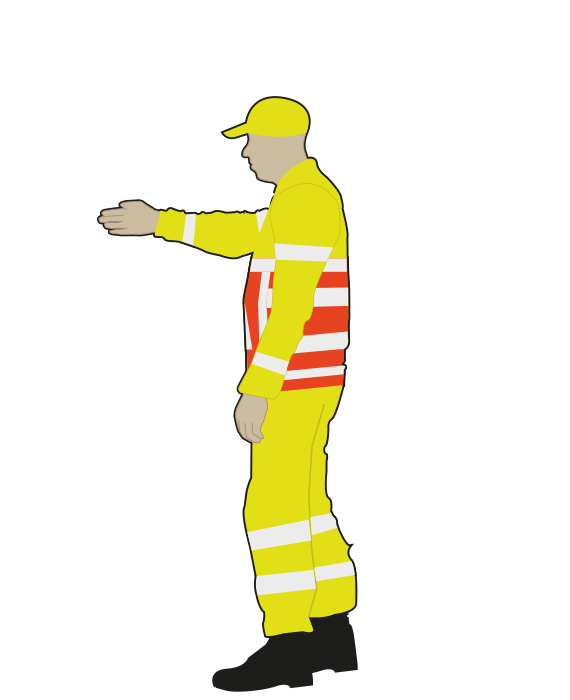
Stop sign for the traffic approaching the traffic controller
from the right
At this stop sign it is also easiest to imagine extending the
arm and see it as a barrier. Only if you approach the traffic
controller from his right-hand side will you run into his arm
and you have to stop.
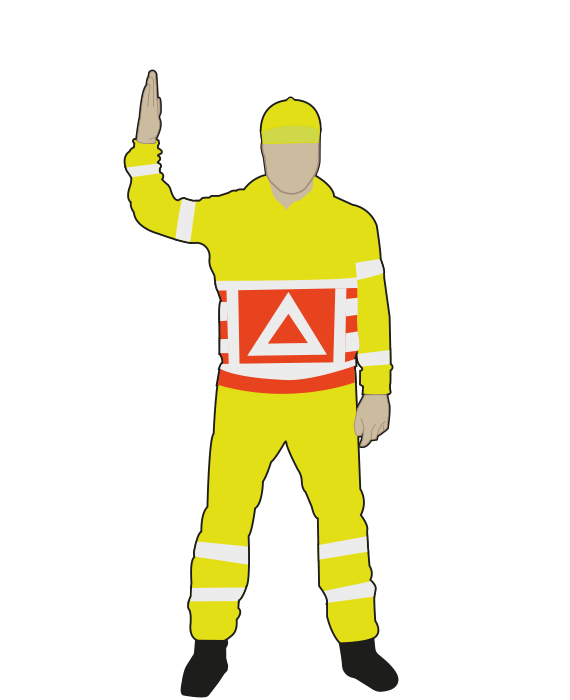
Stop sign for traffic in free direction, watch out for traffic
in stopped directions, keep intersection free
This stop sign looks very similar to the general stop sign. The
only difference is that the palm of the raised hand is pointing
to his head. This is the sign that is given on intersections, if the vehicles have to stop in the driving directions and then the stationary vehicles are allowed to drive.
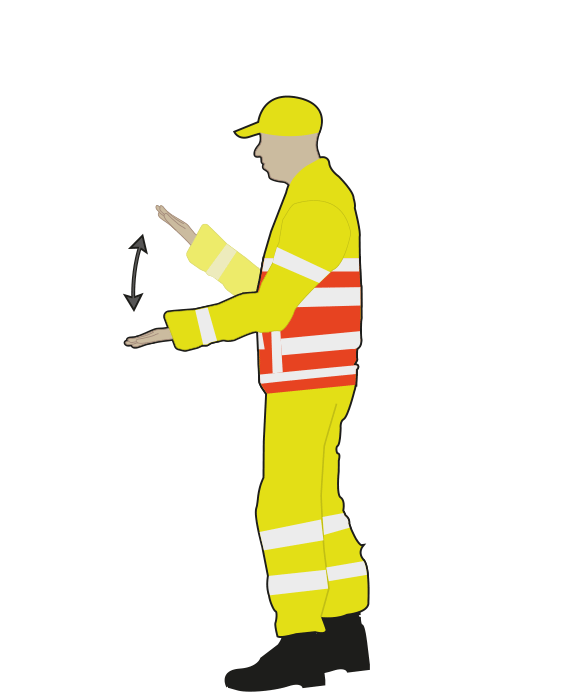
Reduce speed sign
The traffic controller moves his forearm up and down with
the palm facing down.
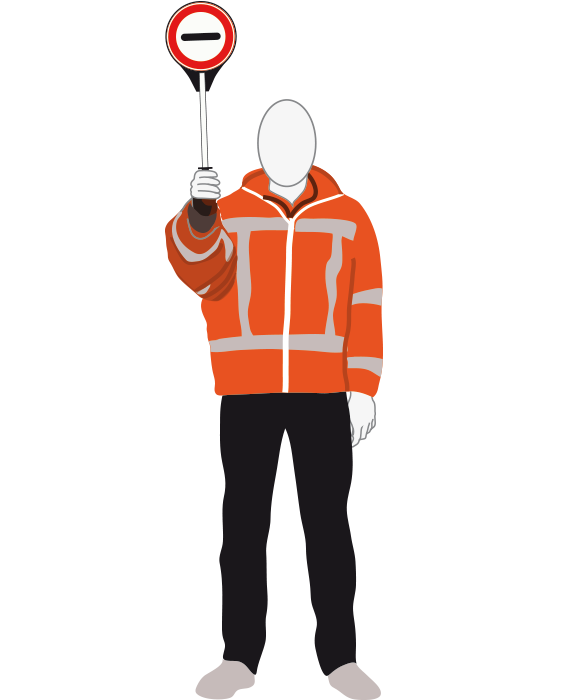
Crossing patrols stop sign using sign F10
Lollipop men or ladies (of the crossing patrol) are only
allowed to stop drivers. So they should not give any other
directives. In most cases, these directives are given with a
sign like the one on this picture.
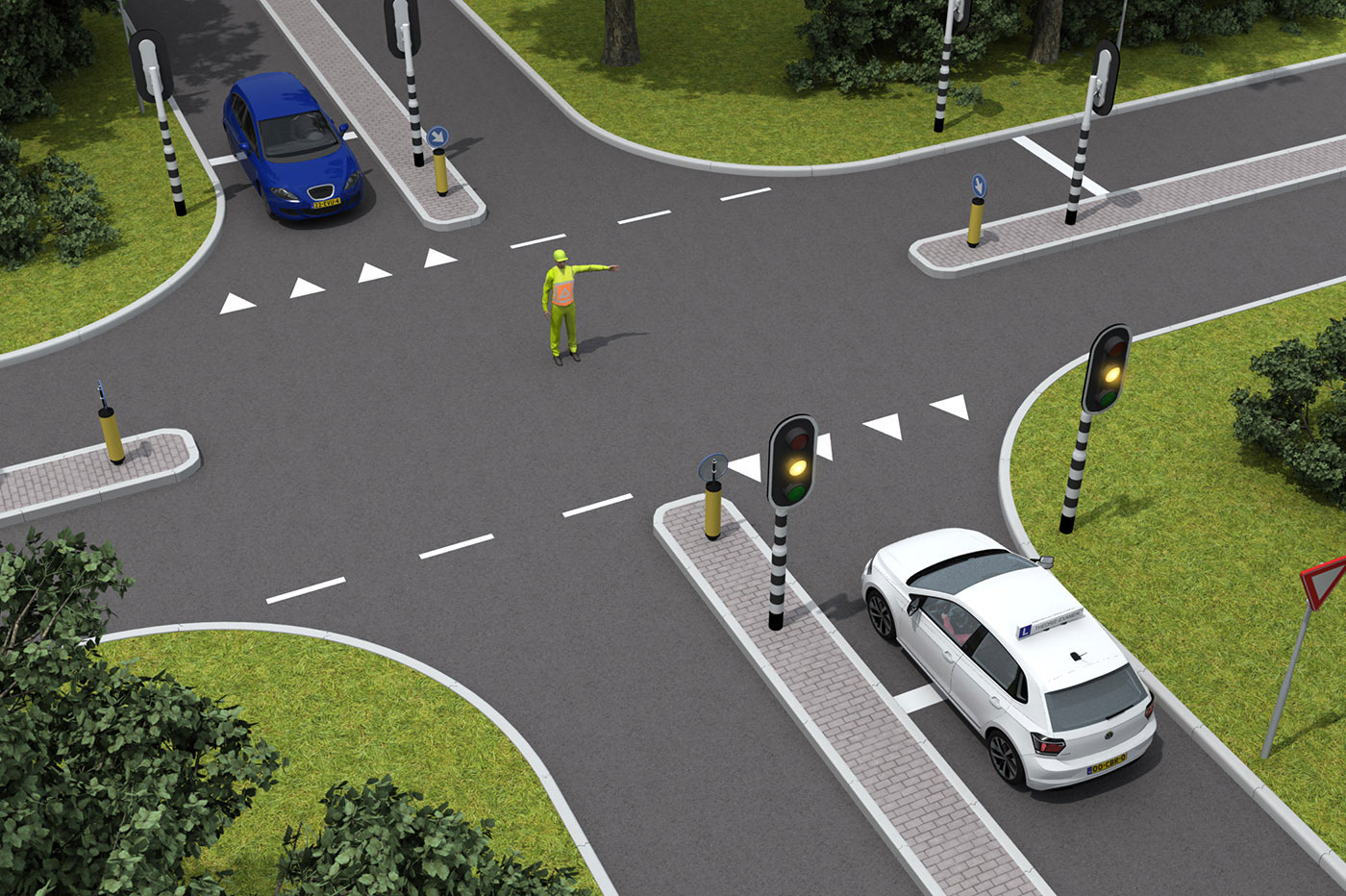
In this case the traffic controller raised his left arm, on the side of the lesson car. Therefore, the lesson car has to stop, regardless of the direction he planned on going. The blue car is allowed to continue in any direction.
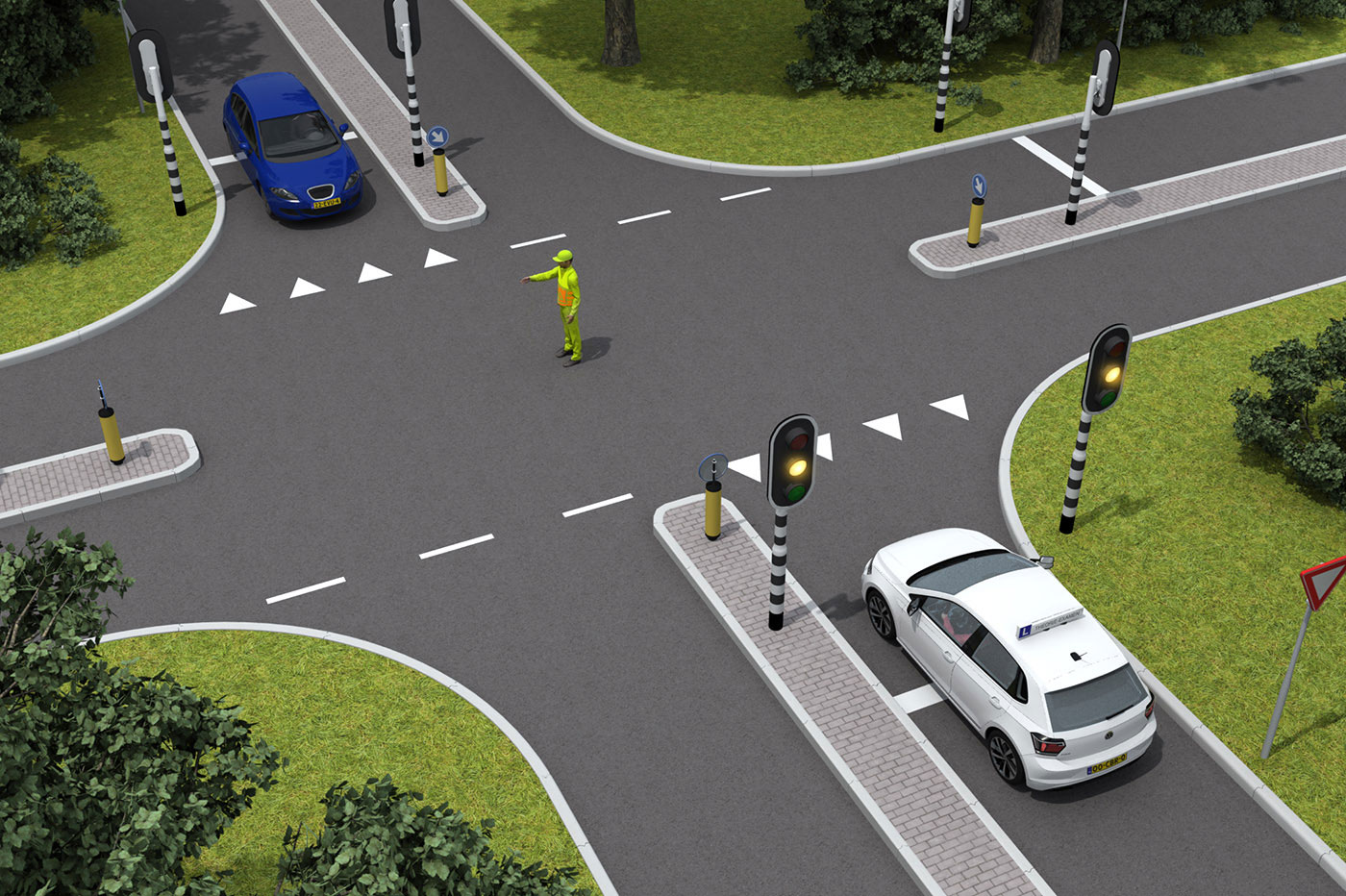
In this case the traffic controller raised his right arm, on the side of the blue car. Therefore, the blue car has to stop, regardless of the direction he planned on going. The lesson car is allowed to continue in any direction.
In reality it may happen that other signs are given. Always use your common sense. Regardless in what way the signs are given, you are always required to follow them as long as they are given by an authorised person.