

Special vehicles – part 3
Trams
Tram drivers also have a number of special rights in traffic:
- The tram always takes precedence over other road users at an equivalent intersection.
- When turning, the tram takes precedence over other road users on the same road.
Tram drivers must adhere to the traffic signs and road signs. For example, tram drivers must give way to pedestrians at a pedestrian crossing and crossing drivers on priority roads.
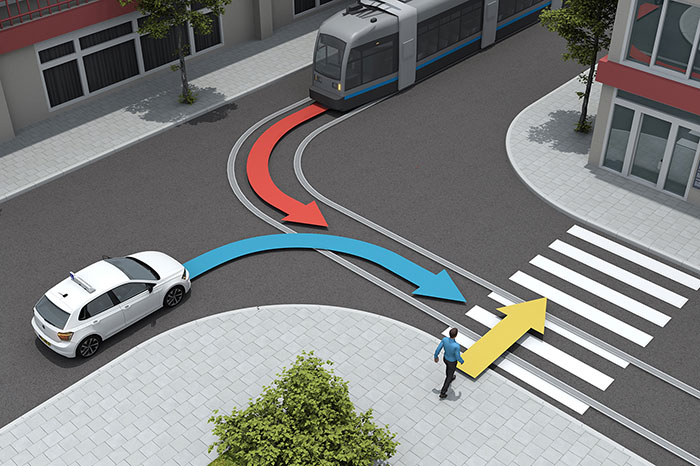
The driver of the tram does not have to wait for the lesson car, but he must wait for the pedestrian.
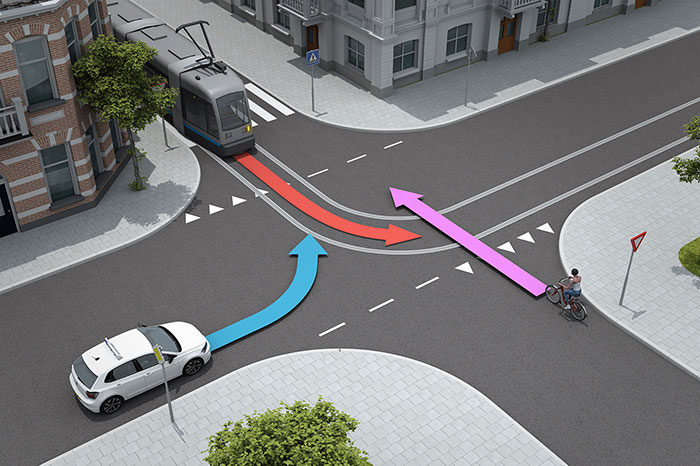
The driver of the tram has to wait here for the lesson car because it drives on a priority road. He does not have to wait for the cyclist.
Trolleybuses (electric buses)
A trolleybus is a public bus that is electrically powered by means of electricity cables above the road. They do not run on rails, but like a regular bus on the road. Therefore they are not subject to the rules of the trams. Instead, they follow the rules of the public buses. You should therefore give way if they indicate that they want to pull away from a bus stop in built-up areas.
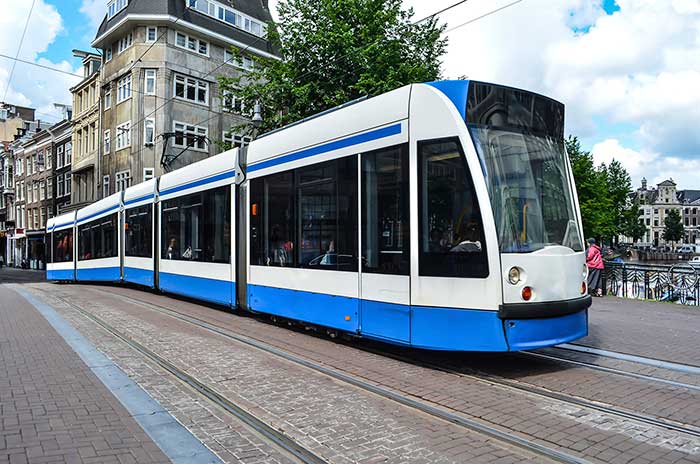
Tram drivers have special rights in traffic. They may always take precedence at equal intersections.
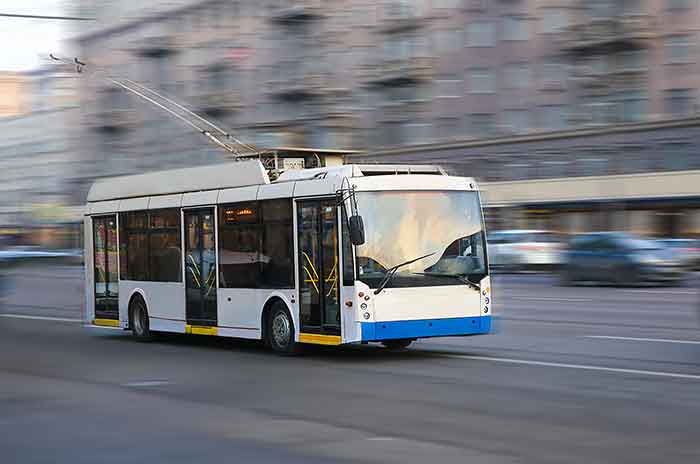
The driver of a trolleybus follows the rules of the public buses and does not have as many rights as the tram driver.
LZVs and special transport
In addition to normal lorries, there are also larger lorries. These have the name LZV (Lang Zwaar Voertuig or Long Heavy Vehicle) and are mainly intended for transport on motorways.

Attention! Extra long. (in Dutch)
Normal lorries are 16.5 to 18.75 metres long and weigh a maximum of 50 tons (50,000 kg). LZVs can be a maximum of 25.25 metres in length and weigh a maximum of 60 tons (60,000 kg).
They can be recognised by a warning sign on the back with the text: ‘LET OP! EXTRA LANG.’ (Attention! Extra long.). This is especially important to know if you want to overtake them. Due to this extra length, the overtaking manoeuvre takes longer.
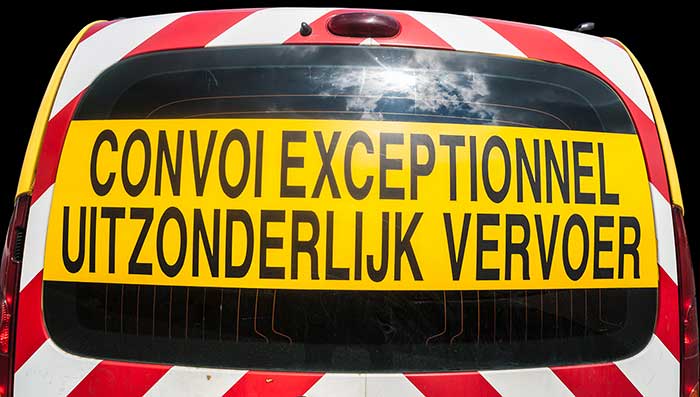
Large transports are usually accompanied by escort vehicles with orange flashing lights.
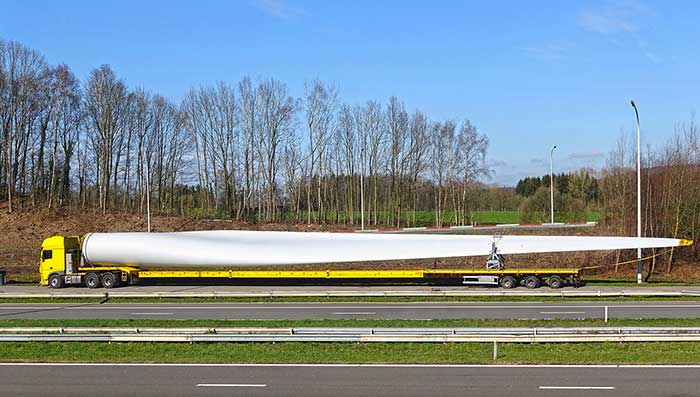
Large transports can be extra long, like this one, but also extra wide, or even both
If something extra large or extra heavy is to be transported, permission must be requested in advance. These transports are called ‘convoi exceptionnel’, ‘exceptional transport’ or ‘uitzonderlijk vervoer’. They are usually accompanied by escort vehicles with orange flashing lights.
Take these transports into account. Do not overtake if there is no room for this and keep your distance.