

Roundabouts
A roundabout is a special intersection. It consists of a circular main road with a number of side roads. The direction of travel is always counterclockwise. The traffic rules on roundabouts are the same as at an intersection. Again, it depends on whether or not there are signs, how the priority is arranged.
If there are no signs, the rule applies that drivers from the right have priority. Drivers on the roundabout should in that case give priority to drivers entering the roundabout. This is not very common anymore. In most roundabouts, priority is controlled by priority signs and road markings.
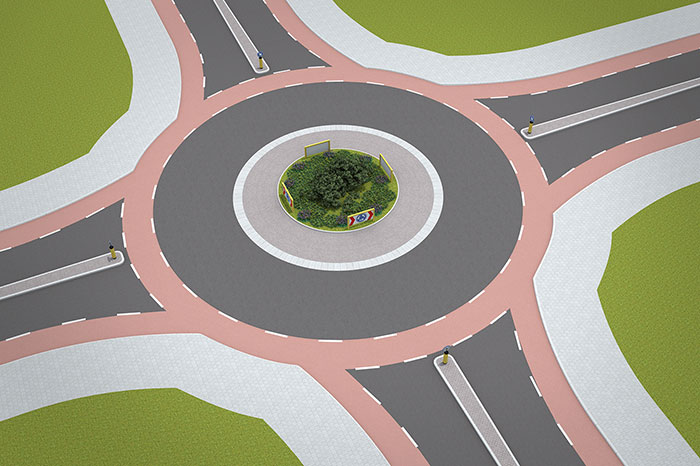
Right of way on this roundabout is not regulated by signs. Drivers from the right, i.e. drivers entering the roundabout, have priority over drivers already on the roundabout.
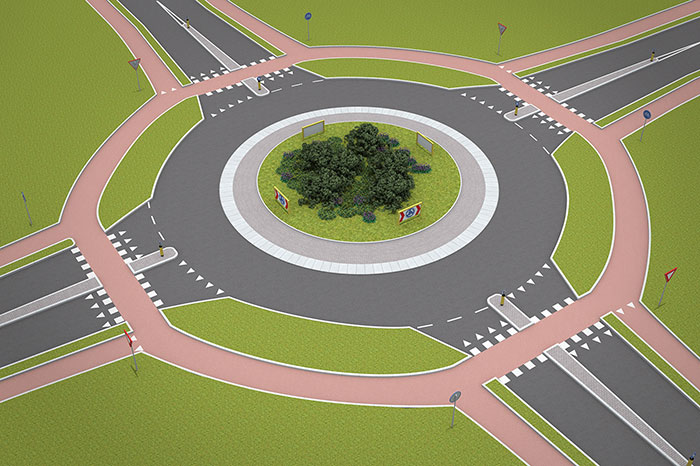
Right of way on this roundabout is regulated by signs (B-6). Drivers on the roundabout have right of way. This also applies to the separate cycle path.
At most roundabouts, road signs govern right of way. When approaching a roundabout, this is usually the B-6 sign (‘give right of way to drivers on the intersecting road’). There are almost always priority triangles on the road surface. In this case, drivers going around the roundabout have priority over drivers entering the roundabout.
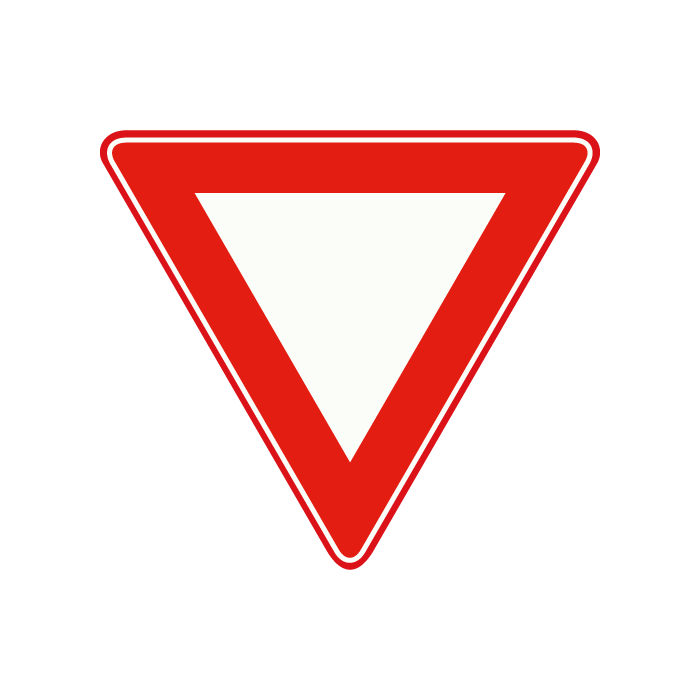
B-6
Give right of way to drivers on the intersecting road
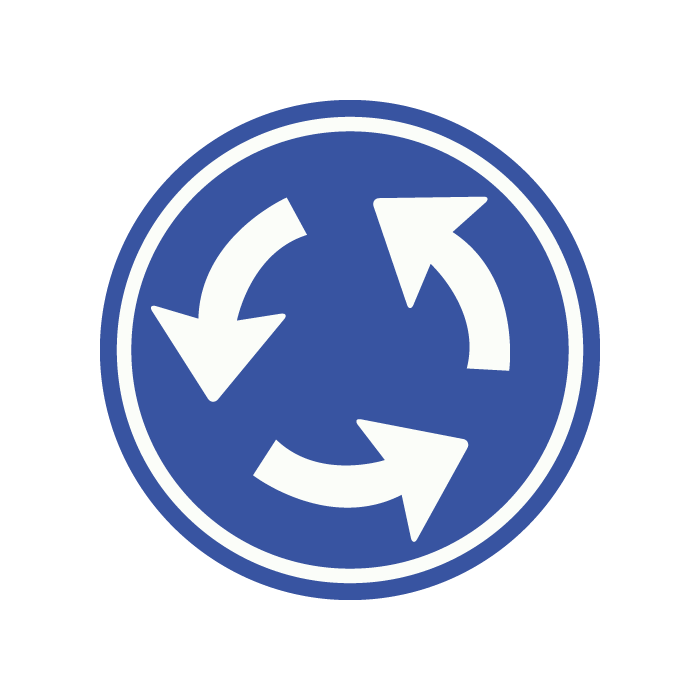
D-1
Roundabout, compulsory direction of travel
Leaving a roundabout is seen as a right turn, and you must indicate in time before leaving a roundabout. Also give way to through traffic on the same road (i.e. the roundabout), including cyclists, snorfietsers, and pedestrians.
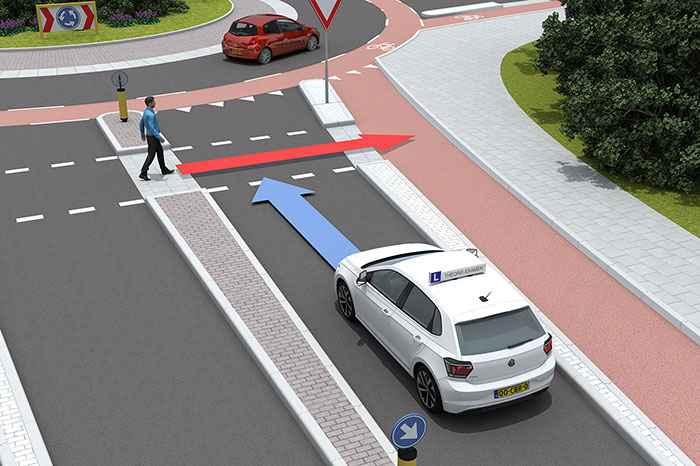
When entering a roundabout, you do not have to give way to the crossing pedestrian. He is not a driver.
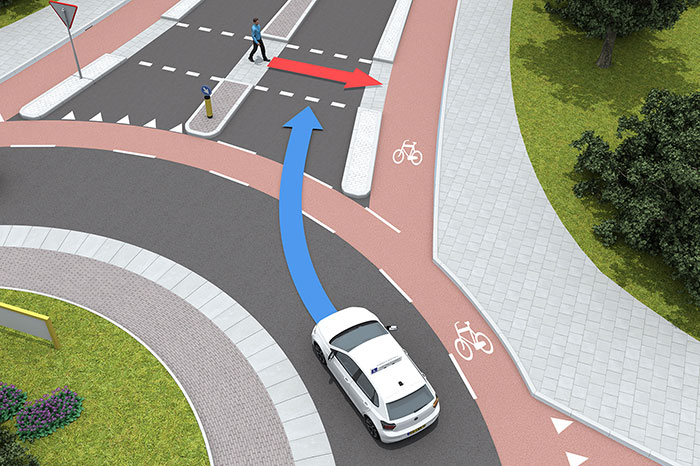
When leaving the roundabout, you must give the pedestrian right of way. He will continue to follow the roundabout you are leaving and is therefore through traffic on the same road.
At some roundabouts, cyclists, snorfietsers, and pedestrians do not take part in roundabout traffic. In these cases, cycle paths are further away from the roundabout and do not bend and turn with it.
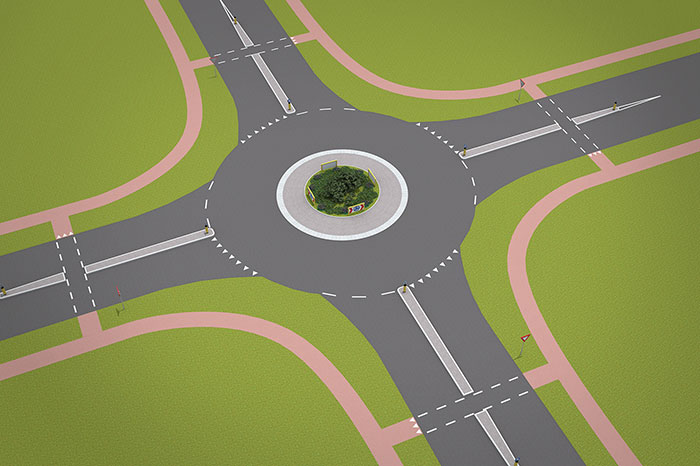
At this roundabout, cyclists do not participate in the priority of the roundabout. They must give right of way when crossing the road.
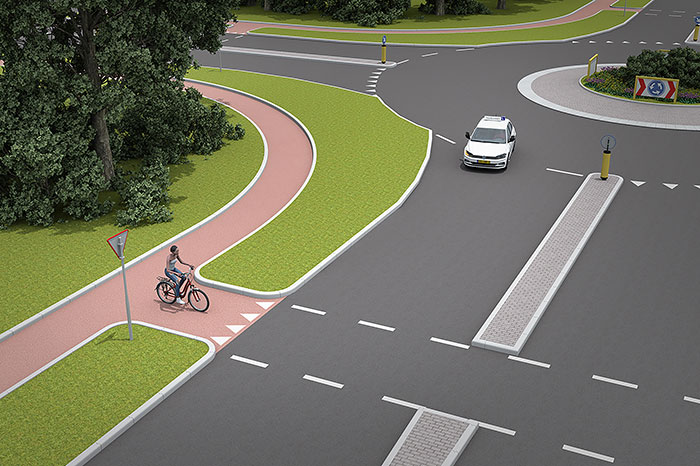
The cyclist crossing the road has to wait for the lesson car to leave the roundabout. The cyclist is not on the roundabout.
Where the cycle path and footpath or pavement crosses the road, this should be seen as a separate intersection. Usually the cycle path in that case has sign B-6 and priority triangles. If you leave the roundabout, you do not have to give way to snorfietsers, cyclists, and pedestrians.
A roundabout can also be designed as a multi-lane roundabout. In that case, most new roundabouts are designed as ‘turbo roundabouts’. This is a spiral roundabout where, by choosing the right lane at the beginning, you can leave the roundabout in the right place. Choosing the lane in time is important here. It is often not possible to change at the roundabout itself.
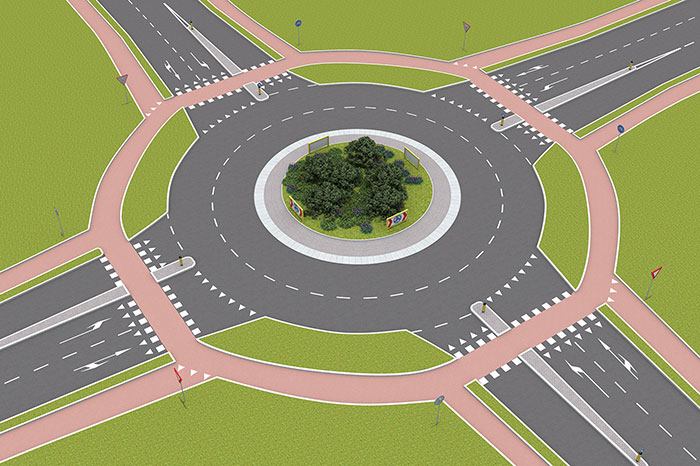
This roundabout consists of several lanes. If you want to go three-quarters (turn left), you have to start at the roundabout on the inner lane and move halfway up the roundabout to the outer lane.
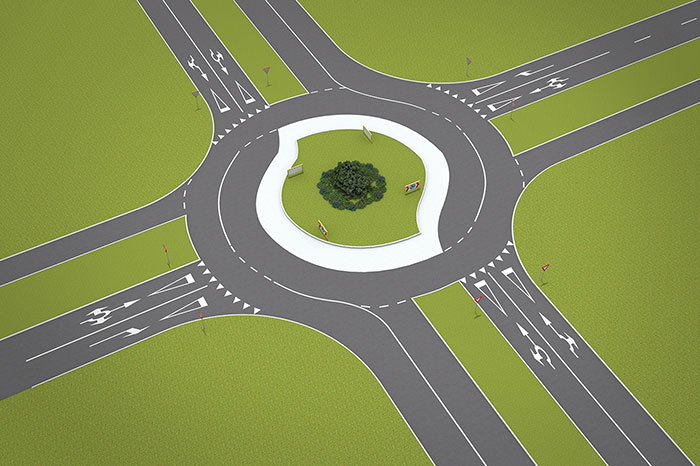
This roundabout is designed as a multi-lane turbo roundabout. If you choose the correct lane before you enter the roundabout, you will not have to change lanes on the roundabout.
On the lead road to the turbo roundabout, there are usually arrows on the road that indicate which lane to take for which direction.

Turn left

Turn left and straight on

Turn left, straight on and turn right
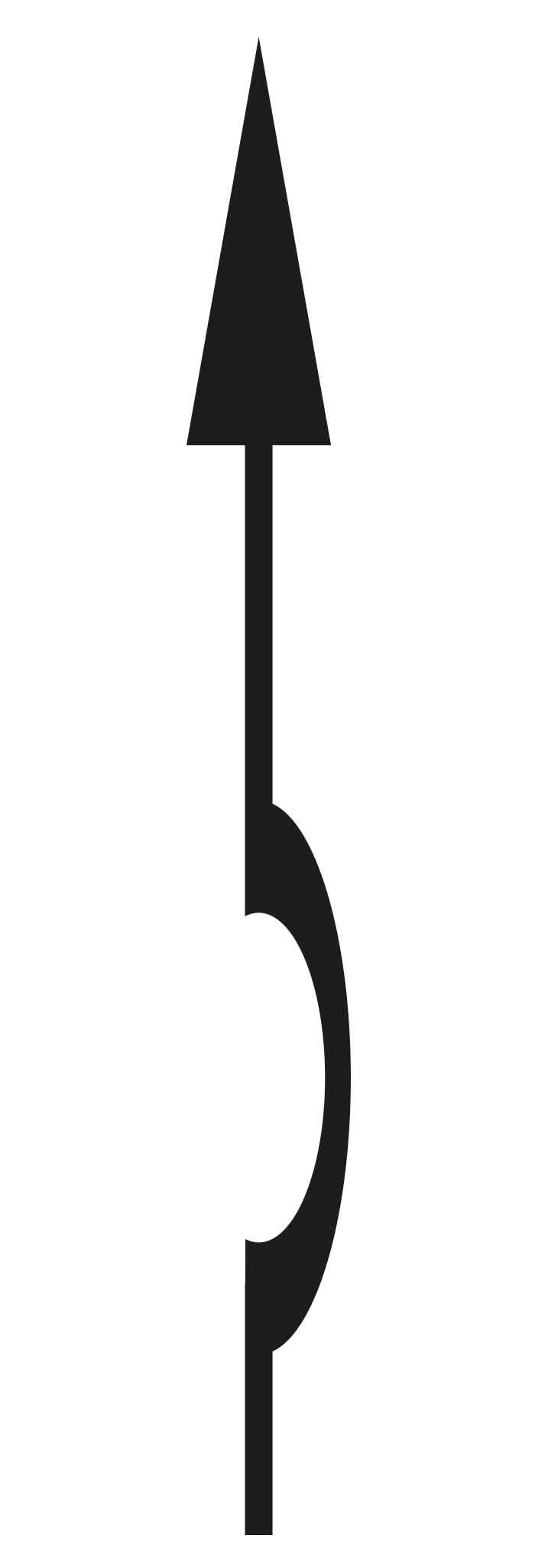
Straight on

Straight on and turn right

Turn right