

General requirements – part 2
- Major tread grooves
Wide grooves in the middle section of a tyre’s tread that contain the wear indicators.
- Tread
Part of the tyre that comes into contact with the road surface.
- Carcass
Part of the tyre under the rubber layer that gives the tyre its strength. Usually equipped with plastic (nylon, polyester) and steel wires.
- Wear indicators
Elevations in the main grooves. When these wear with the tread, the tyre no longer meets the minimum tread depth.
Tyres
Tyres on a passenger car that are not in working order can lead to dangerous situations. However, few drivers check their tyres and tyre pressure on a regular basis. As tyres gradually wear down, drivers are advised to check the pressure and tread depth regularly – at least once a month.
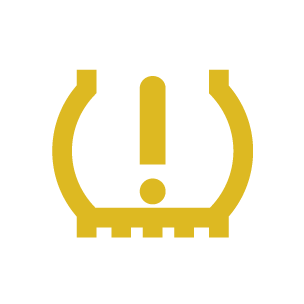
This is the tyre pressure indicator light in the dashboard. When the tyre pressure of (one of) the tyres is no longer adequate, this light will light up. Check the tyre pressure at least once a month and as soon as this light comes on. Not all passenger cars are equipped with a tyre pressure indicator light.
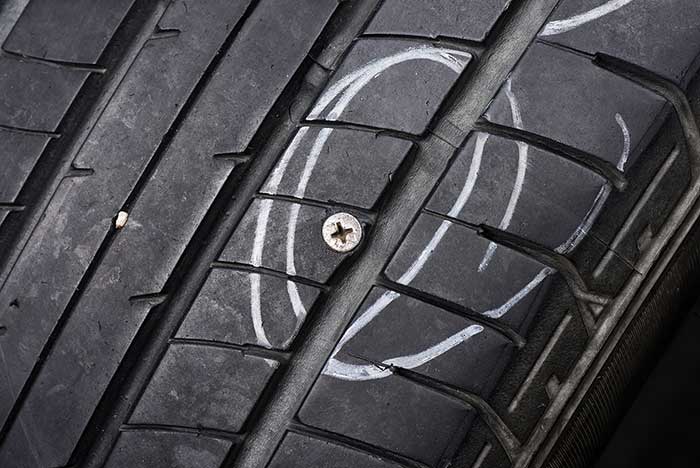
Do not remove a nail or screw embedded in the tyre until you reach a garage. Removal will cause the tyre to deflate rapidly.
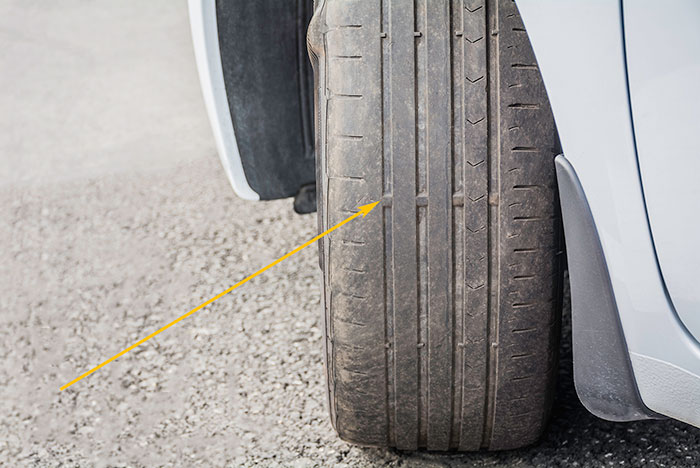
The wear indicators in these major tread grooves are worn down almost to the level of the rest of the tread. This tyre is worn down.
Tyres must meet the following technical requirements:
- They must be air-filled tyres. Nitrogen-filled tyres are also permitted. For example, passenger cars may not be equipped with solid rubber tyres or tracks.
- Tyres must not have any bulges or any damage where the carcass is visible.
- Tyres must always have a minimum tread depth of 1.6 mm in the major tread grooves. They are not allowed to be re-treaded, which means the grooves may not be cut deeper.
- Tyres must be mounted in the correct direction of rotation.
- Tyres may not contain any metal components that can protrude while driving, such as studded tyres used in countries with harsh winters.
- Tyres on one axle must be the same size. For example, the front left tyre should not be larger or smaller than the front right, except when an emergency or spare tyre must be used.
- Tyres must have adequate tyre pressure. The applicable pressure value is stated in the instruction booklet. Do not forget the spare tyre.
- The tyre pressure indicator light must not indicate a malfunction.
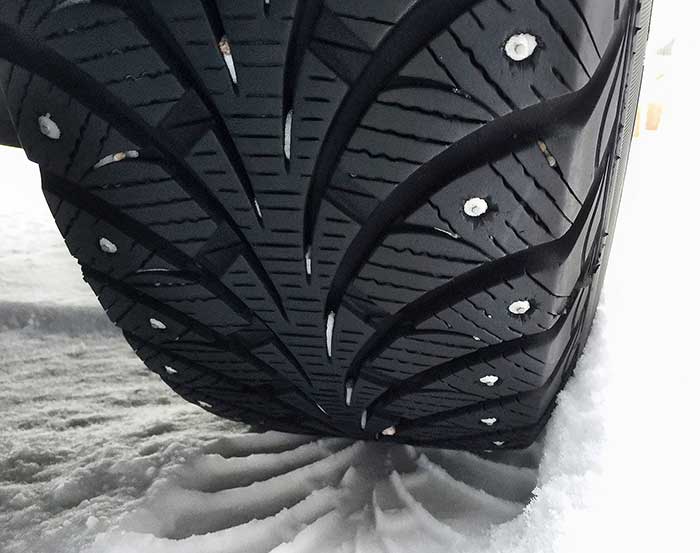
Some countries with harsh winter conditions allow the use of studded tyres. It is not permitted in the Netherlands.
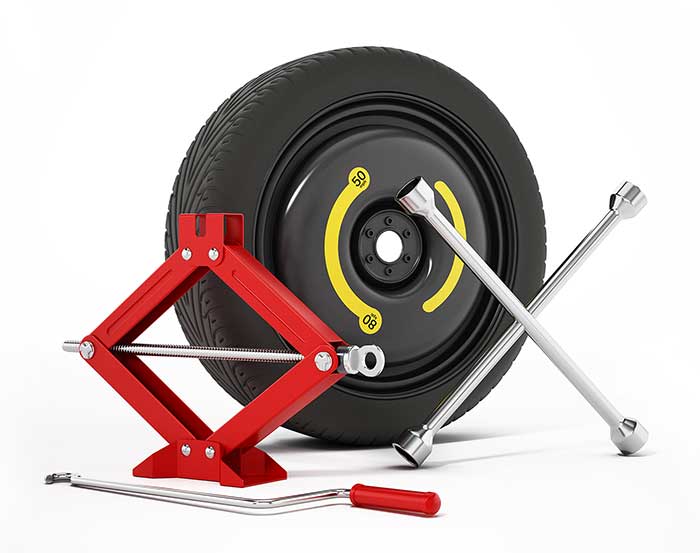
A spare tyre could differ in size from a normal tyre. It is used in emergency situations only. Replace the tyre as soon as possible and drive a maximum of 80 km/h.
Braking device
Brakes are a vital component of passenger cars. Components in the brake system must therefore be damage-free. They must also:
- be properly secured;
- be rust-free;
- show no signs of leakage;
- show no signs of excessive wear.
All components must function properly and movable parts such as the brake pedal must be easily moved. The brake pedal must have a non-slip surface.
All passenger cars must be equipped with a properly functioning parking brake (handbrake).
Tyres and brakes must ensure good road holding and a short braking distance, hence both components must be kept in good condition.