

Vehicle requirements
- Motor carriage
All engine-driven vehicles. These may not require rails for mobilisation (e.g. train, metro, or tram). This does not include bicycles with pedal assistance. Attention: does include trolley buses and speed pedelecs!
- Driver of a motor carriage
The person driving a motor carriage or under whose immediate supervision a motor carriage is being driven (e.g. a driving instructor).
- Holder of a motor carriage or trailer
Someone who rents, borrows, or leases a vehicle for an extended period of time. This does not imply or refer to the owner.
A vehicle must meet certain technical requirements before it can be operated on public roads. If a manufacturer releases a new car model, it must first be typeapproved by the Road Traffic Service (RDW) before it can be sold in the Netherlands.
Modifying your car in any way could invalidate the type approval, rendering your car unfit for public roads. This means the car no longer meets the permanent technical requirements and must be re-approved.
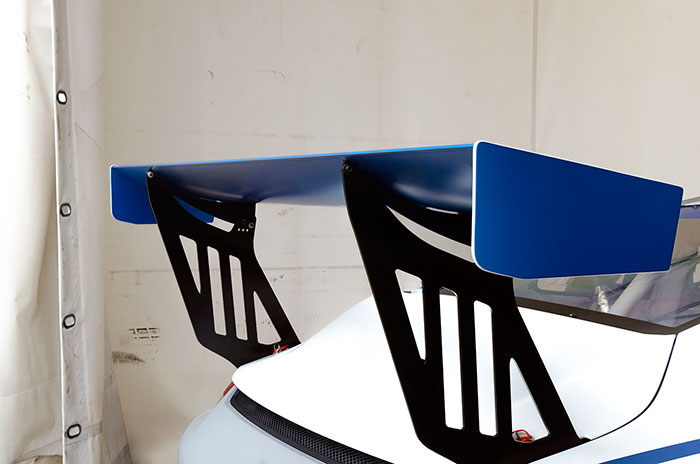
Mounting a large spoiler on your car may invalidate the vehicle’s compliance with technical requirements.
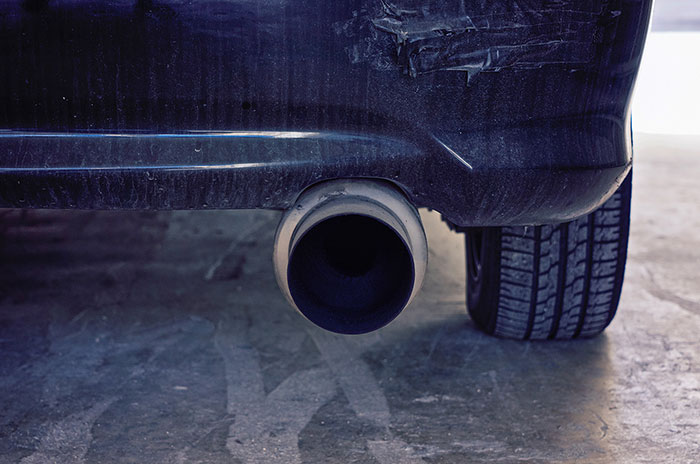
Replacing a vehicle’s exhaust with a different type of exhaust can also lead to problems.
- Registration number
Unique identifier consisting of a combination of numbers and letters that is issued to a type-approved and registered vehicle subject to registration.
- Number plate
Rectangular plate on which the registration number is visible. This plate must be attached to the vehicle registered with this registration number.
- Registration certificate
Proof issued to the owner or holder of a vehicle. Contains vehicle information and registration number.
- National vehicle register
National database in which all registration numbers and associated data are stored.
Awaiting inspection (WOK, ‘Wachten Op Keuren’)
If an inspection detects a problem with your vehicle, its registration certificate may be temporarily invalidated. This may be due to modifications you have made to the vehicle, or damage caused by a collision.
If your vehicle’s registration certificate is temporarily invalidated, it will be marked in the vehicle register as ‘road use prohibited’. This is also known as ‘waiting for approval’ or ‘WOK’ status. The vehicle must then be re-tested at the RDW. You may not operate the vehicle until it has been re-approved.
If your vehicle is under WOK status, the registration certificate will not physically be confiscated, but the national register will show that the vehicle may not be driven.
Authorised people can also require you to make the car available at an agreed time and place, for example for further investigation.
Unknown owner
If it is unclear who owns a vehicle that is on a public road, for example due to the lack of a clearly legible number plate, the vehicle may be towed and held until the owner comes forward. Before towing a vehicle, a wheel clamp may be placed for up to two days as a way of tracing the owner.