

Driving under the influence
- Novice (new) drivers
Upon first acquiring your driving licence, you are considered a novice driver for the first five years. If you obtain a moped or tractor licence before the age of 18, you are considered a novice driver for the first seven years. Slightly stricter rules apply to novice drivers.
Extra information alcohol and traffic
- Per mille
A value (indicated by ‰) used to indicate blood alcohol level.
- µg/l
This stands for micrograms per litre. It is a value used to indicate the amount of alcohol per litre of exhaled air. 220 µg/l corresponds to 0.5 per mille. The standard term within the lesson material is per mille.
- Standard glass
In hospitality, beer, wine, and spirits are generally served in standard sized glasses:
- beer 25 cl (5% alcohol);
- wine 10 cl (12% alcohol);
- spirits 3.5 cl (35% alcohol).
This ensures that one glass of wine contains the same amount of pure alcohol as one glass of beer or one glass of spirits. This does not apply when standard glasses are not used, for example with speciality beers and cocktails. In these cases, there is often much more pure alcohol in one glass.
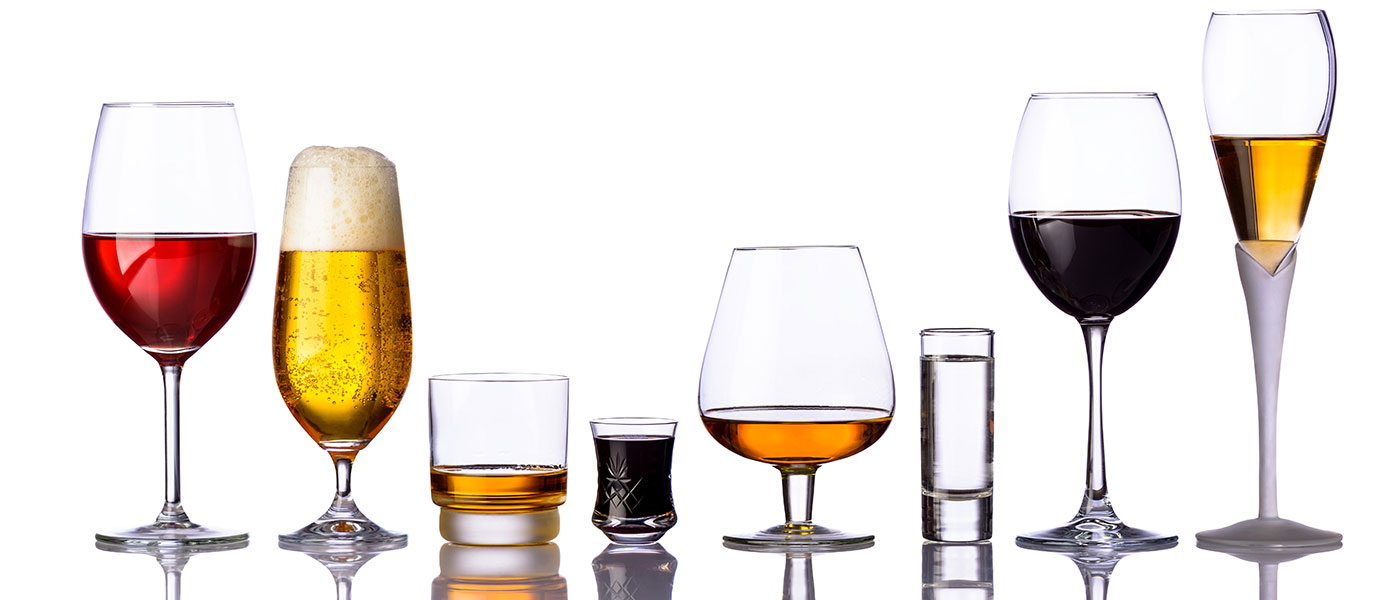
Each glass contains an equal amount of pure alcohol.
Driving under the influence (DUI) of alcohol, drugs, or medication that impacts your ability to drive is a criminal offence. Certain limit values apply. For alcohol these are:
- For novice drivers: maximum of 0.2 per mille (88 μg/l).
This is approximately 0.5 to 1 standard glass of beer, wine or spirits. - For experienced drivers: maximum of 0.5 per mille (220 μg/l).
This is about 1.5 to 2.5 standard glasses of beer, wine or spirits.
This limit value also applies to cyclists!
The limit values for drugs and medications differ per drug. With drugs, it is best to assume that after one ‘dose’ you are generally over the limit and therefore no longer permitted to drive. Some drugs remain in your body for up to several days.
Driving under the influence of both drugs and alcohol is a criminal offence regardless of the amount.
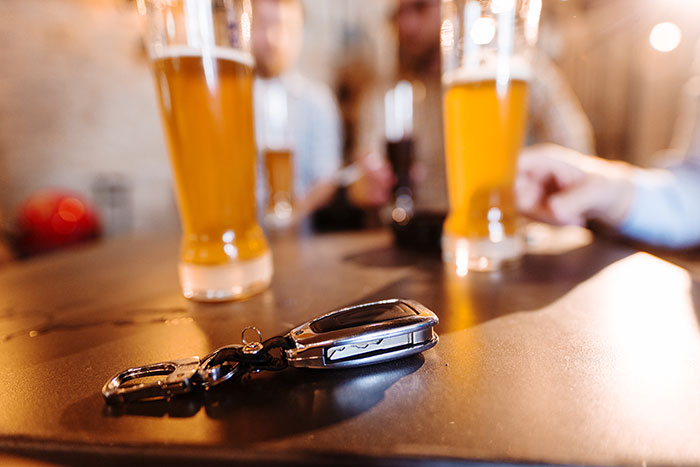
You are criminally liable the moment you consume your first glass of alcohol and then proceed to drive.

You may be banned from driving by merely showing intent to drive under the influence.
- Vehicles
Bicycles, mopeds, disability vehicles, trams, motor vehicles, horse drawn vehicles and handcarts.
- Mopeds
A motor carriage on two, three, or four wheels, which cannot and must not exceed 45 km/h (designed speed), equipped with a combustion engine of maximum 50 cm3 (cc) or combustion or electric motor with maximum net power of 4 kW. A moped on four wheels (brommobiel) has an unladen weight of under 350 kg. Mopeds are not disability vehicles.
- Motor carriages
All engine-driven vehicles. These may not require rails for mobilisation (e.g. train, metro, or tram). This does not include bicycles with pedal assistance. Attention: does include trolley buses and speed pedelecs!
- Driving ban (forbidden to drive)
A ban on operating vehicles (including bicycles), which may be imposed if you are found driving or attempting to drive under the influence of alcohol, drugs, or medication.
- Driving disqualification (driving licence suspended)
A disqualification from driving any motor carriage for several weeks, months or even years. If you are caught violating traffic regulations, a public prosecutor or judge may disqualify you from driving. Riding a bicycle is still allowed.
Extra information driving ban, confiscation and disqualification from driving
DUI enforcement
If you drive or attempt to operate a vehicle while under the influence, police are authorised to take immediate action. This may be done via the following means:
- Driving ban (forbidden to drive)
Planning or attempting to operate a vehicle while under the influence is against the law, which means you could be banned from driving before you even get into the car. A driving ban applies for several hours and up to a maximum of 24 hours. The exact length of time depends on how far over the legal limit you are. A driving ban means you cannot operate any vehicle at all, including bicycles. - Confiscation
If you are stopped by police while driving and a breath test shows you to be above certain alcohol limits, the police will confiscate your driving licence immediately. This is also the case if drugs are detected during a saliva test. Once your driving licence has been confiscated, you are no longer permitted to operate a motor carriage until it is returned to you. The limits for confiscating your licence after an alcohol violation are:- 0.8 per mille for novice drivers;
- 1.3 per mille for experienced drivers.
If you do not cooperate or, for example, refuse to take a breath test or provide a saliva sample, then your licence may also be confiscated.
If your driving licence is confiscated, your licence will be forwarded to the public prosecutor. They will decide, within 10 days, whether your licence will be returned to you, or that you will receive a driving disqualification. The prosecutor may offer you a plea deal. If you agree to the terms, the matter will be settled. But it may also involve attending court. A judge will determine the final penalty.
CBR notice
In addition to receiving a fine if you exceed 0.2 per mille (novice driver) or 0.5 per mille (experienced driver), the police will also report you to the CBR if you exceed certain limits. These values are:
- 0.5 per mille for novice drivers;
- 0.8 per mille for experienced drivers.
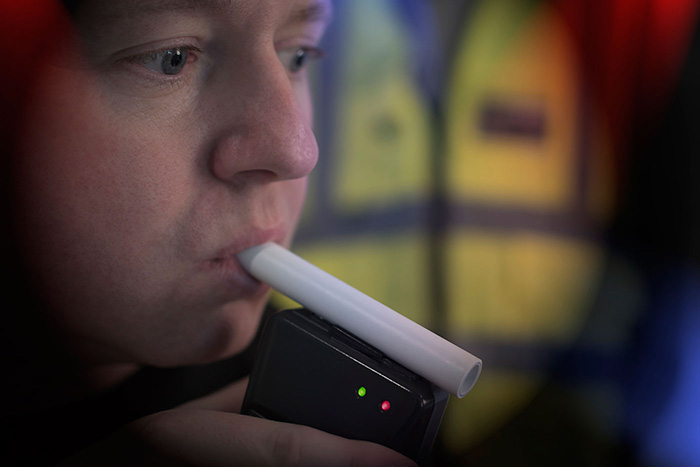
A breath test is used to determine alcohol use. You may not refuse this test.
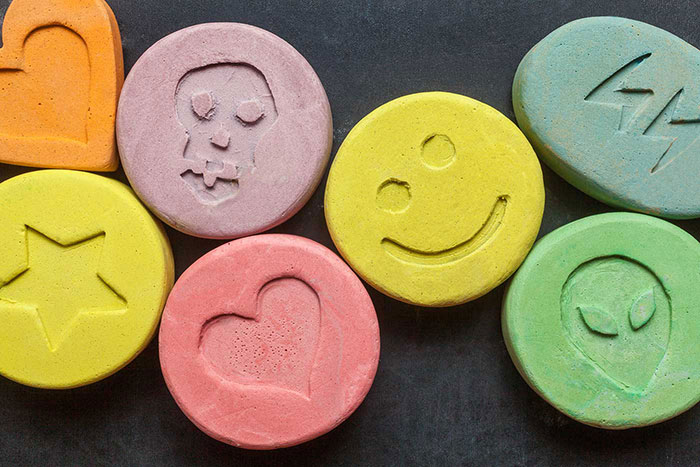
A saliva test is used to determine drug use. You may not refuse this test either.